Graphoscope | Charles Gaudin
The daguerreotype and the calotype were the pioneering processes in photography. But their repercussions, although resounding, in terms of access and use were more concentrated among a select public, since the former was very expensive and the latter had the barrier of the patents that Talbot registered. A second wave, giving new scope to photography towards its massification, came with the wet plate, the collodion, to obtain negatives and the printing process with albumin, to obtain the photograph itself, the positive.
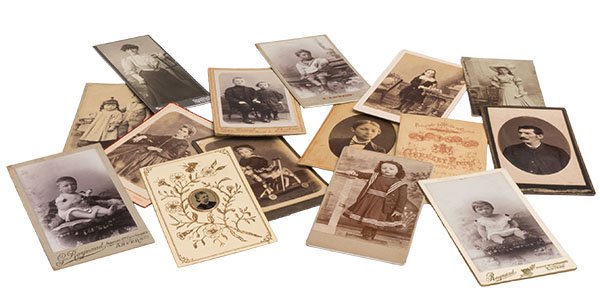
The 1860s saw the emergence of the Carte de Visite (above), a special format of photograph, something like 6x11cm, produced by hand in small towns and practically industrially in the big cities. People began to take photographs of themselves and to collect photographs of celebrities on the most diverse subjects: actors, military personnel, politicians, writers… it was a real furor.
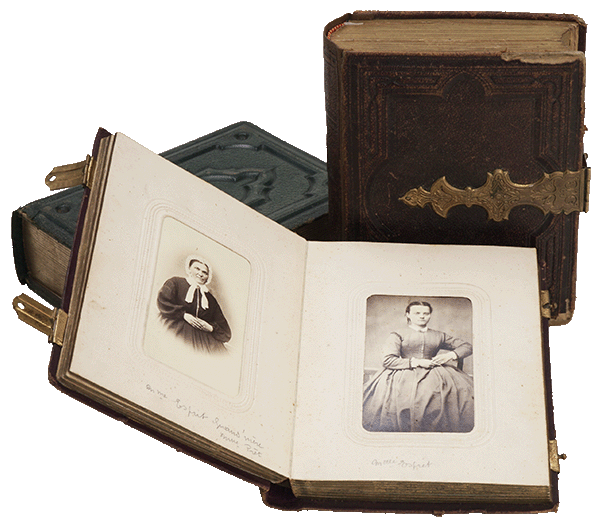
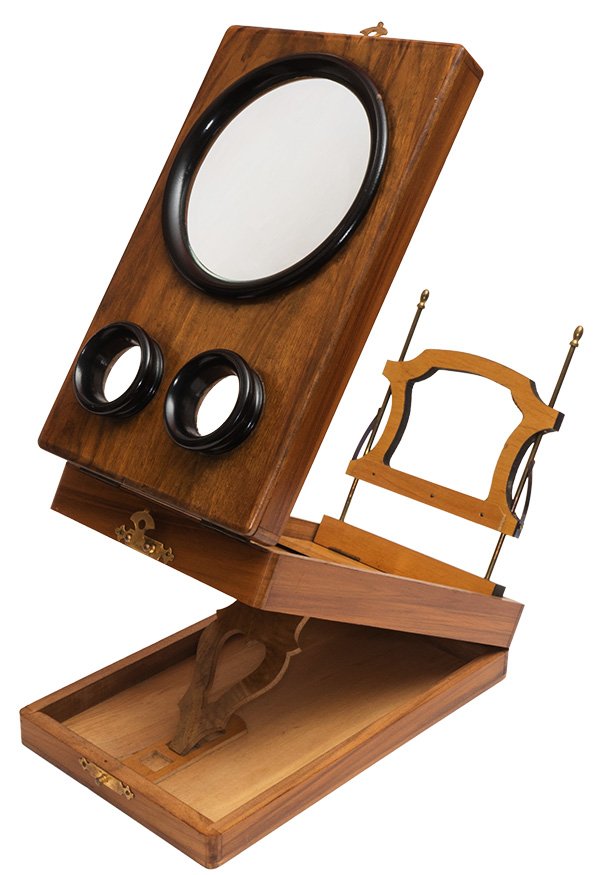
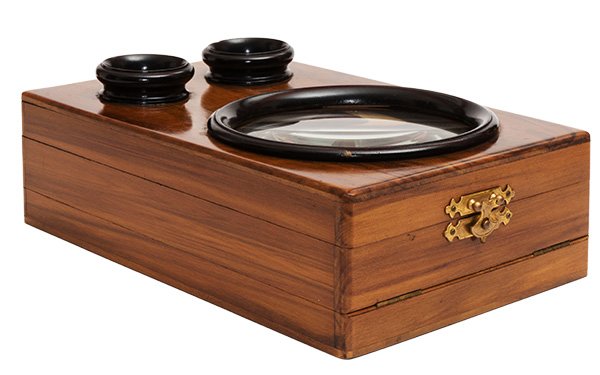
These photos were arranged in albums and also viewed individually. For this second case, a Frenchman called Charles Gaudin patented a small device in 1864, the Graphoscope, which greatly improved the viewing experience. At around the same time, the American Alvan Clark also patented something similar.
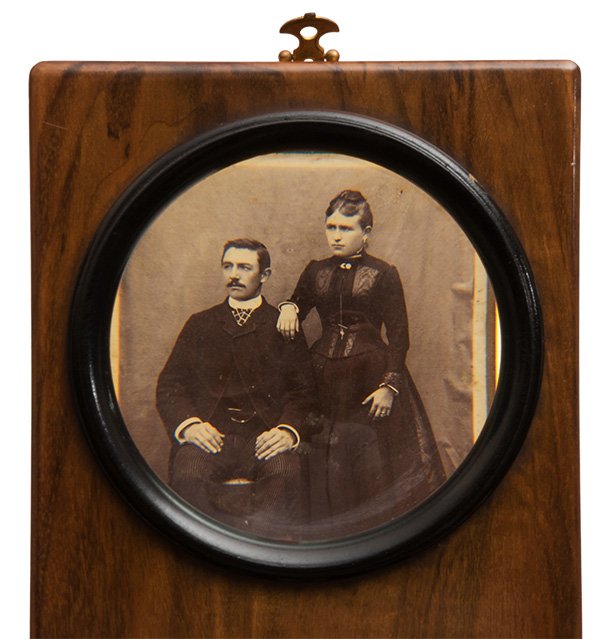
It’s amazing how the graphoscope really gives you a different feeling compared to examining the photo without it. You bring your eyes very close to the large lens, adjust the height so that the photo is in the center and the image fills your field of vision. You can see many details that would otherwise go unnoticed.
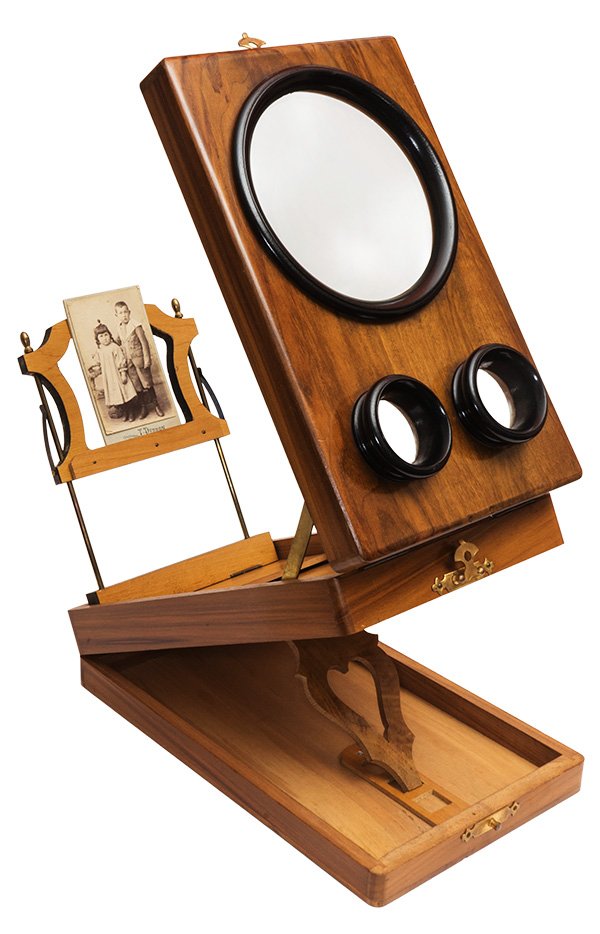
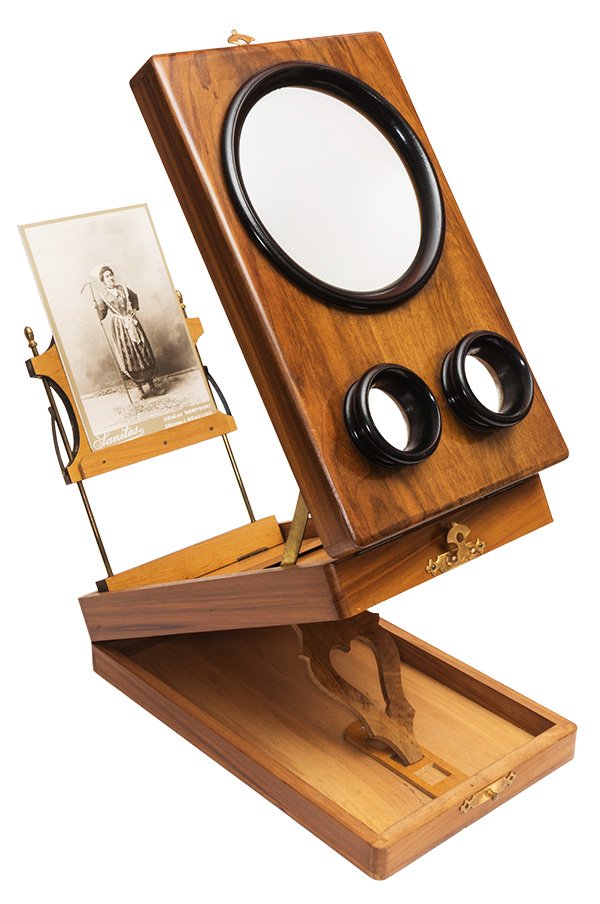
The photo above shows a carte de visite with two children. But the best thing is the Carte Cabinet, a format that only gained momentum in the 1880s, because it is slightly more than twice the size of the carte de visite. This is the case in the photo below.
Not all, but many graphoscopes are also equipped with a pair of lenses for viewing stereoscopes. There was a very strong trade in views of cities, nature, animals, curiosities in general, and also some more dedicated amateur photographers made stereoscopes of their outings and family events.
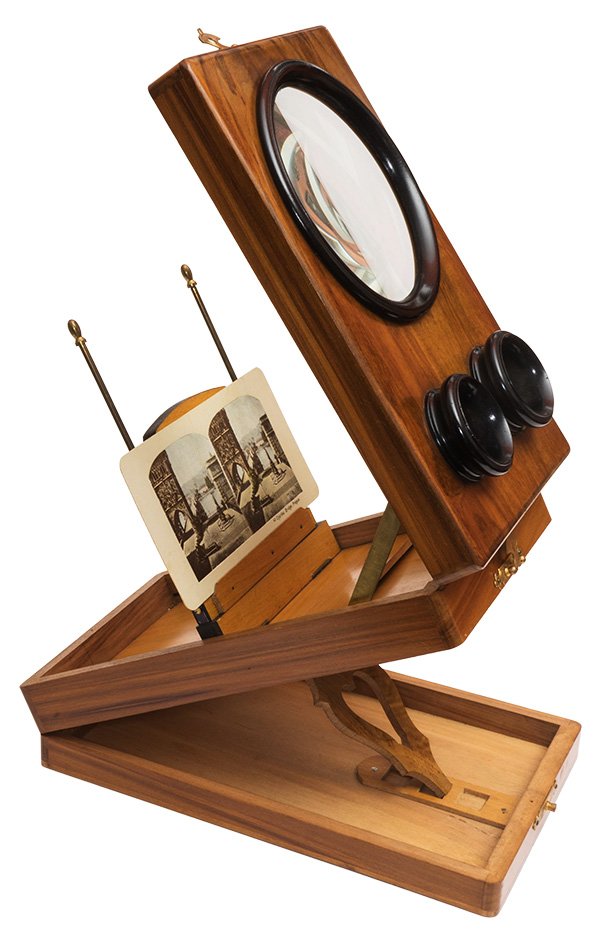
When not in use, the graphoscope closes like a box, making it very easy to store. This model from the collection is very simple. But there were also some with mother-of-pearl inlays, maché work and ornaments.
If you haven’t read it yet, be sure to follow the link and read the article on carte de visite and carte cabinet. Several examples are shown, from large studios and itinerant photographers, to kings and ordinary people. This “cartomania”, as it is often called, was extremely important even as a social phenomenon.