Serra da Mantiqueira | Victor Andrade
Solo exhibition from 02 to 31/Jan/2026
click on the photo to see it in a light box.
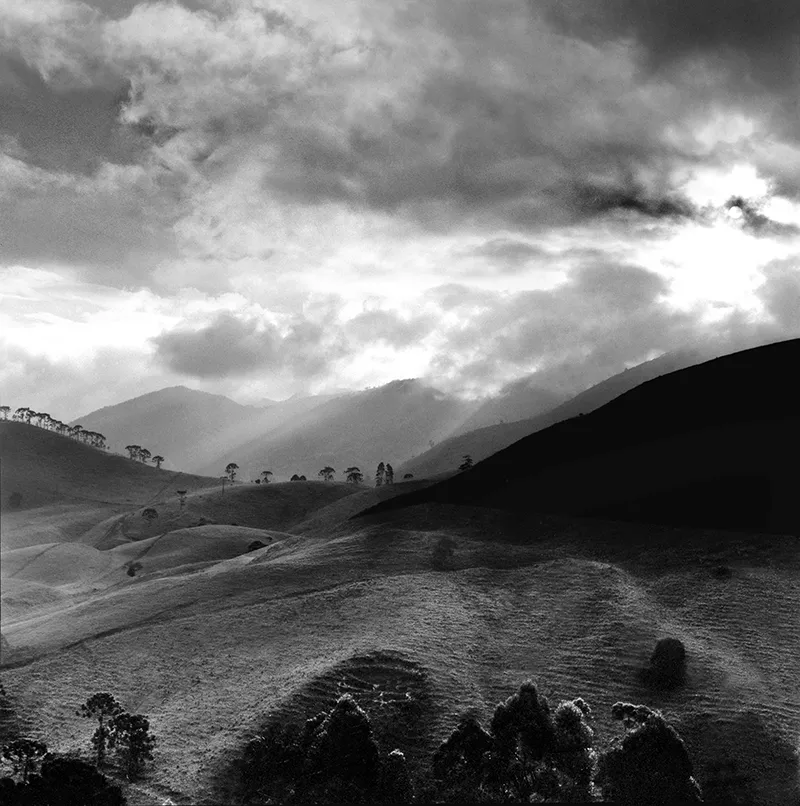
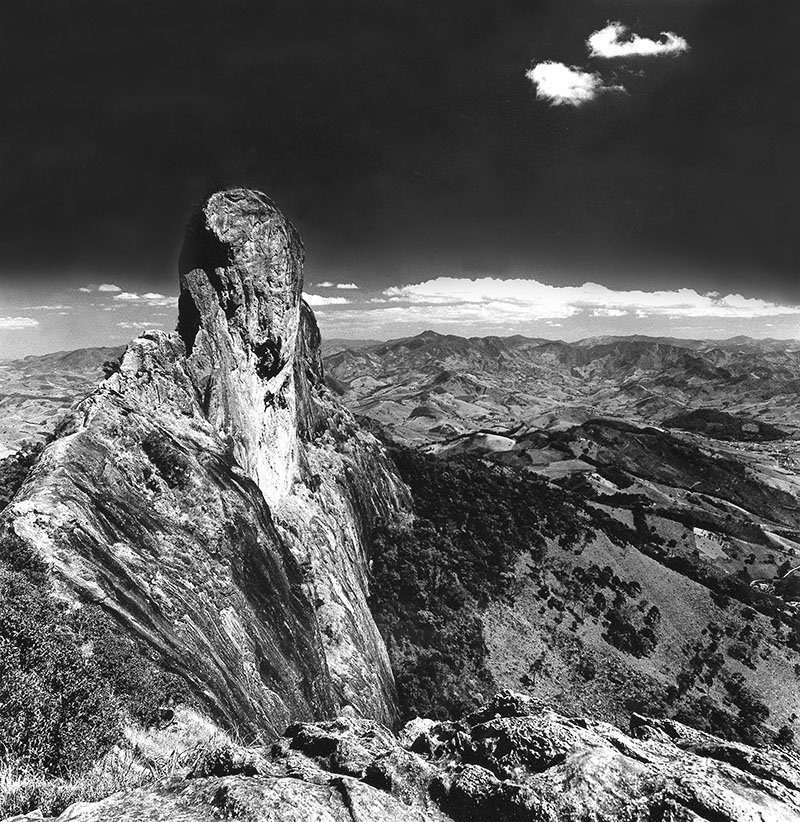
In 1974 I was already shooting professionally in 35mm, but there came a time when I needed a medium format camera. The client demanded better quality in the chrome, things were taking off and I needed to evolve my photography. I had always admired the Hasselblad camera, which coincidentally bears my name: Victor. I considered it simply beautiful. Once, during a break at an event, I approached a photographer carrying a Hassel and, curious, asked him about it. I was amazed by the safety locks so as not to hit one picture on top of the other, or not to take the magazine out without the protective slide so as not to burn the film, or not to take the picture with the little plate preventing the light from getting through. Once, I was covering Formula 1 at the Interlagos Autodrome, and Mario Andretti’s Lotus stopped a few meters away from us photographers. One of them gave me his Hasselblad to take a picture of him inside the car. I’d never held one before and, a little awkwardly, I clicked the Swedish camera.
When I left the newspaper where I worked, I got a job at a photo agency, we did technical photos and there I learned how to work with the Hassel, I saw how easy it was, a light and small camera, strong and with exceptional optics. I also saw that it required a tripod. I didn’t stay there long, because only the boss made money, so I left and went to the market to work for myself. I was very young, very green and had a lot to learn, so I went out to offer my work to agencies and publishers. My 6×6 was a Flexaret TLR that was my grandfather’s and my aunt gave it to me, but I couldn’t work with it, it was too old-fashioned and lacked resources. I went in search of a better camera. The Hassel was the dream, but very expensive. At my friend Kirio’s store, I almost bought a Zenza Bronica 6×6, with a normal Nikkor 80 mm lens and a 200 mm lens. But it broke in his hand, on the counter, while he was showing me how it worked.
I left there and went straight to the best cinephoto store in town, Fotoptica Professional. I plucked up the courage and bought the cheapest used Hasselblad I could find, a very old 500 C. I took out a carnet, as it was called at the time, and paid it off in 10 installments, which were heavy at first, but then one of the biggest inflationary periods in this country began and the installments became very light.
The first Hassel never gave me any problems, except when it jammed when I took the lens off, but that was a beginner’s mistake, you don’t take the lens off without the shutter being cocked. With it I could feel the reliability of this equipment manufactured in the 1960s. I now had my dream Hasselblad, with the normal 80 mm lens, and I began to miss a wide-angle lens, discovering how expensive and difficult it is to get Hassel lenses and equipment in Brazil.
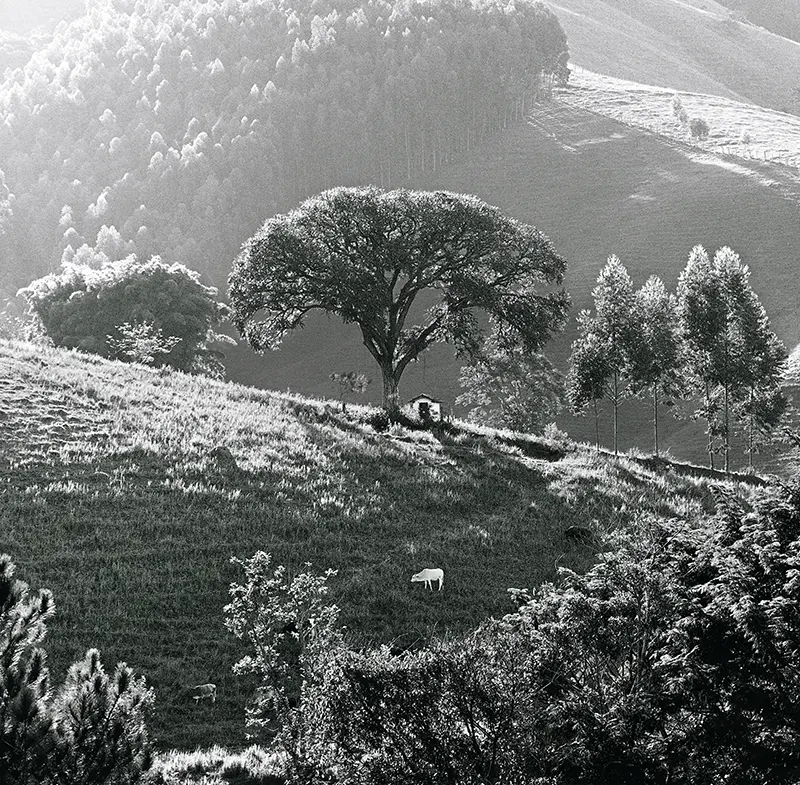
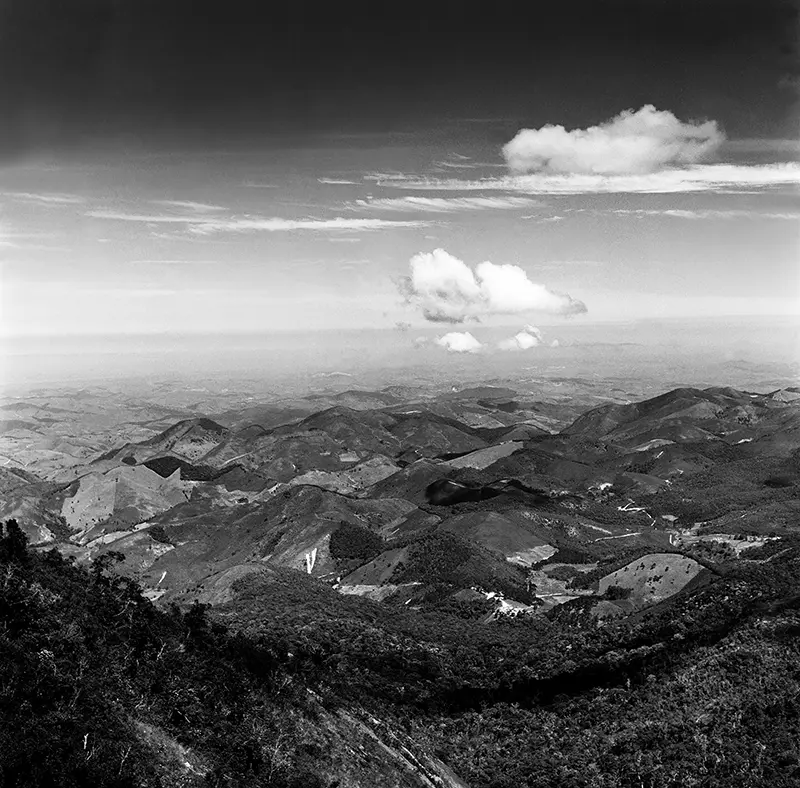
In 1982 I did a black and white nature shoot in the region of Monte Verde, MG, all with a Hasselblad. It’s a mountainous region not far from São Paulo where I lived. This shoot earned me an exhibition at the São Paulo Cultural Center and a portfolio published in the magazine Iris Foto, which was the beginning of my work with the Serra da Mantiqueira. Looking back over the shoot, I was amazed at how many great photos it yielded with just a normal lens.
My second experience shooting with the Hassel in the Mantiqueira was in Itatiaia with some friends and one of them warned me to be careful of the strong mountain wind that could knock the camera over. I crouched down to change the film magazine and the wind knocked the camera over. I tried to catch it, but I caught it on the underside of the tripod, the weight was too much and I only cushioned the fall. It hit the rock, broke the prismatic viewfinder, dented the side of the camera and the 50mm lens flapped to the ground. It wasn’t that bad, but I lost confidence in it. I went to the newspaper classifieds and bought the camera from someone who only had a 500 CM body, no back or lens, but it had a plate with Victor Hasselblad’s signature and several improvements over the 500 C I had at the time. I paid cheaply and put my lens and back on, went back to using the viewfinder that Optronic had repaired, sold my other camera and got a 500 CM, which was another important step forward.
In 1986 I was invited to an event at Importecnica, where they had a slide show with Hassel’s 6×6 projectors and a talk by photographer Sergio Jorge about his experience with Hasselblad in Antarctica. Meanwhile, some Swedish technicians from the factory were giving our cameras a free overhaul. That day I saw Hasselblad’s Forum magazine and the desire to publish there one day was born.
In 1998, Ivo, director of T.Tanaka, which now represented Hasselblad in Brazil, called me. He told me that Hasselblad’s Forum magazine wanted to publish Brazilian photographers and was recommending me to them. I prepared a portfolio with the Monte Verde photos and they took it to Sweden, and I ended up being published in 2002 in a magazine with worldwide distribution and about the camera I loved so much. The dream was coming true.
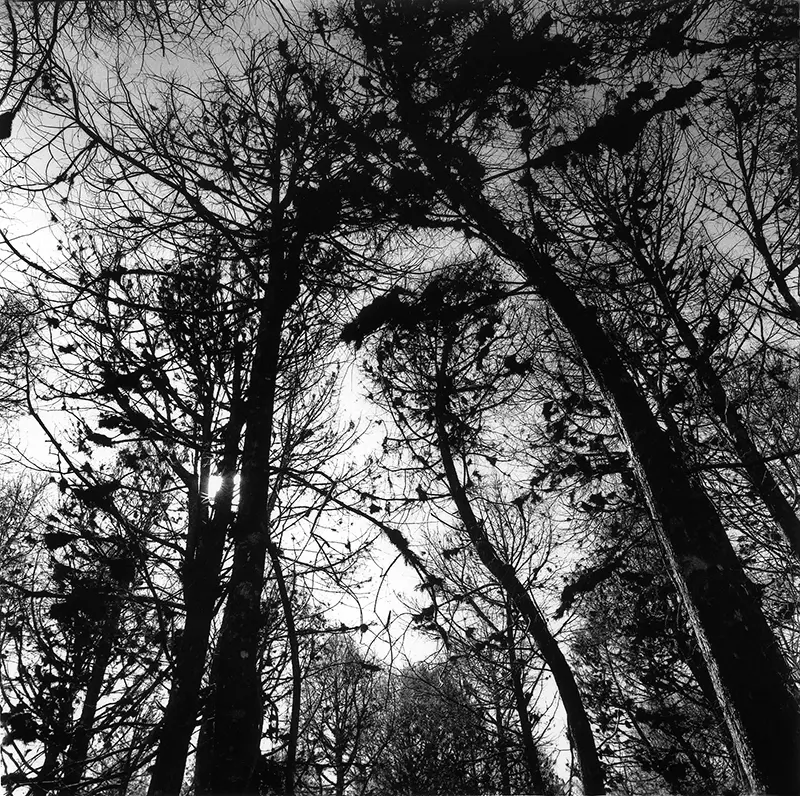
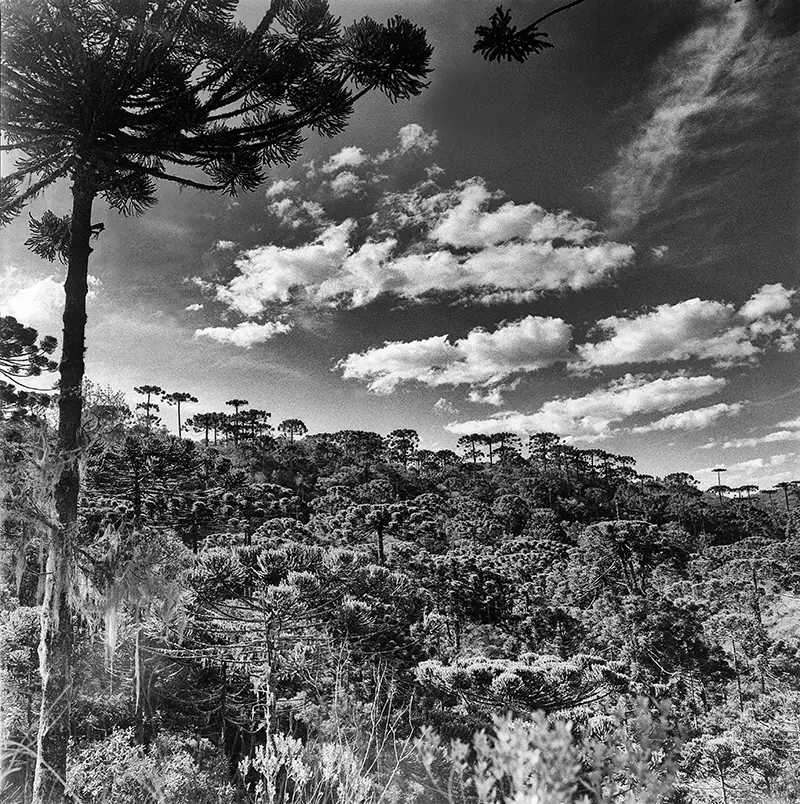
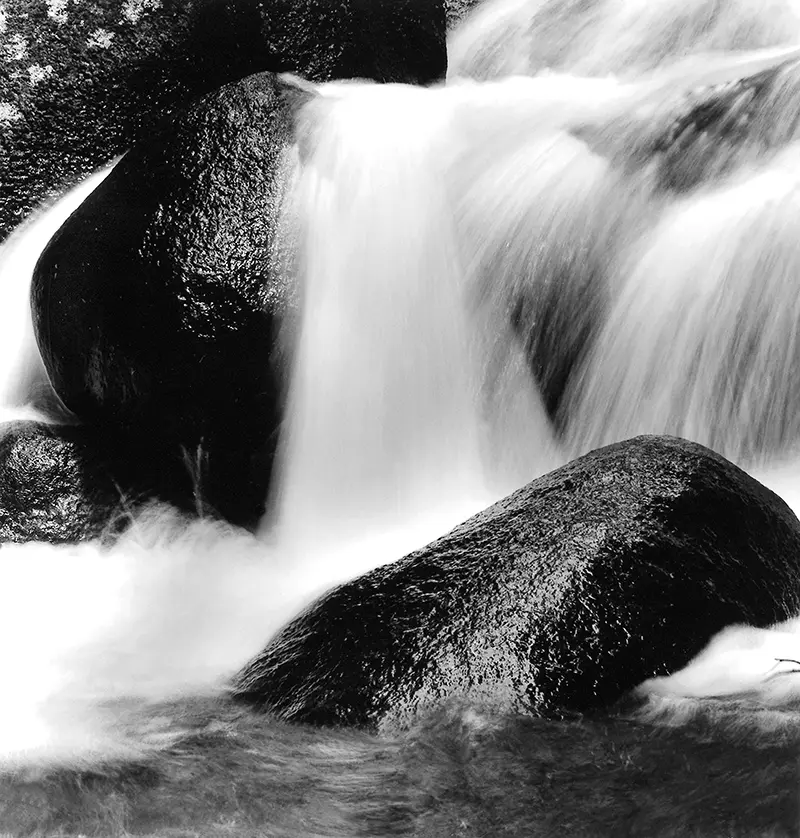
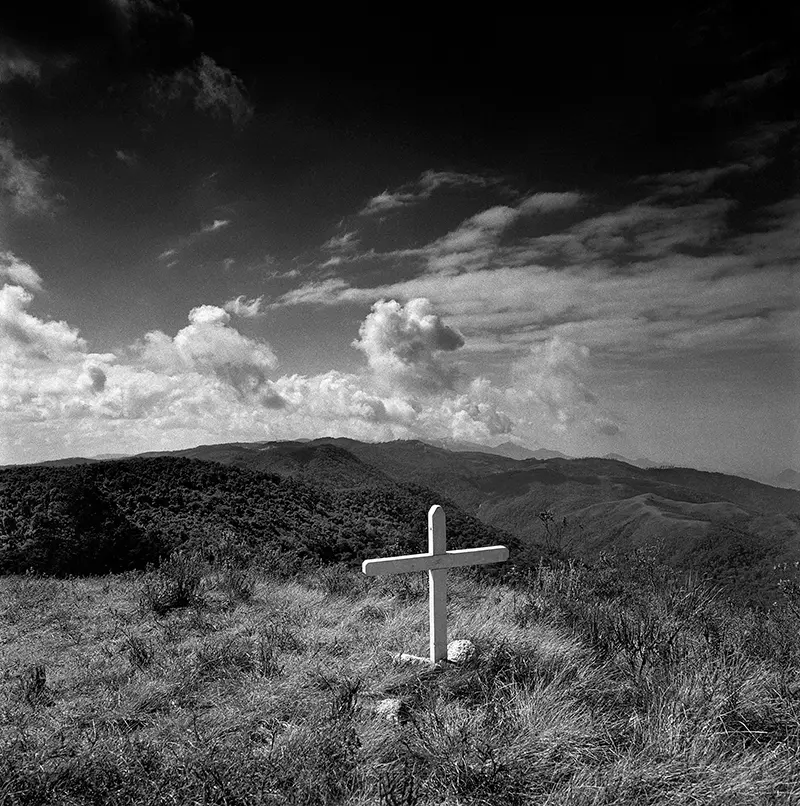
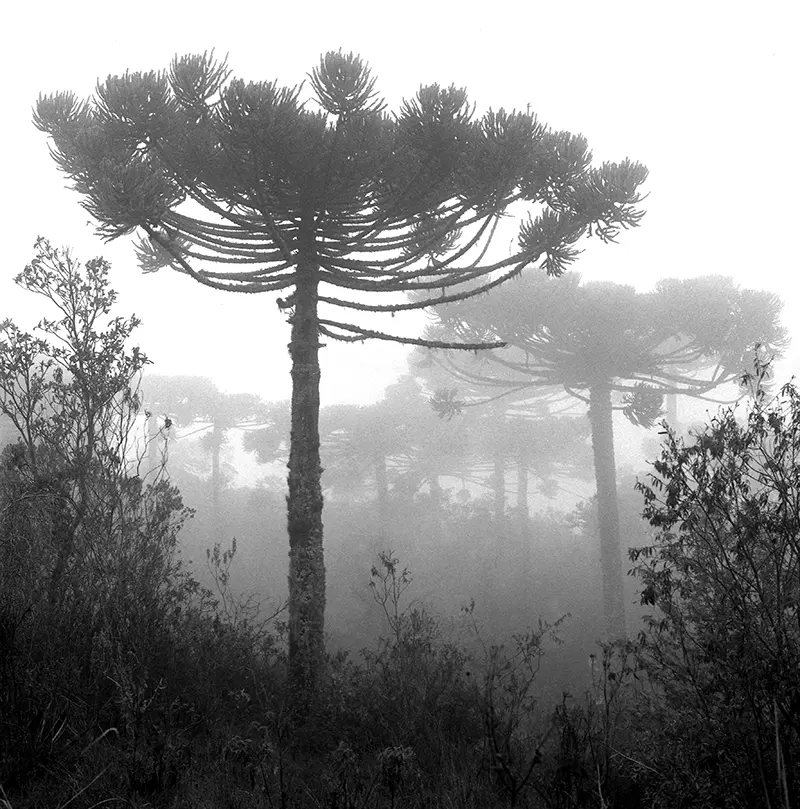
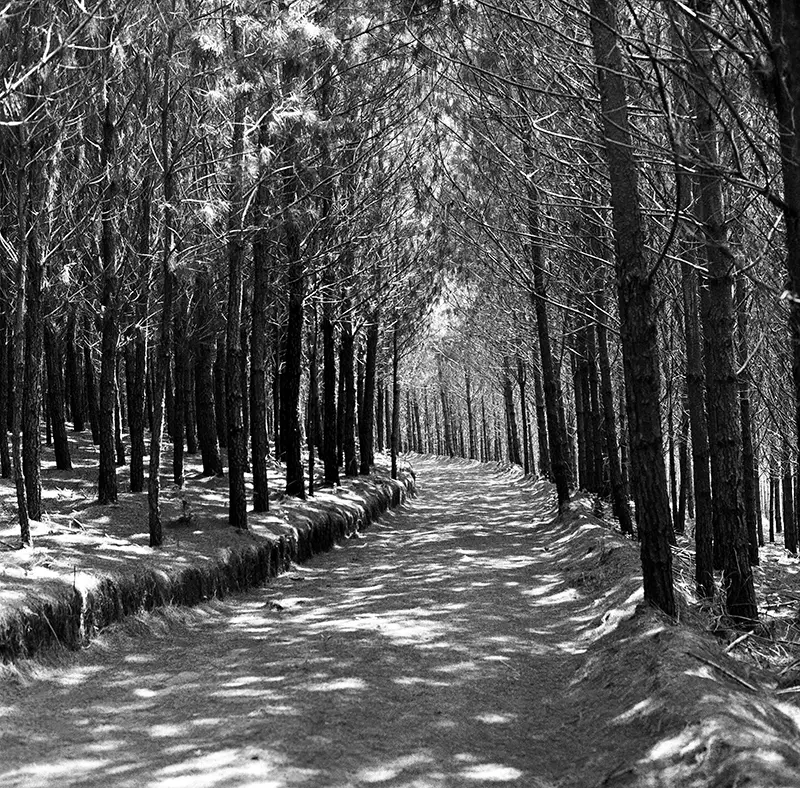
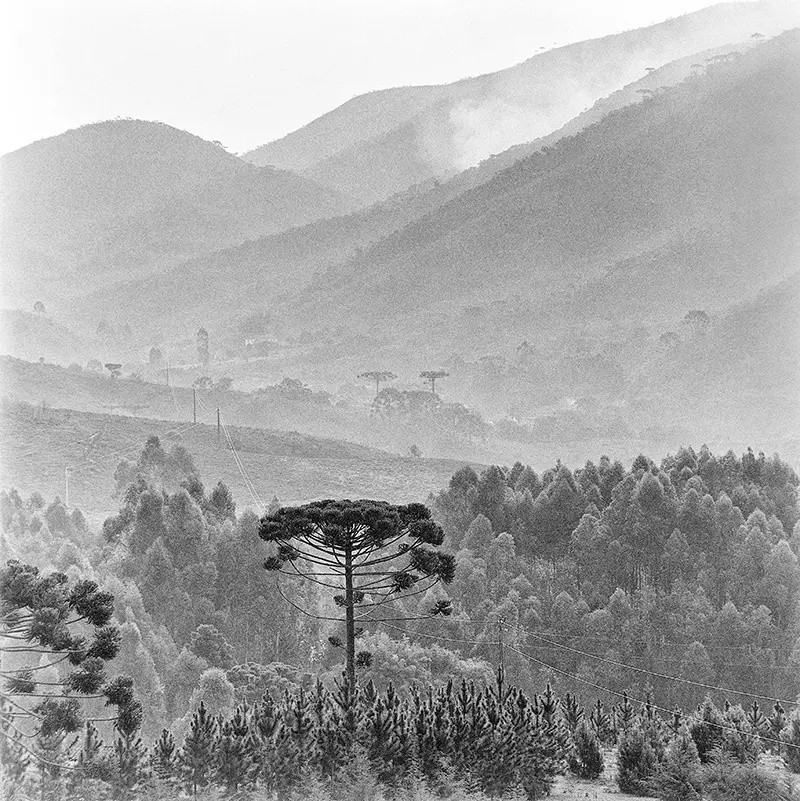
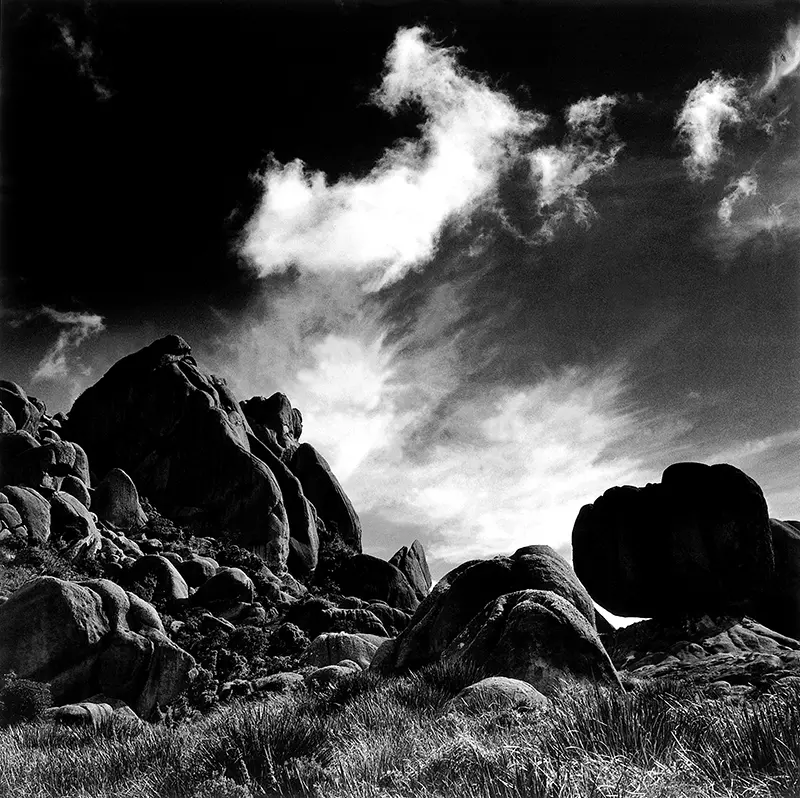
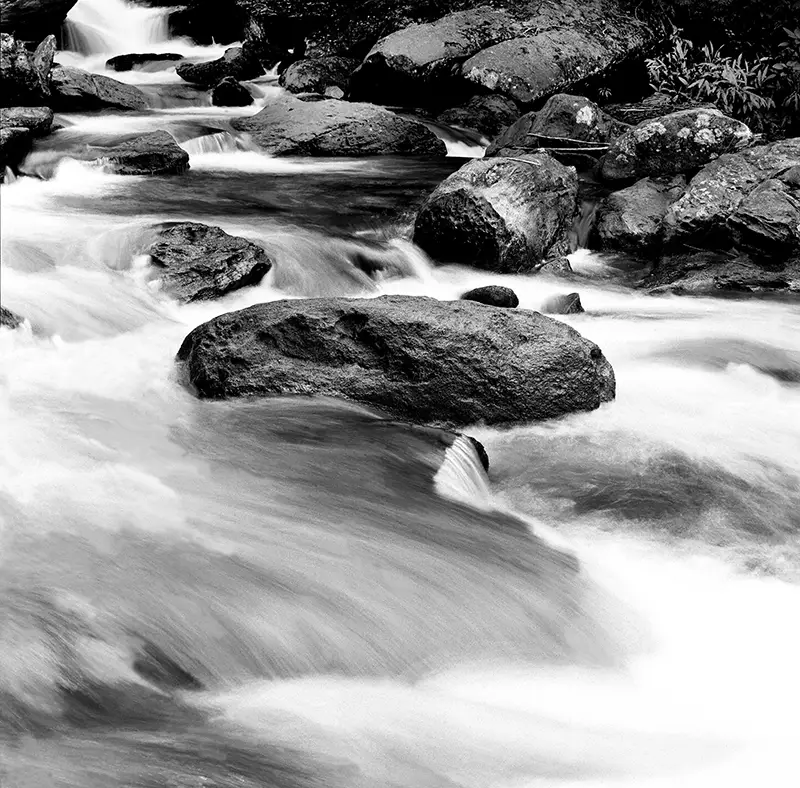
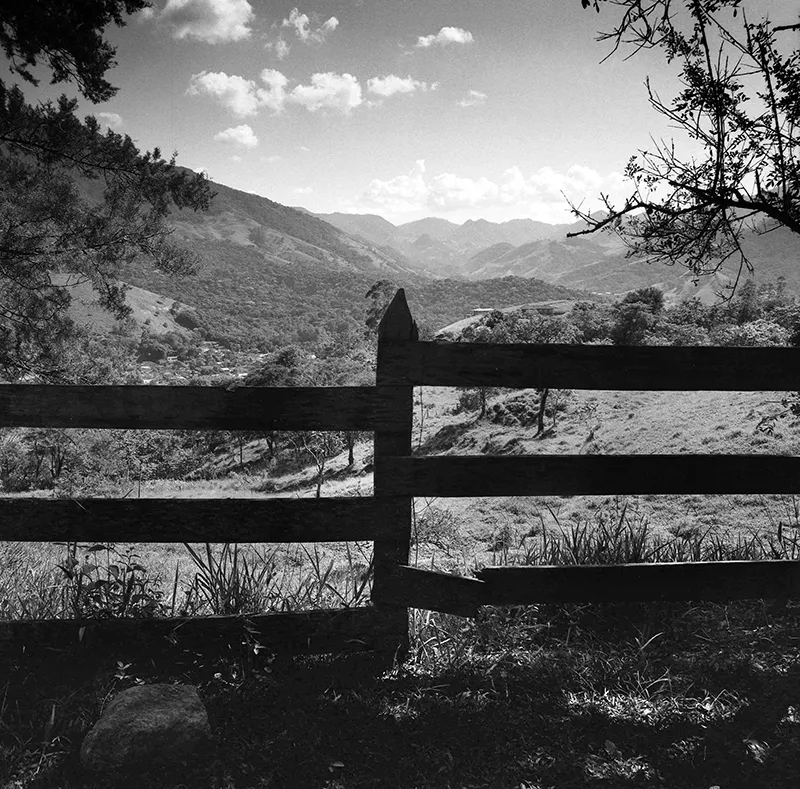
The photos in this exhibition show some of the images I’ve taken over almost fifty years. I’ve visited Serra da Mantiqueira for a long time, with vivid memories of my first trip to Campos do Jordão in the late 1950s and my trips to the Paiol Grande campsite and the Itatiaia National Park in the early 1960s, long before I thought about becoming a photographer.
I’ve been visiting the mountains all these years and the emotions and visual memories of the peaks of Agulhas Negras and Prateleiras, Pedra do Baú, the araucarias, forests and birds, the rivers and their rapids with pools and waterfalls are strong. There’s no forgetting the cold and frost in June or the temperamental summer rains, the high altitude fields, their low clouds with the rays of sun that pierce them and all those things that photographers love to see.
Anyone who visits the Mantiqueira mountains knows this enchantment and sense of well-being, this thinner air that lifts the spirit as we climb in search of poetic and energetic revitalization.
I started this work in 1982 when I felt more strongly identified with the peace and quiet of the landscape, and it was also an opportunity to test my knowledge of the technique I was studying in black and white and adopted as a language. From then on, especially from the late 1990s to the mid-2000s, I went in search of new photos whenever I could on dozens of trips throughout the Mantiqueira mountains. Traveling and photographing these paths, from the most remote to the most touristy spots, was a good adventure and I realized that the mountains are still beautiful and untouched in some places, but threatened in others.
About Victor Andrade
Victor Andrade has been a photographer since 1974 and is a journalist with a degree from Fiam. He worked as a photographer at Jornal da Semana in Pinheiros between 1975 and 1978, where he started out as a professional and then went freelance for various clients. He has collaborated with various publications, companies and press offices and has published in several magazines.
He focuses on nature photography, as well as magazine and newspaper features, industrial photography and architecture. His work has been published in Pentax Family in Japan, Forum Hasselblad in Sweden, Fotografe Melhor, Iris Foto Magazine, Fotóptica Magazine, BW&Color and PB MAG. In 1999 he produced a photographic book for VCP about the Salto Paper Mill, the oldest paper mill in Brazil, all in 6×6 with the Hasselblad in black and white. In the same year, he began working with Serra da Mantiqueira, also in black and white and Hasselblad, and worked with the companies Maxion, Votorantim, Thyssen, Deicmar and Furnas, among others with Hasselblad cameras, mostly on transparency positive film. Hasselblad made its mark in the 80s, 90s and mid-2000s, when digital technology came along.
He worked with Hasselblad 500C, 500CM, 501C, SWC and XPan cameras. Zeiss 38, 40, 50, 60, 80, 150 and 250 mm lenses.