Bergheil | Voigtlander
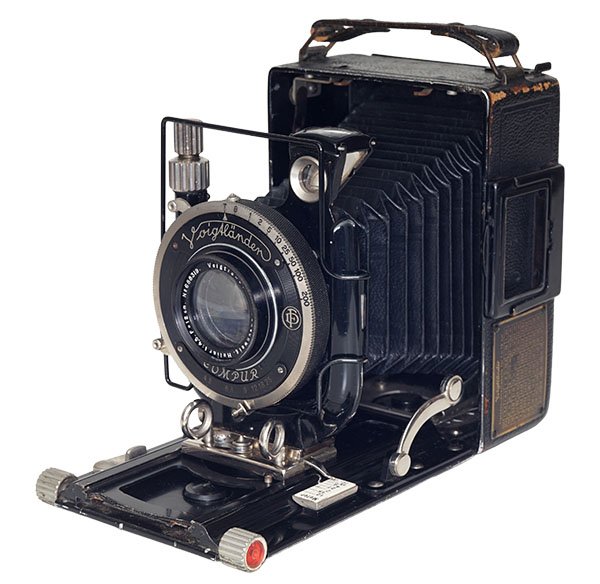
The Voigtlander Bergheil is often considered the pinnacle of the era of folding plate cameras. These were cameras with a front that looks like a drawbridge that opens so that the lens can move forward while extending the bellows. There have been dozens, perhaps hundreds, of cameras with this configuration, but the Bergheil was something special.
Produced roughly between 1912 and 1940, it was Voigtländer’s flagship model. Its concept referred to the imagery of mountain photographers, hence the name “Bergheil”, a traditional mountaineers’ greeting meaning “Greetings to the mountain”, as berg is mountain in German.
In the 1920s and 1930s, “mountaineering” was the ultimate symbol of health, courage and technical mastery in German-speaking culture. But despite its name, Voigtländer wasn’t just targeting the few people who climbed mountains; it was selling “robust reliability” and “precision”. The reference was a clever way of emphasizing its small size and the many features it offered.
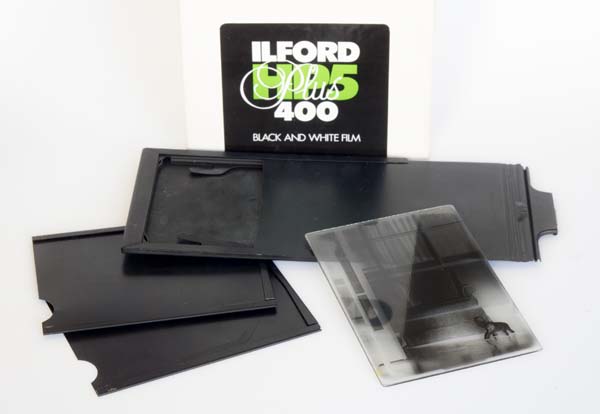
It was a camera designed primarily for use with glass plates. There were adapters for 120 film or at least for flexible film in sheets, but the main use was with glass plates. Considering the practicality of flexible film, it’s surprising that until the end of the 1930s glass was still such a strong media for photography.
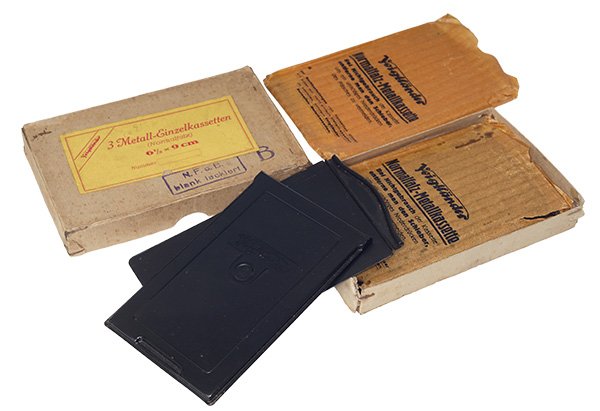
But even after almost 40 years of the existence of roll film in various formats, the cameras that used them remained marked as cameras for the amateur photographer and without any technical or aesthetic ambition. The Bergheil was a “mini” large camera with which the professional or dedicated amateur could differentiate themselves and position themselves in the trenches of great art, far from the simple “button pushers”.
It was produced in 9 x 12 cm and 6.5 x 9 cm formats. The latter is more interesting because the 9 x 12 cm market offered options with similar specifications – such as the ICA Ideal and Zeiss Juwel offering industrial perfection – but the 6.5 x 9 cm Bergheil carved out a unique space. It offered the full experience of professional movements in a format that felt personal, agile and discreet.
Bergheil Deluxe version
Much sought after by collectors today, the Deluxe version is covered in fine green Moroccan leather with green bellows. It was a status symbol in the 1920s. In practical terms, all the mechanics and optics are the same in the black leather version that was the standard one. The black version ended up being preferred by professionals because it was more affordable, durable and easy to maintain. Many luxury Bergheils today have a green color that is hard to notice, as they have lost their color over time. But it’s still the desirable Bergheil de Luxe version.
Features
1- Interchangeable lenses
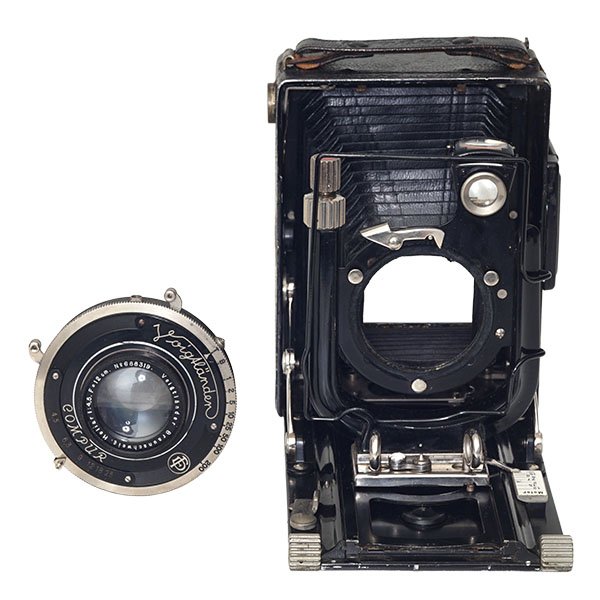
The bayonet lens mount is its most distinctive technical feature. Unlike most plate cameras, where the lens is fixed, the Bergheil used a proprietary bayonet system. This allowed photographers to choose between different optics (such as a wide-angle or a longer Heliar) depending on the subject. Today, this isn’t much of an advantage as these extra lenses are very hard to find.
2- Double extension bellows
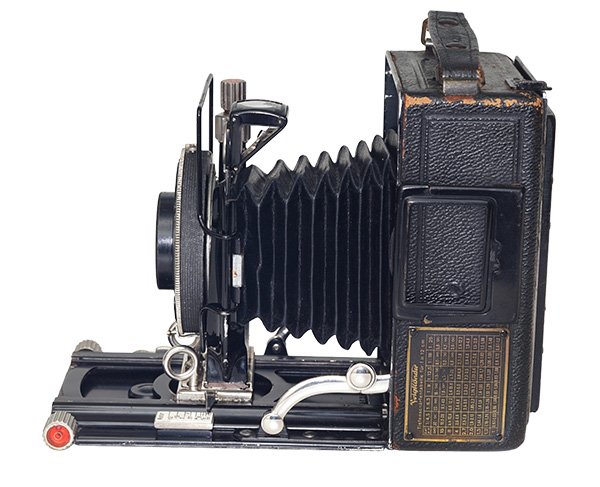
As a logical consequence of interchangeable lenses, the Bergheil bellows allowed for extra variation. It can be extended enough to allow 1:1 macro photography, a rare capability for a portable camera of the time and interesting even for those who wouldn’t use a longer lens. I avoid doing this because the camera is already close to a hundred years old and the bellows, which is always folded, might feel a bit strange. But it can advance more than twice as far as you can see in the photo above.
3- Movements
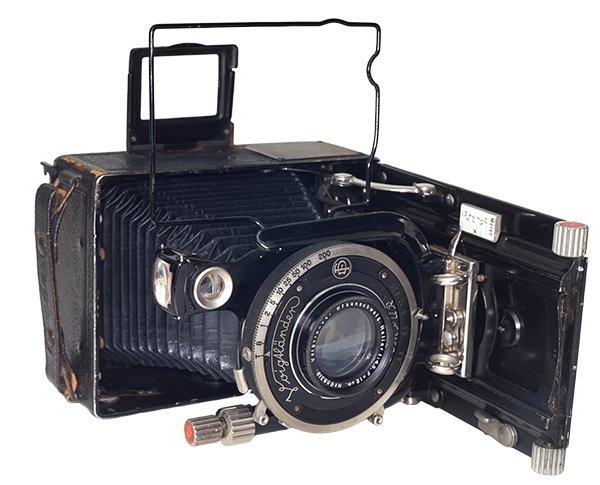
Bergueil allows you to raise and lower the lens plate to correct the perspective (perfect for photographing mountains, trees or tall buildings without “tilting” the camera). This is quite common on folding plate cameras, but what is rarer is transverse movement: moving the lens to the left or right. It may seem like a useless move, but in the case of a landscape format photograph, ends up behaving like a front raise/fall and the vertical lines remain vertical even in this horizontal format.
On the Bergheil, the two movements are achieved in a precise and elegant way by acting on the buttons which, in the photo above, appear at the bottom left of the shutter. The protruding one acts for horizontal movement and the inner one for vertical movement.
To ensure precision in both cases, Bergheil has two very precise bubble levels, as they are fixed. One is on the button that moves the lens horizontally and the other is on the button that focuses the lens on the left. You can see the red coloring in both cases in the photo above.
Most models in this category came with a rotating bubble level and this almost always meant a loss of precision. With two fixed bubble levels, whatever the frame, landscape or portrait, you can guarantee that the horizon will be perfectly flat – vital for “Renaissance” precision in photography.
4- Heliar
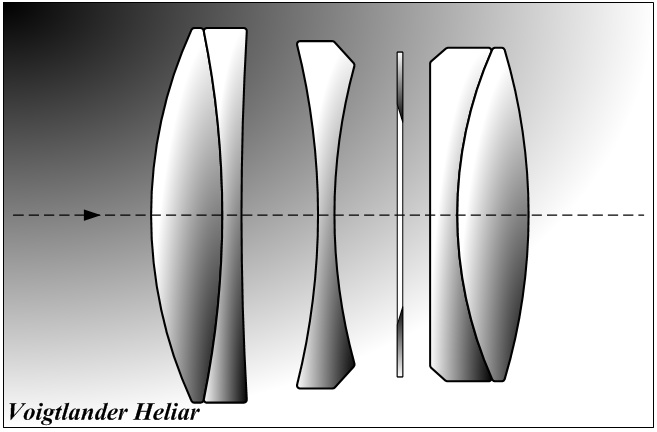
Bergheil is inseparable from the Voigtländer Heliar lens. Created by Hans Harting in 1900, the Heliar has a 5-element design (unlike the 4-element Tessar). The rendering is world-renowned for its “creamy” transition between sharp and blurred areas. While a Zeiss Tessar is “critically sharp”, the Heliar is “artistically sharp”. It was the lens of choice for portraits and landscapes because it lacked the harsh, clinical contrast of later lenses.
5- Shutter
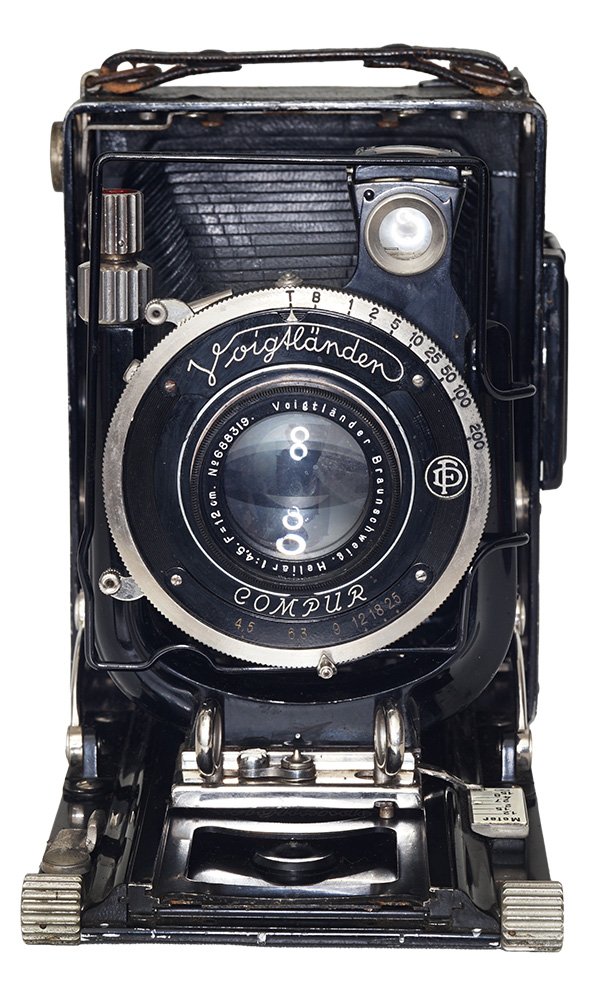
The Bergheil in the collection was made in 1928 and already has a Compur rim-set shutter, which refers to the ring on which the speeds are marked. The previous ones were of the dial set type and featured a small disk at the top of the lens. The transition took place towards the end of the 1920s. The speeds are T, B and from 1 s to 1/200 s.
6- Focusing and framing
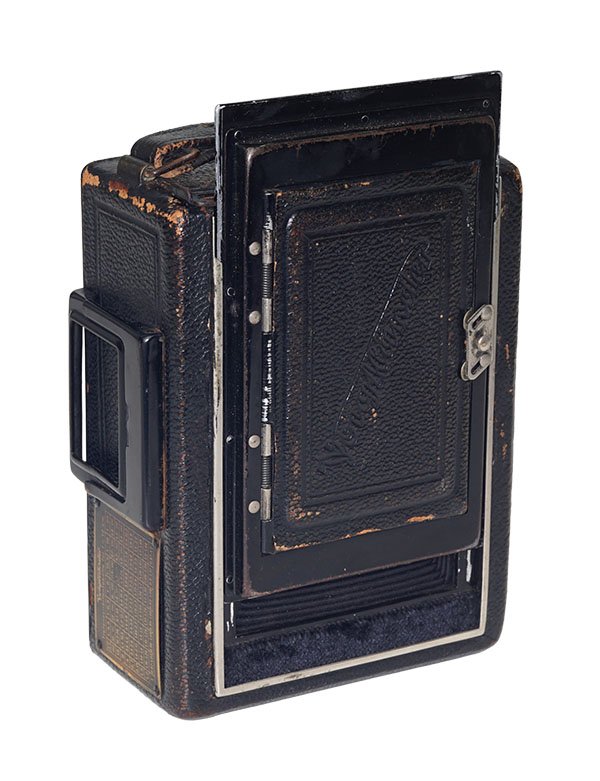
Focusing and framing can be done, as in a view camera, through the ground glass on the back. The glass holder, with the usual light-protecting flaps, needs to be removed and the plate holder, inserted by sliding it along the rails as shown in the photo above.
The camera also has a rotating mirrored viewfinder, which is practical but offers a very small image, and a wire sports viewfinder that is easier to use. In both cases, the focus must be set by estimating the distance and adjusting the scale on the base of the camera.
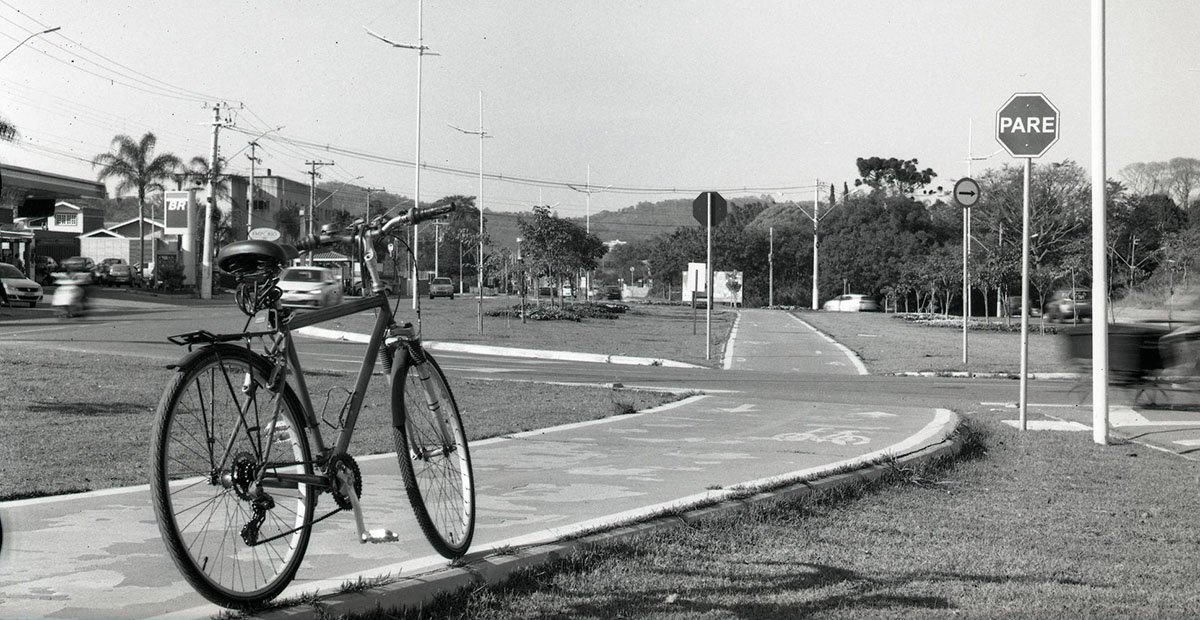
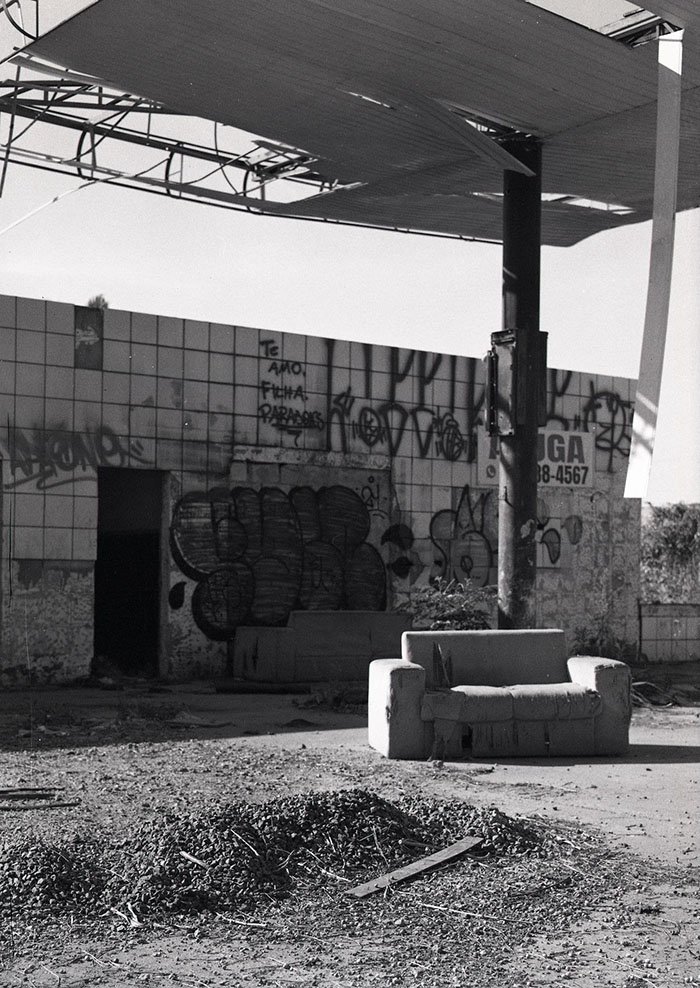
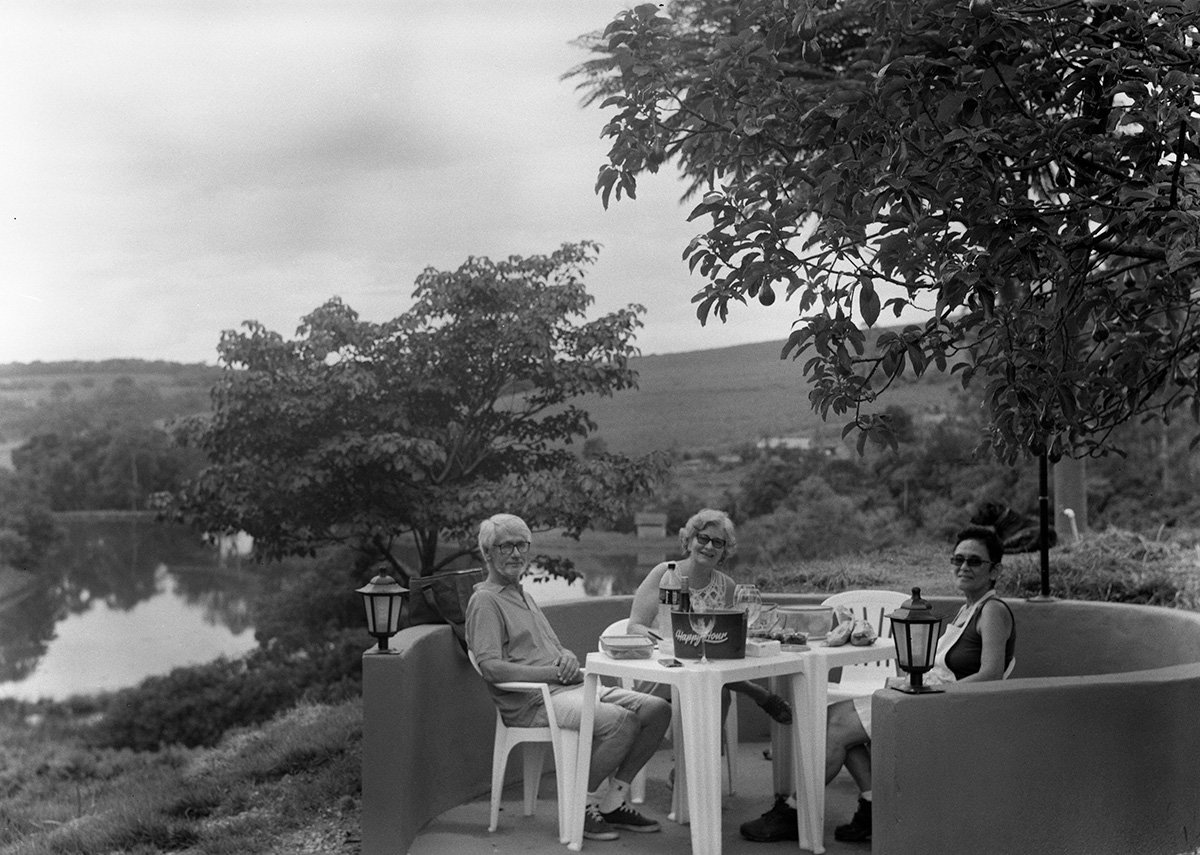
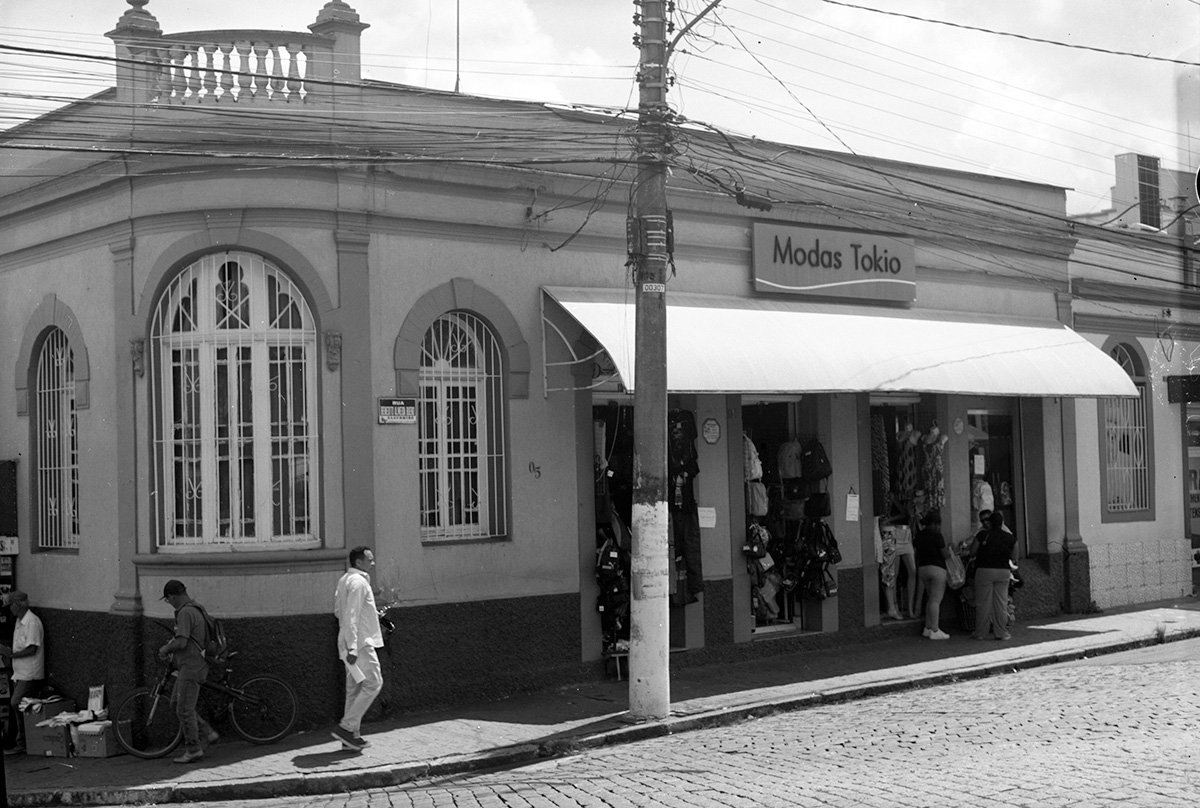
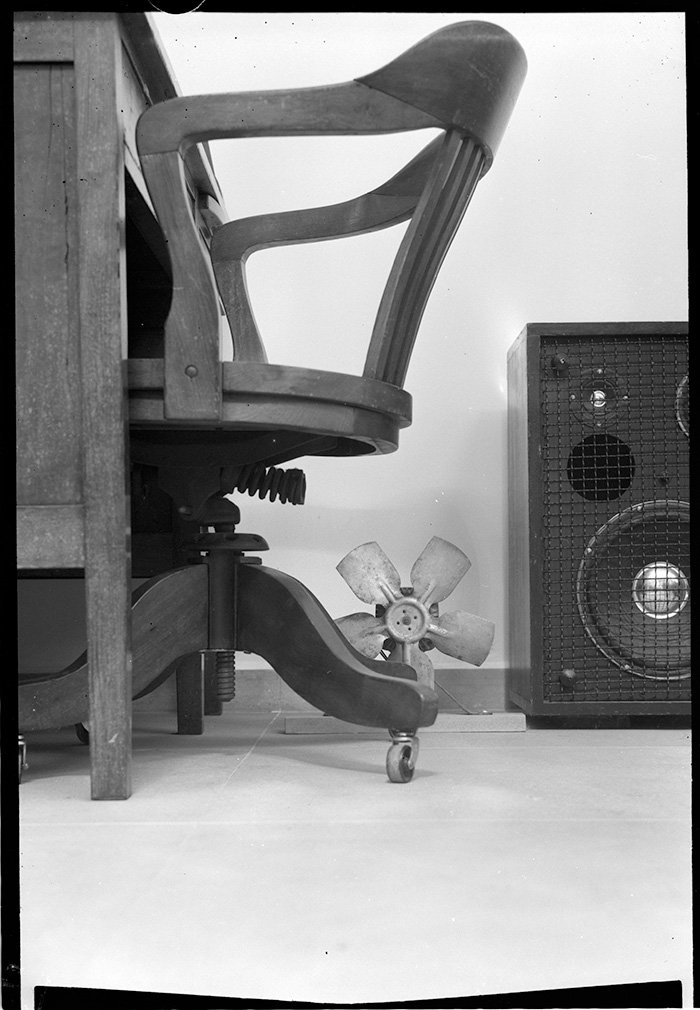
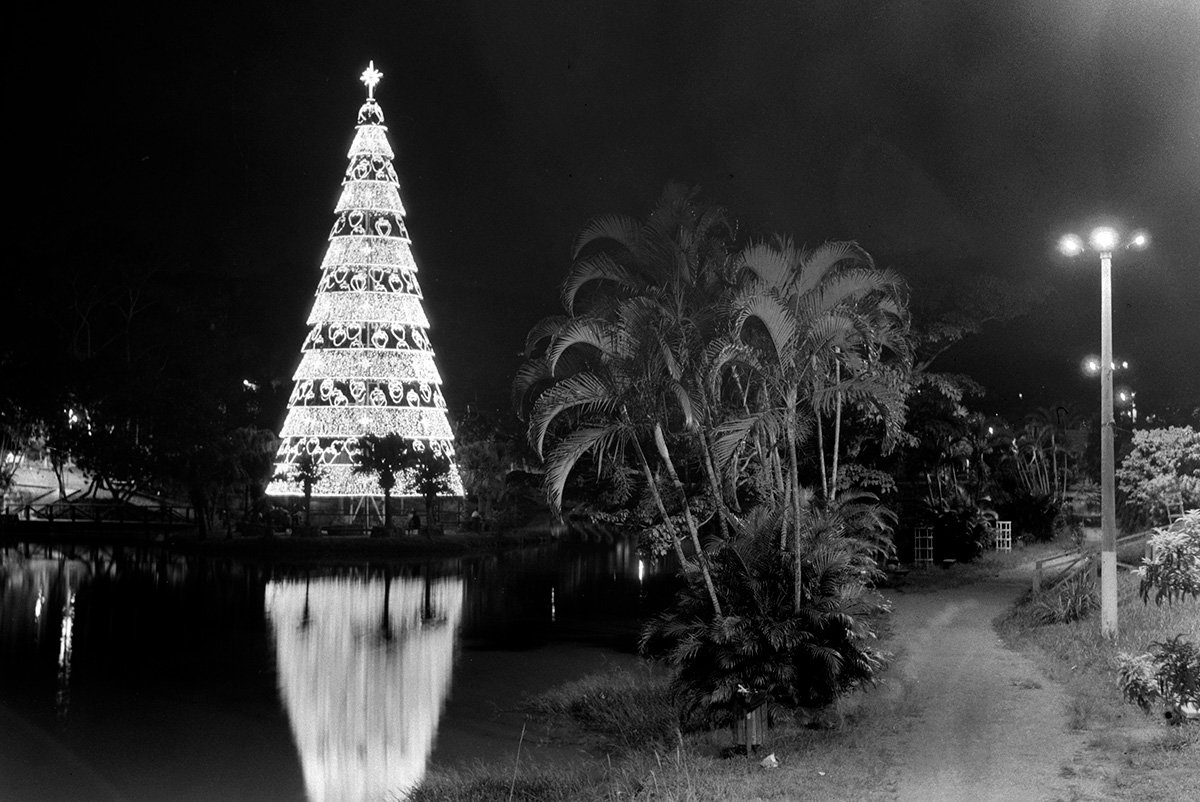
Photos taken with this Bergheil