The Science of Art | Martin Kemp
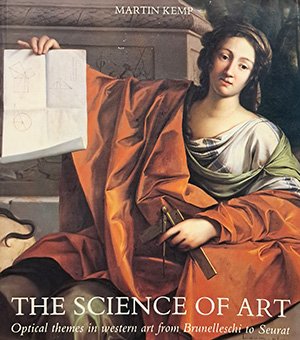
There are many books that cite or talk about the journey that, starting at the end of the Middle Ages, invented space, perspective, nature, landscape, and then culminated in nature reproducing itself in photography. Normally the subject is restricted to a quick introduction with a few examples that are repeated everywhere. But here Martin Kemp provides a very rich and detailed itinerary of this journey. Added to the bibliographical references, it really is a mine for anyone who wants to dig deeper into the subject.
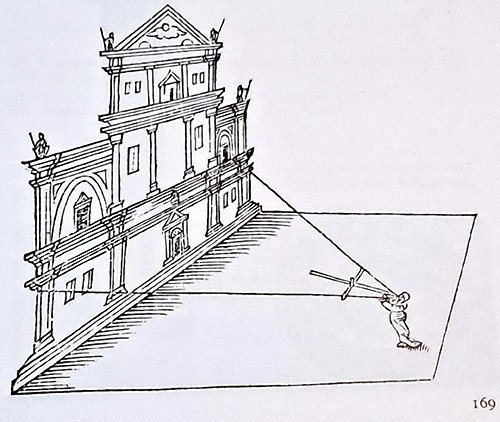
The book has three parts. The first deals with the whole effort to systematize the representation of space and its objects in images. The focus was on enunciating laws, relationships and procedures that could guide the artist in rendering a convincing drawing of an environment, a body or a landscape.
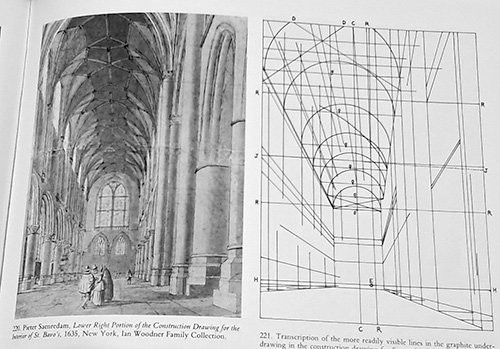
It was more a desire to decipher the code in which the world was created. There was a basic assumption that there was a mathematical logic that would allow the artist to remake and even surpass nature. But Kemp doesn’t go into the philosophical discussion of the Renaissance. His aim is more of an inventory of the techniques, their theorists and also to analyze some works and how they were informed by this approach to the problem of representation.
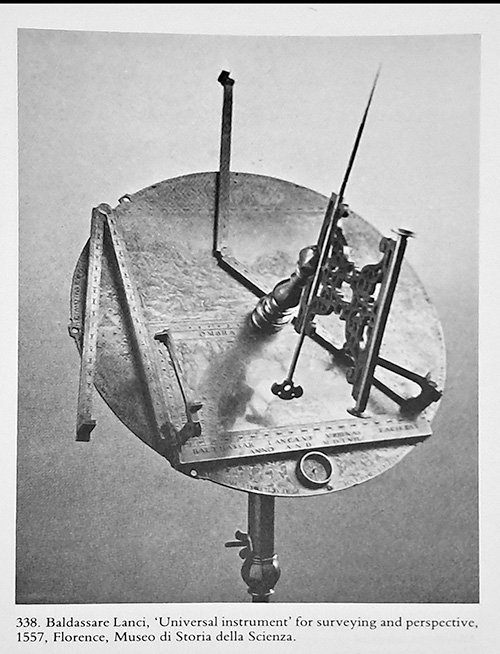
The second part deals with the instruments created for measuring and drawing. They are many and of the most varied types. Far beyond what is normally found in books on the subject.
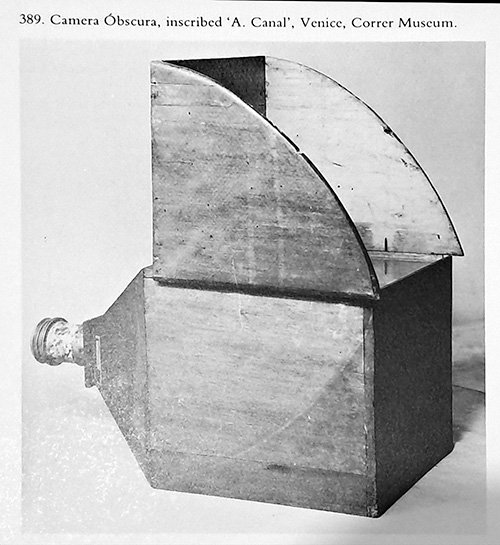
Optical instruments, such as the camera obscura and camera lucida, and later photography, emerged as a natural consequence of this search for retinal representation. Curiosities and tricks such as anamorphic, animated and three-dimensional images are also discussed.
The third part is on the subject of colors, from Aristotle to Newton and his successors.
It’s a very interesting book because of its scope and very broad, clear and systematic approach.