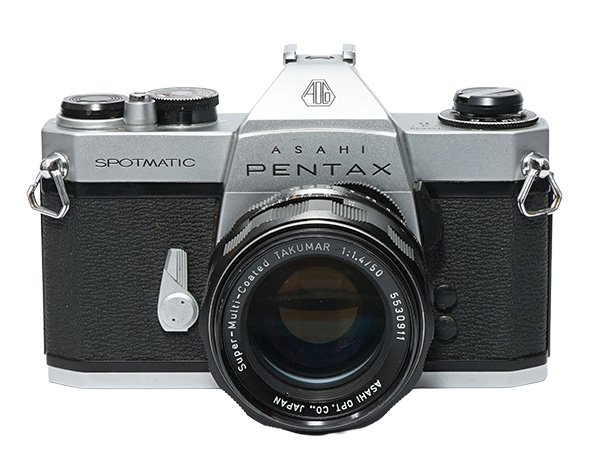
Pentax Spotmatic | Asahi Pentax
Pentax had a rather late entry into photography. It was founded in 1919 in Tokyo as Asahi Kōgaku Kōgyō G.K and initially produced lenses for spectacles. It wasn’t until 1930 that binoculars and photographic lenses became part of its portfolio.
Japanese industry was the target of a conscious policy of accelerated modernization of the country. Until the 1850s, Japan was culturally very sophisticated but had not been touched by the industrialism that was flourishing in Europe. The organization of society was still somewhat medieval. It is therefore surprising that it came to completely dominate the global SLR camera market from the 1960s onwards. For a closer look at this transformation, visit the Nikon F room.
Asahi Kögaku was an innovator. It launched the Asahiflex, the first Japanese monoreflex in 1952. It was still a camera with a waist level finder. But as early as 1957, it was also the first of the Japanese cameras to incorporate a pentaprism for eye-level viewing and the right image direction. That’s where Pentax came from, combining “pentaprism” with the X for “Asahiflex” and probably also taking the Contax name from Zeiss Ikon, which was a very prestigious brand worldwide.
Spotmatic
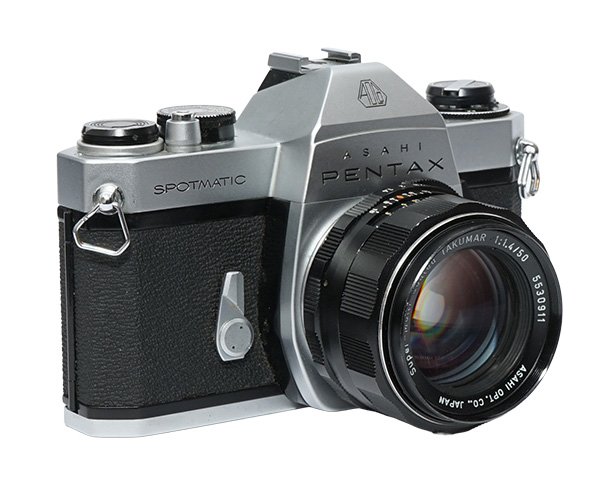
The Asahi Pentax Spotmatic (SP) was launched in 1964 and was a milestone in the industry. The camera offered through-the-lens metering. But it was of the type known as stop down metering, which means that you have to close the iris to the selected aperture and only then does a needle show, taking into account the shutter speed, whether the exposure is sufficient or not. The light meter can’t measure the light with the lens wide open and adjust for the fact that at the moment of clicking the iris will be closed.
M42 assembly
A very important step with the 1964 Spotmatic was the adoption of the M42 standard for mounting the lens. This is a 42 mm diameter thread. It was developed in East Germany by VEB Zeiss Ikon and Kamera-Werke (KW) in 1949 for the Praktica and Contax S cameras. In isolation, this is nothing special, but the important thing is that the distance from the flange to the film was also standardized. In the M42 standard, this distance is always 45.5 mm for all cameras/lenses.
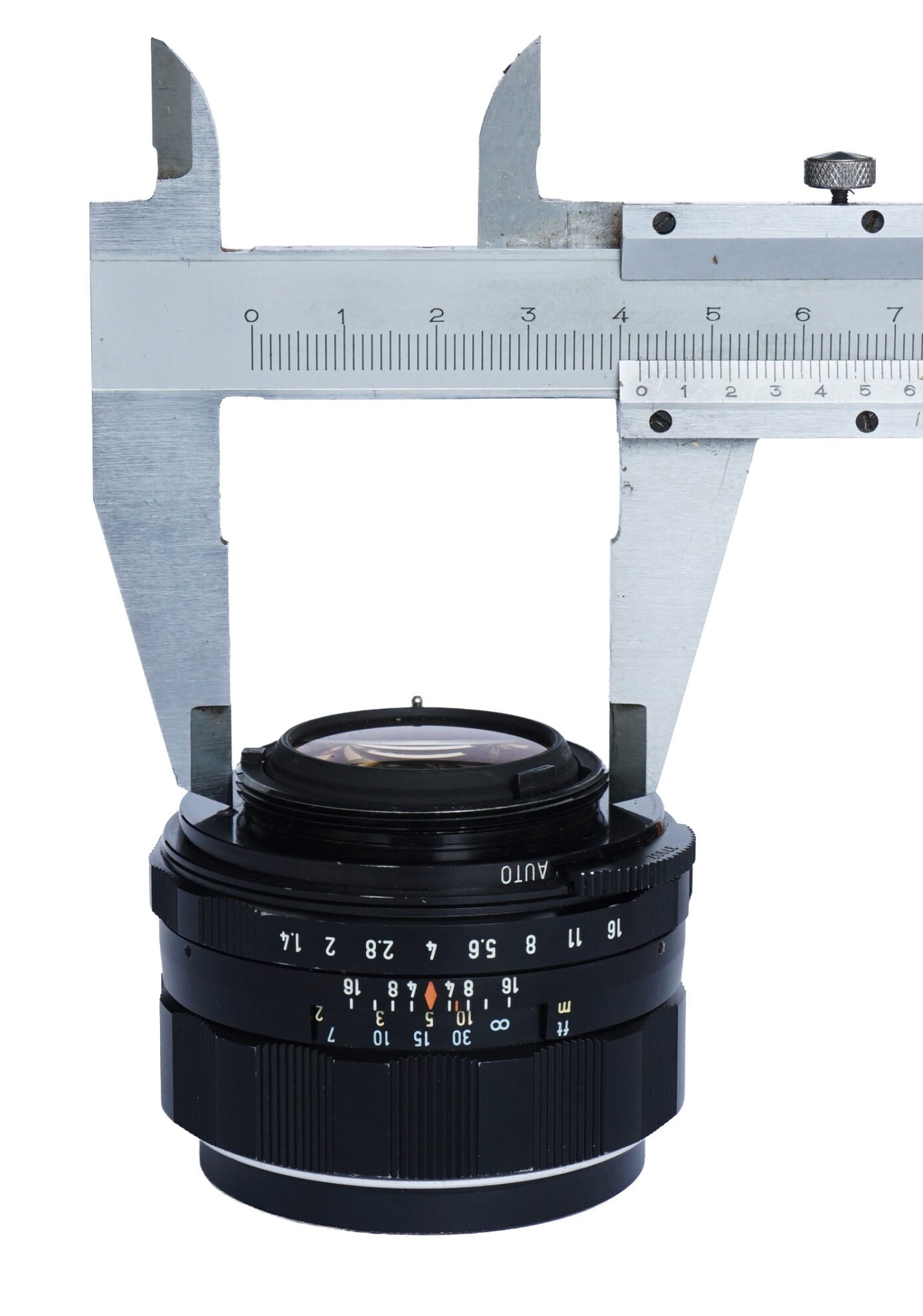
This is the distance that allows enough space between the lens and the film to accommodate the mirror at 45º to allow a view of up to 100% of the photographed frame and still leave room for the mirror to swing upwards to allow the light to pass through at the moment of the click. This allowed a system to be shared between several manufacturers and it was possible to mix optics and cameras from the most diverse origins.
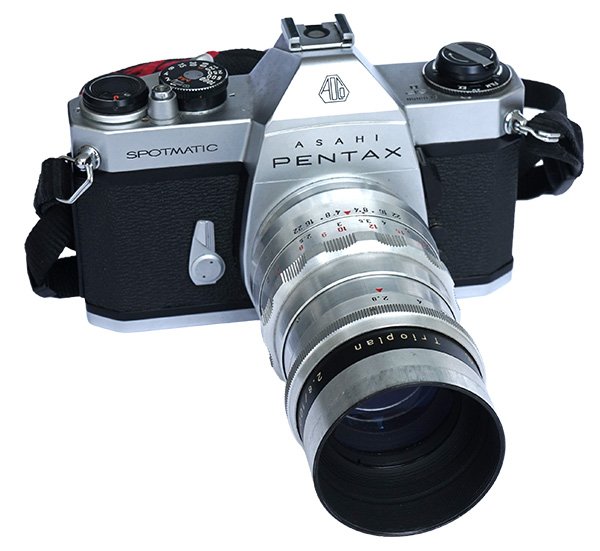
For example, in the photo above is the Spotmatic with a super cult Trioplan 100mm f/2.8 lens made by Meyer Gorlitz.
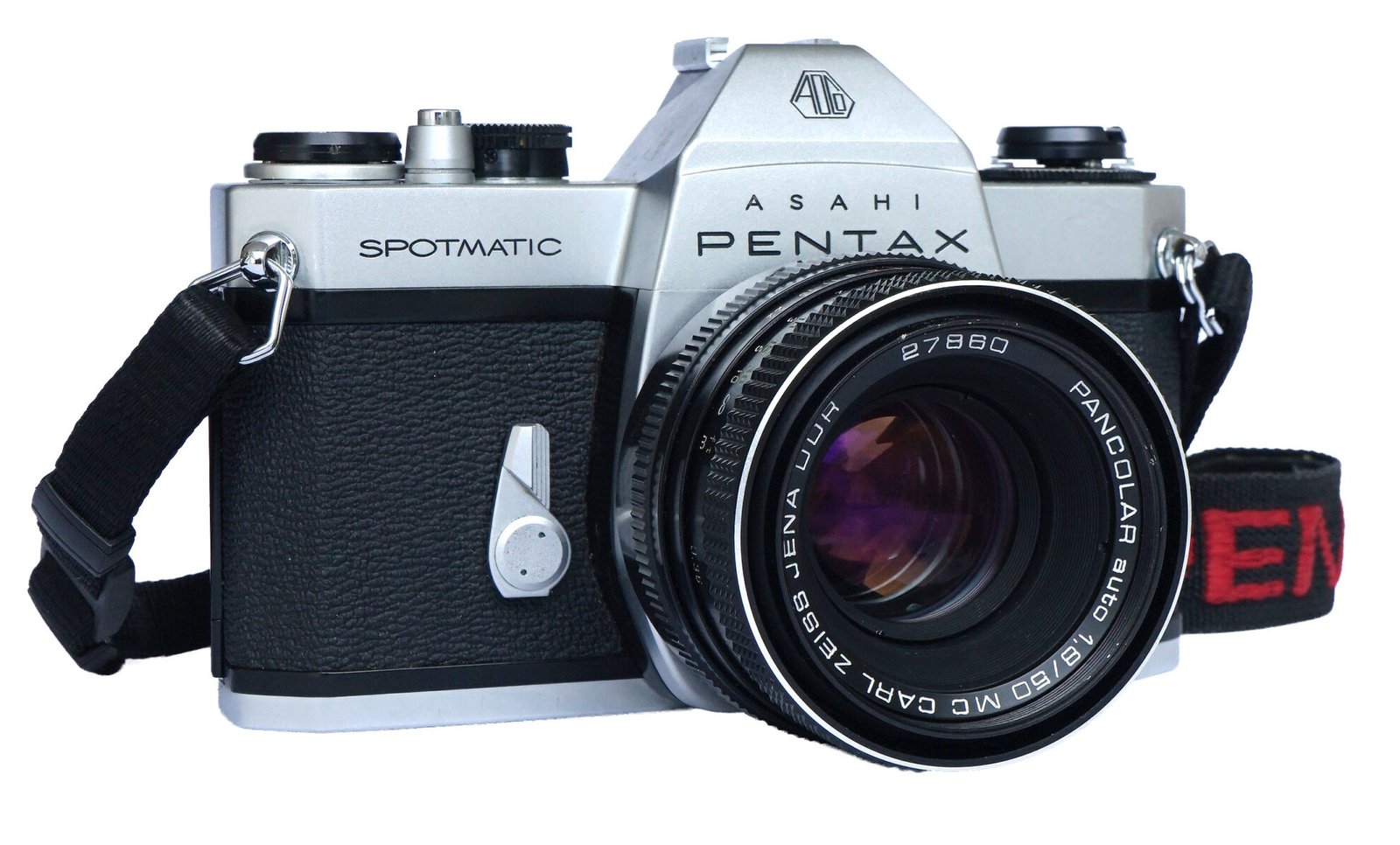
The Pancolar 50mm f/1.8 is another gem that was manufactured by Carl Zeiss Jena in the M42 standard.
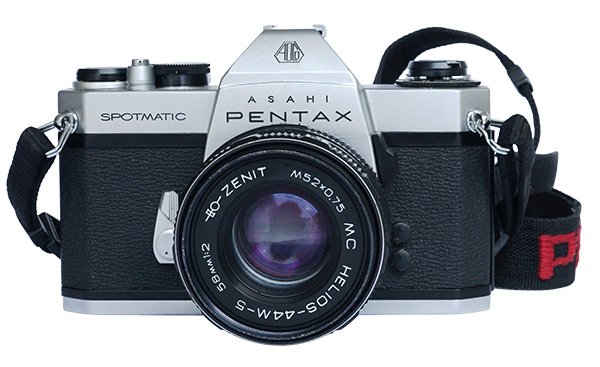
Another lens that was once despised but is now prized is the Helios-44 58 mm f/2, which was a copy of the famous Biotar and used on Zenit cameras.
This good distance between the flange and the image has also had the consequence that it is now very easy to find adapters to make photography or even digital cinema with vintage lenses. A mirrorless almost always has the sensor very close to the flange, so there is plenty of space for a tube, with the digital bayonet on one side and the lens thread on the other, to allow this meeting of generations.
Spotmatic SP II
The model in the collection is an SP II and was launched in 1971. Among small aesthetic and performance upgrades, such as a more accurate light meter, the addition of a flash shoe was very important.
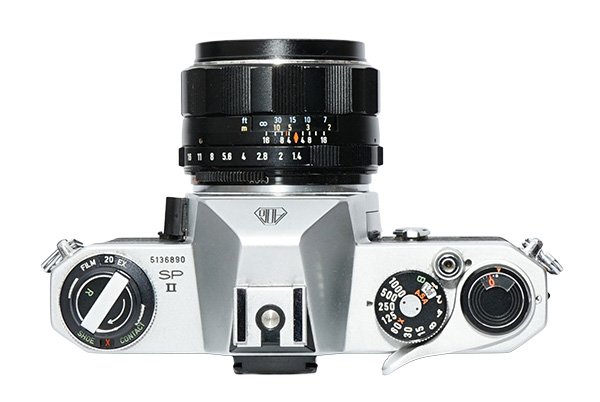
Pentax didn’t have the reputation of Nikon in terms of robustness. They are smaller and more delicate in appearance. But time has shown that they are very reliable cameras and it is not at all difficult to find a Pentax Spotmatic that is more than 50 years old and still in full working order.
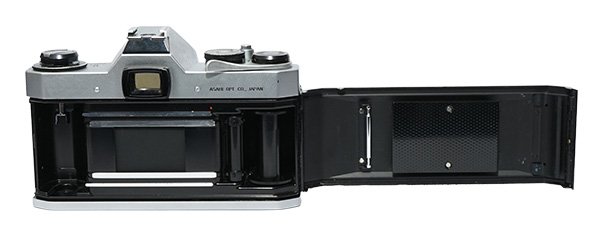
The curtains are made of fabric. The mirror return is automatic so that the camera is not blinded after each shot. The position of the film advance, shutter speed and shutter release controls follow the SLR (single lens reflex) pattern that Pentax itself helped to consolidate.
On the original lenses, which bear the Takumar brand, there is the option of an automatic or manual iris. In the automatic position, the iris is wide open to facilitate framing and focusing, but closes to the aperture selected when the photo is exposed.
Leaving the iris in manual mode has the disadvantage of making the image darker, if the idea is to use a narrower aperture. On the other hand, you can better assess the depth of field.
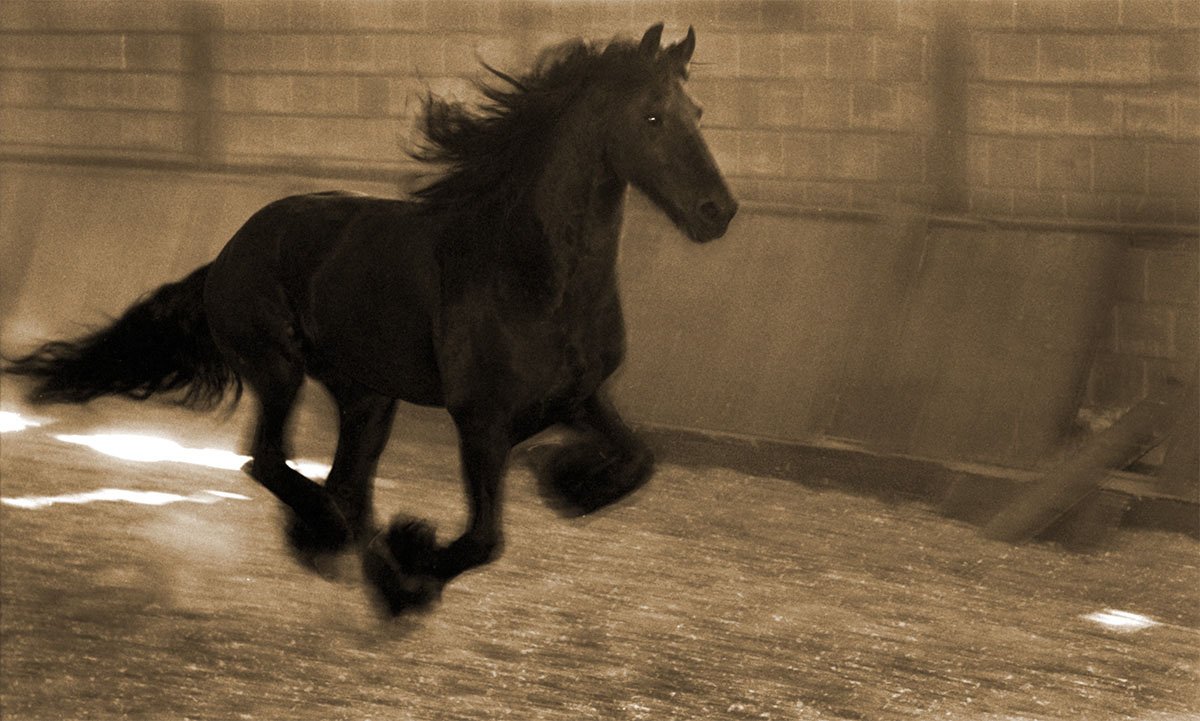
Some photos taken with the Spotmatic SP II