Pentax K1000 | Asahi Pentax
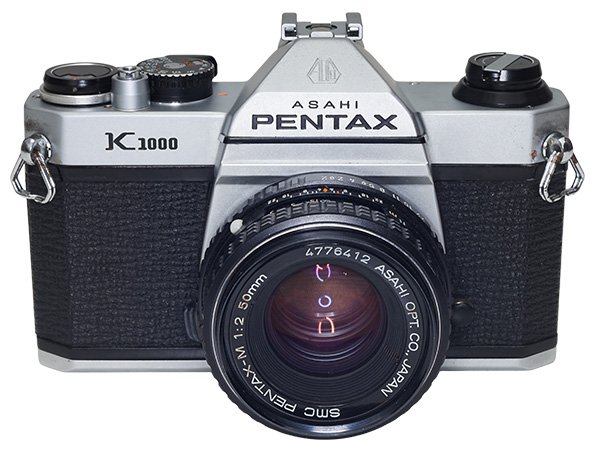
The Pentax K1000 has the same architecture as the Pentax Spotmatic but with one fundamental difference: the lens mount has abandoned the screw system in favor of a bayonet.
The K
The transition from the M42 screw mount, the universal mount used by many other manufacturers, to the K bayonet in 1975 was a turning point for Pentax. Although the M42 had made the company the most popular SLR manufacturer with the Spotmatic, it had reached a dead end. There were three main factors behind the change:
1. The “barrier” of full aperture measurement
This was the most critical technical limitation. In an M42 screw mount, the lens can stop at a slightly different rotation point each time it is mounted (due to wear on the threads).
The problem: in order to have “full aperture metering” (viewing a brighter image with the maximum aperture, while the camera “knows” that you have selected a smaller one), the lens must communicate the selected aperture to the camera body.
The flaw of the M42: As the rotational position was not fixed, Pentax had to use the measurement with the aperture that will actually be used. To do this, you have to operate a lever that closes the iris diaphragm to the selected aperture and only then does the light meter indicate whether the light condition, measured through the lens, is good or not. The alternative would have been to create incredibly complex and fragile mechanical joints that often broke.
The bayonet solution: A bayonet engages and positions the lens in the same position every time. This allowed a simple, robust mechanical lever to tell the camera exactly what the aperture was and give right aways the right settings for a good exposure.
2. Operating speed (the professional requirement)
In the early 1970s, photography was evolving rapidly. Photojournalists and sports photographers found the M42 mount too slow.
The comparison: Nikon and Canon already had bayonets. A photographer could change a Nikon lens in about 2 seconds with a 60-degree turn. A Pentax photographer took 5 to 10 seconds and risked damaging the threads if he was in a hurry.
The marketing: Pentax needed to prove, to its mostly amateurs clientele, that its cameras were “professional” grade. The bayonet was a requirement for speed.
3. The limitation of size and robustness
The M42 mount had a relatively narrow diameter (42 mm). Optical constraints: as lens designers pushed for faster lenses (f/1.2 lenses), the M42’s narrow rear throat became a bottleneck. This created optical vignetting because the rear element simply couldn’t get any bigger. Stability: as the lenses got heavier, the M42’s fine threads came under immense strain. The K mount provided a much wider and more stable platform that could support heavy telephoto lenses.
Attention to former customers
Pentax has done something very rare in the industry. Although it abandoned the M42, it designed the K mount with the same focal length as the flange (45.46 mm). This allowed it to sell a simple mechanical adapter so that all its loyal Spotmatic users could continue to use their old Takumar lenses, plus any other M42, on the new K-series bodies. It was a good gesture to maintain customer loyalty during a radical technological change.
Launch context

The K1000 was launched in 1976, along with the most advanced cameras in the K series (K2, KX, KM). The design philosophy remained the spartan simplicity that was already Spotmatic’s identity. The K1000 was deliberately conceived as a basic SLR, fully manual, robust and accessible for beginners. It dispensed with features found on its sisters (such as self-timer, depth-of-field preview, mirror lock). Its only electronic component was the simple CdS light meter with corresponding needle.
With these characteristics, Pentax wanted to be a benchmark in the education market and compete, for example, with Veb Pentacon’s Prakticas. Its simplicity, durability, low cost and clear manual controls made it the student camera par excellence for decades. Countless photography courses used the K1000 as a standard teaching tool. It was already on the list of materials for students.
This combination proved to be very competitive and the K1000 enjoyed incredible longevity. Due to its popularity, reliability and low price, the K1000 had an exceptionally long production cycle, remaining in production (with some minor manufacturing changes, including moves from Japan to Hong Kong and then to China) until 1997. Millions were sold.
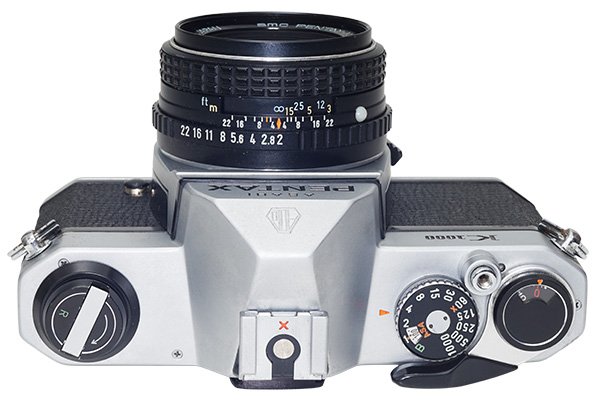
As a “student’s camera”, the Pentax K1000 performed a task that seems impossible nowadays: convincing young people that once the ISO has been chosen, all photography comes down to focus, aperture, time… and nothing else.
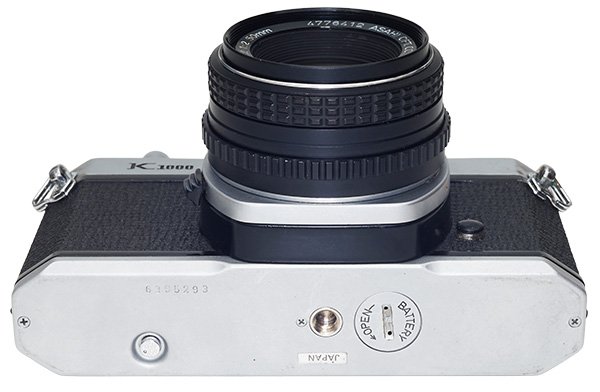
A very good thing about the K1000 is that it uses a common and inexpensive alkaline battery, the LR44. Almost all cameras of its generation used the discontinued mercury batteries and today need adapters to work.
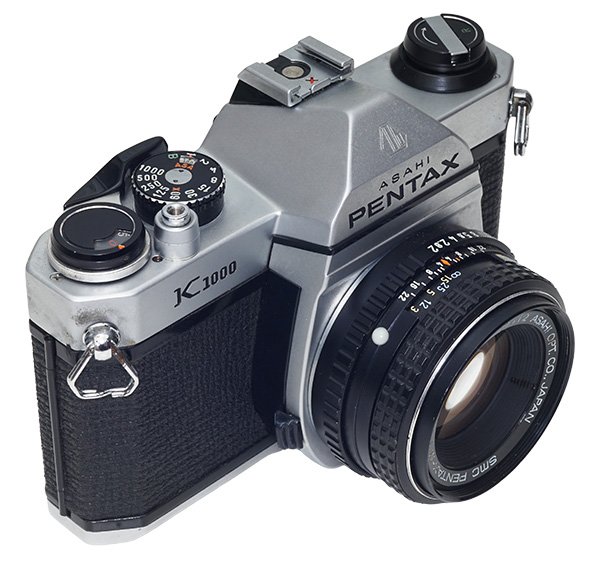
It’s a basic camera, but it’s also very well built. There is nothing in its design or materials that is very original or that seeks to stand out in any way. It looks more like a generic camera like so many others of its time.
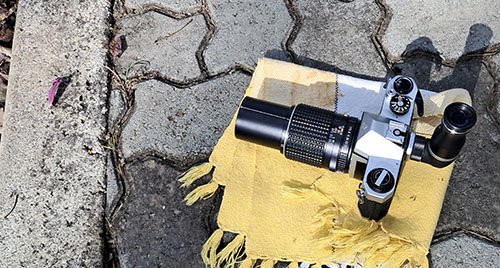
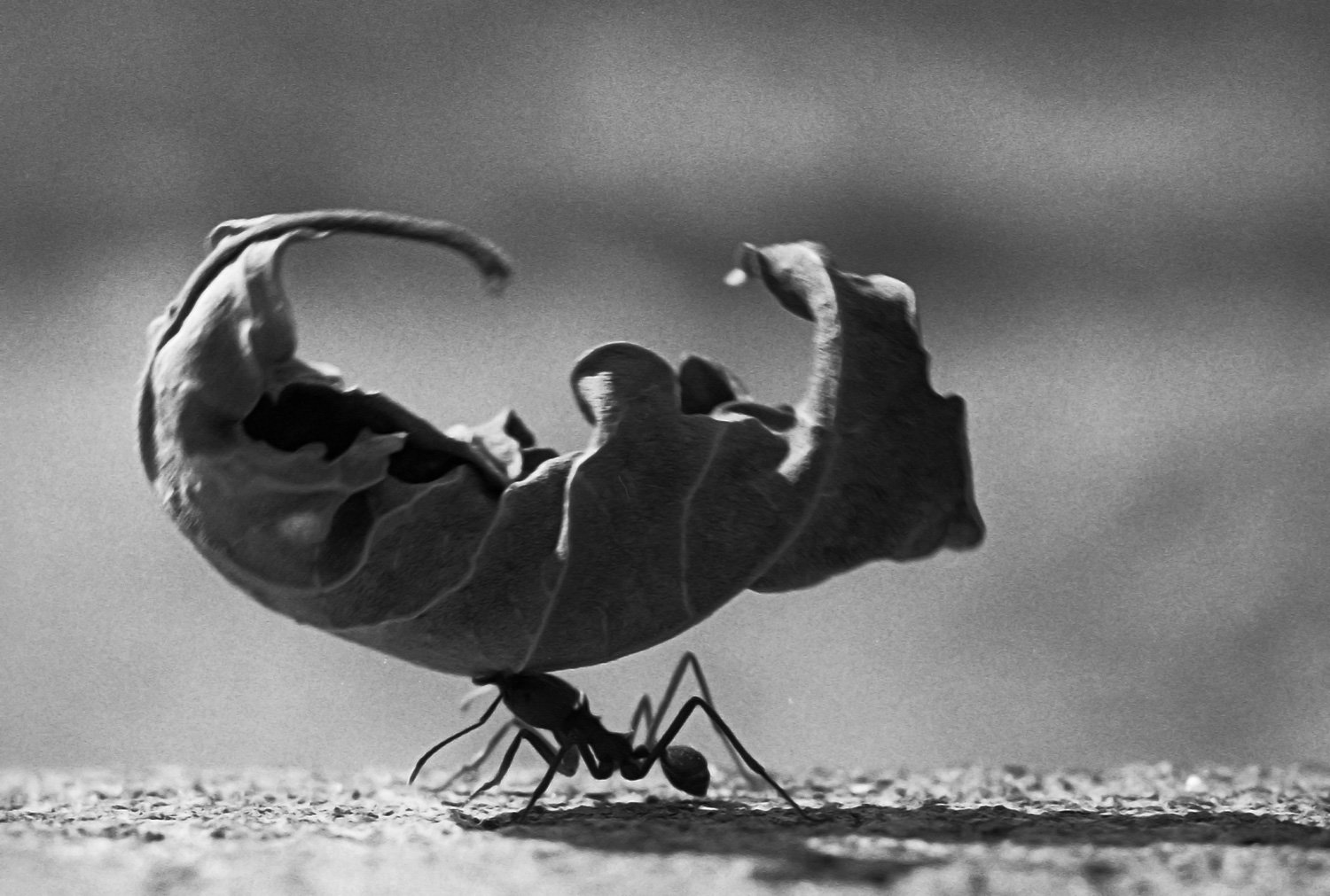
Despite such a simple camera, Pentax offered a large number of accessories for its K series. Many lenses with an excellent reputation under the Takumar brand. Flashes, bellows, filters, motor drive and everything a big brand could offer its most enthusiastic customers. Just as an illustration, above is a set-up using a right-angle viewfinder and a macro lens, 100mm f/4. With it the image below was captured.