Ultra | Clement et Gilmer
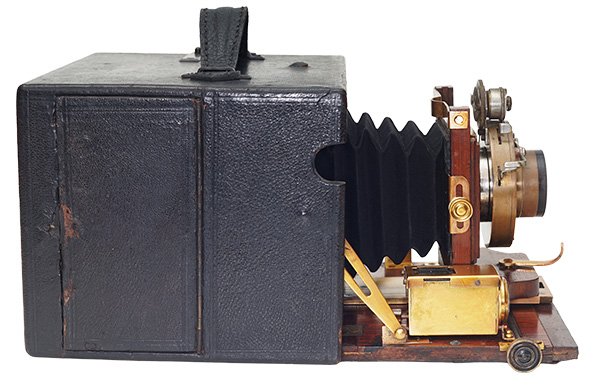
At the beginning of the 20th century, it seemed clear to everyone that photography needed to be more practical, simpler than it had been in the days of the wet plate. The gelatine emulsion, the dry plates, which allowed the industrialization of the photographic medium for the first time, was a big step. George Eastman, founder of Kodak, understood that for most people the home photographic darkroom was a barrier rather than an attraction. That’s why his proposal of cameras with roll film, processed by professionals as a service to the occasional photographer, was a huge success. The Kodak Brownie #2 is perhaps the most emblematic camera of this trend.
But the more dedicated photographer, the one who had a special taste for more studied photography, for developing his own plates and printing his copies, was still groping between the options and looking for one that could satisfy his demanding taste without giving up the progress that dry plates meant.
It’s very interesting to see the options that the industry offered its most passionate photography customers. Most of them were cameras that kept a similar base to view cameras, with the traditional bellows, clear glass, tripod and black cloth, which was the hallmark of the professional photographer. But they added something to make them seem more practical and portable.
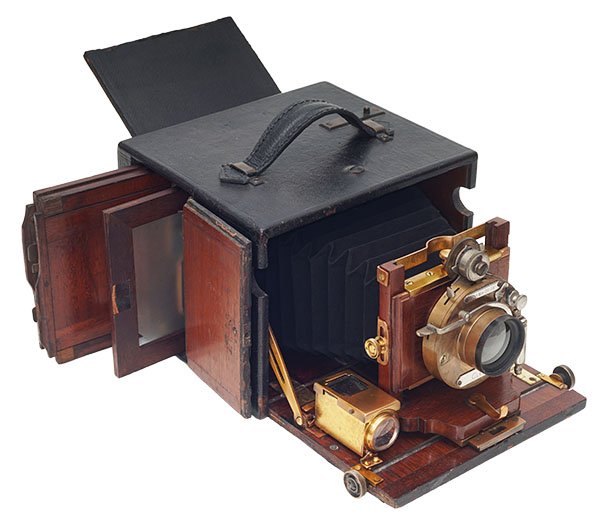
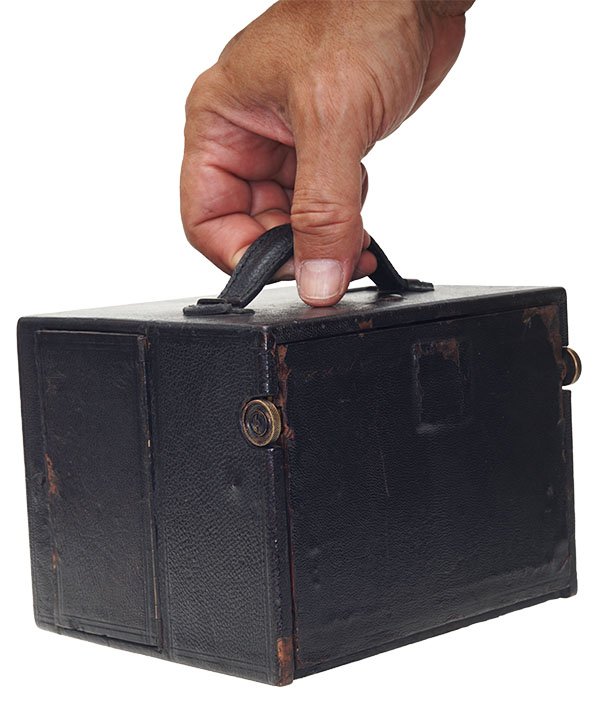
This is very much the case with the French Ultra from the traditional Clement and Gilmer company. It has a design that allows you to store 3 double chassis inside the camera itself and the whole set can be easily transported like a small suitcase.
It also follows a trend of the time for a “quarter plate” format, which in Europe meant 9 x 12 cm and is of the drop bed type, opening from the front and a platform falling down like a drawbridge where the lens plate will slide forward.
Still on the subject of practicality, the Ultra offers a brilliant finder-type viewfinder that can be rotated 90º for portrait or landscape formats. In the photo below, it is the large lens on the left and below the camera.
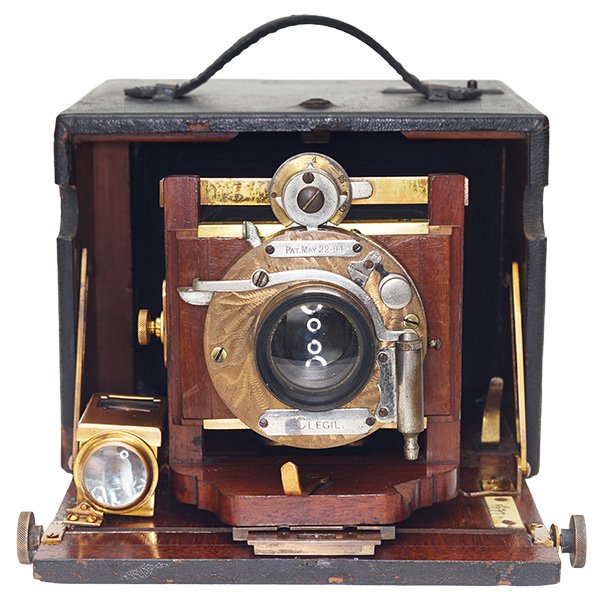
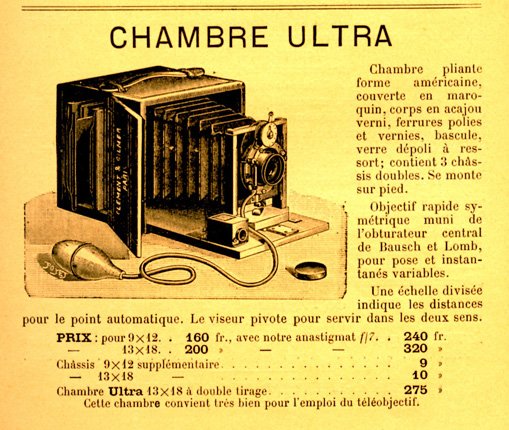
In the ad below, the construction of the Ultra is described as forme américaine, which refers precisely to a camera that houses the chassis inside it. It also clarifies that the shutter is manufactured by Baush & Lomb, although it has a metal plate that reads Clegil, a reference to Clément et Gilmer (pictured above).
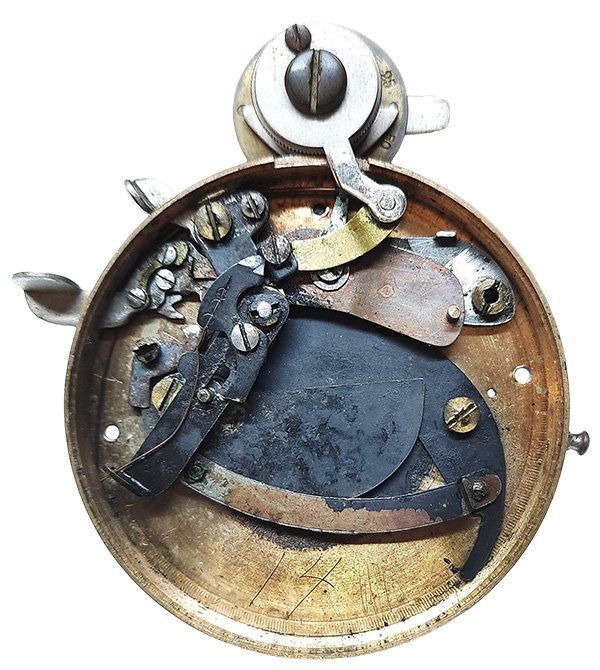
This camera was donated to the museum and arrived in need of a general clean. Below is a photo of the two-blade shutter before cleaning.
The lens is of the Rapide Rectilinear type, it is referred to as objectif rapide symétrique. But there are no focal length or aperture markings. But it should be around 130 to 150 mm and f/8 as would be most common given the format of the camera and the type of construction of the lens.
This category of camera, without including the chassis, but in the drop bed aspect, had a great future throughout the 20th century in cameras like the folding Ikontas and derivatives, medium format, or even the Linhof Technika. But this was still not the solution for the advanced amateur who really wanted high image quality with maximum ease of shooting. That would have to wait until 1925, when Leica arrived. To find out more, read The Leica revolution.
Take a look at Ultra’s timeline of photography to find out more about what was available at the beginning of the 20th century.
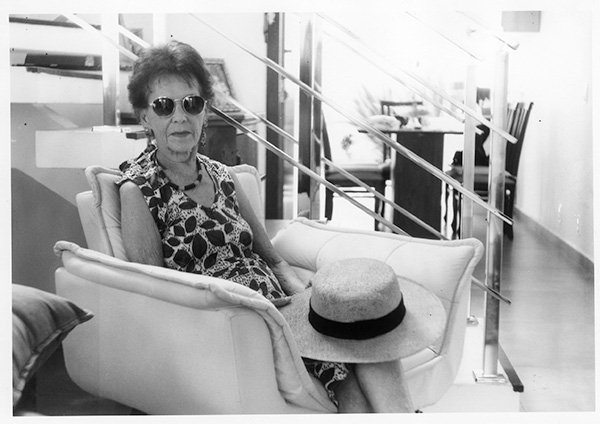
Below, a portrait of her friend Noelina, the person who donated the camera and, of course, made with Ultra herself.