Tribune | Thornton Pickard
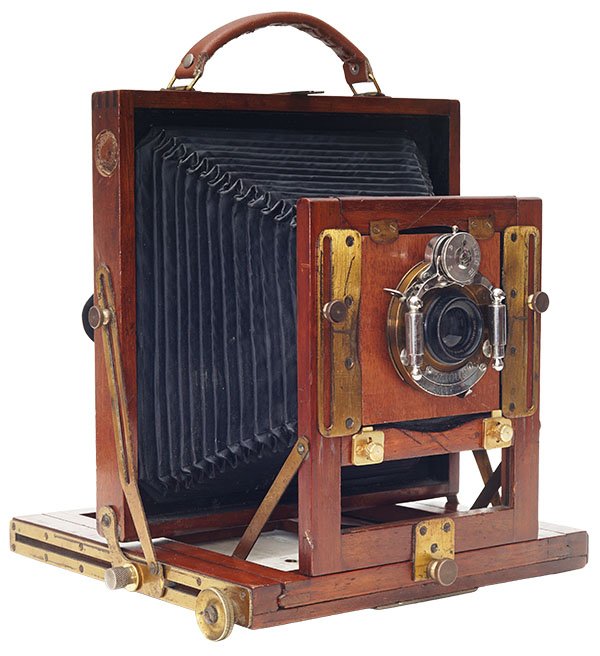
What impresses most about the Thornton Pickard Tribune is how slender it is. A well-designed combination of thin mahogany slats and brass structural reinforcements gives it robustness while maintaining its lightness and small size.
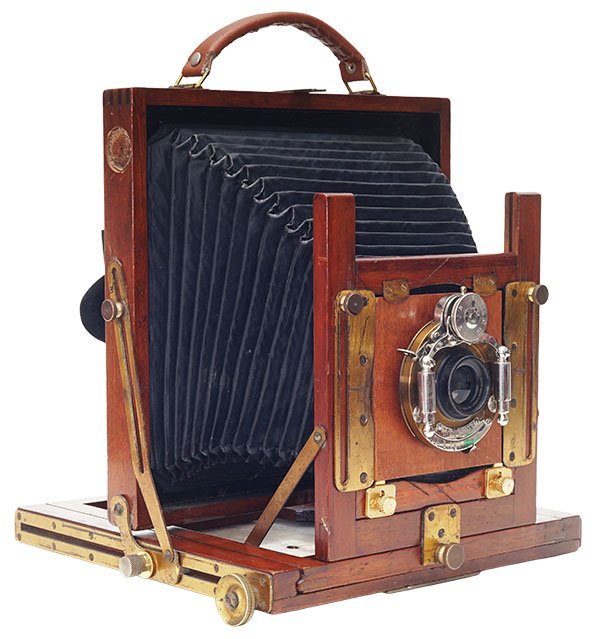
That alone would be a great achievement, but it still offers a great deal of flexibility to move the lens up and down. This is very useful in photos that include architecture, as it is the simplest way to prevent the vertical lines, which are parallel in the scene, from converging at some point in the sky in the photographic image.
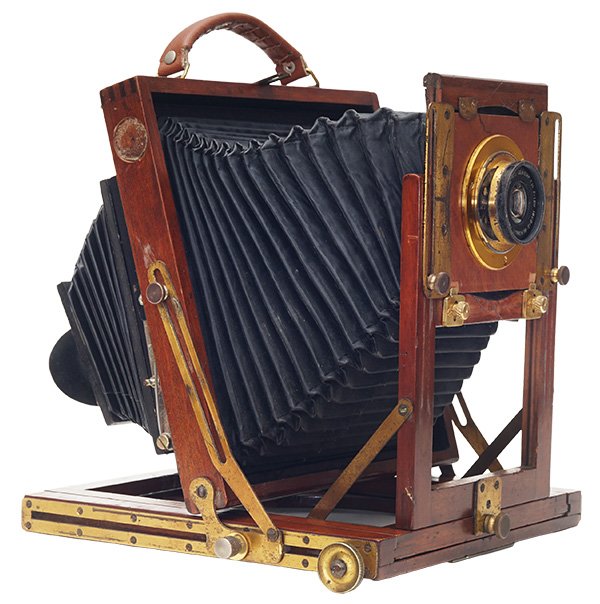
The other interesting movement is the possibility of tilting the camera back in both directions. This allows you to tilt the plane of focus. You can focus on a closer object and a more distant one at the same time. A classic case would be to focus precisely on the hands and face in a half-body portrait with the model seated. This feature allows you to use a lens f-stop wider and alleviate the need for depth of field.
These two movements cover the most frequent cases in large format when you want to move the axis of the lens in relation to the film. What it doesn’t offer is the possibility of rotating the film or lens on a vertical axis.
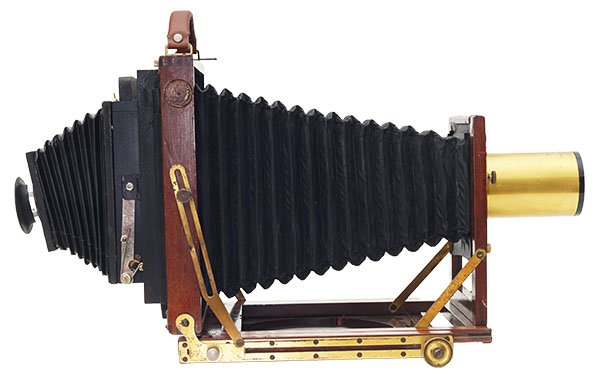
As for the camera back, it can be rotated for portrait or landscape framing. You can move it closer to the lens board to ensure the use of very short lenses. With the back all the way back, advancing the lens board with the rack device also allows the use of very long lenses. Above is a Petzval projection lens from Pathé.
One specific point about this specimen is that originally this camera was for the 4 ¼ x 3¼” format. But it had no plate or film holder (chassis). It was therefore modified by building a back for the standard 4×5″ film holder. The new back was inspired by the Linhof design and this link contains a tutorial with all the details of how it was made.
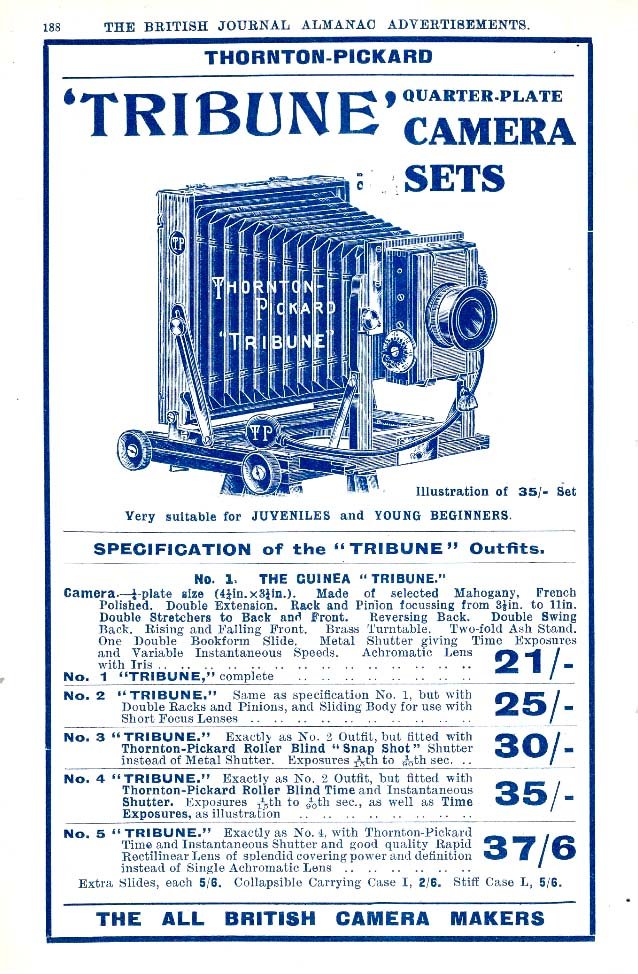
Above, a Tribune advertisement in which it is presented as “very suitable for young people and beginners”. There is a progression between variations on the same body, including movement possibilities, shutters and finally a Rapid Rectilinear lens.
With a 90 mm Collinear
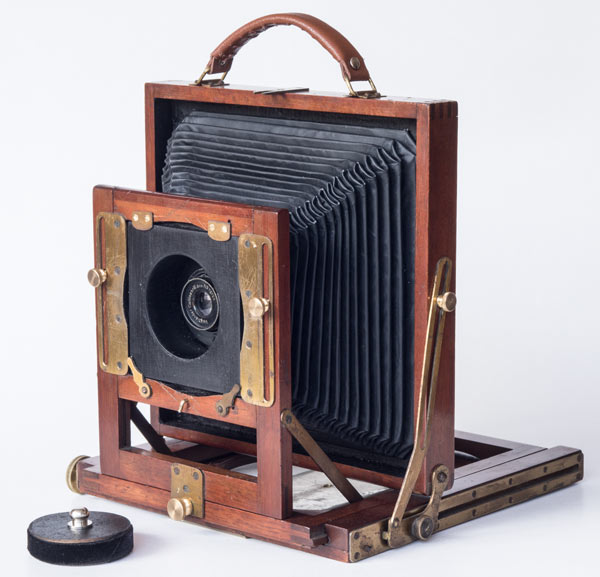
Above, equipped with a Voigtlander Collinear 90 mm. In this case, in addition to moving the back forward along the entire rail, it was also necessary to make a recess in the lens board for focusing.
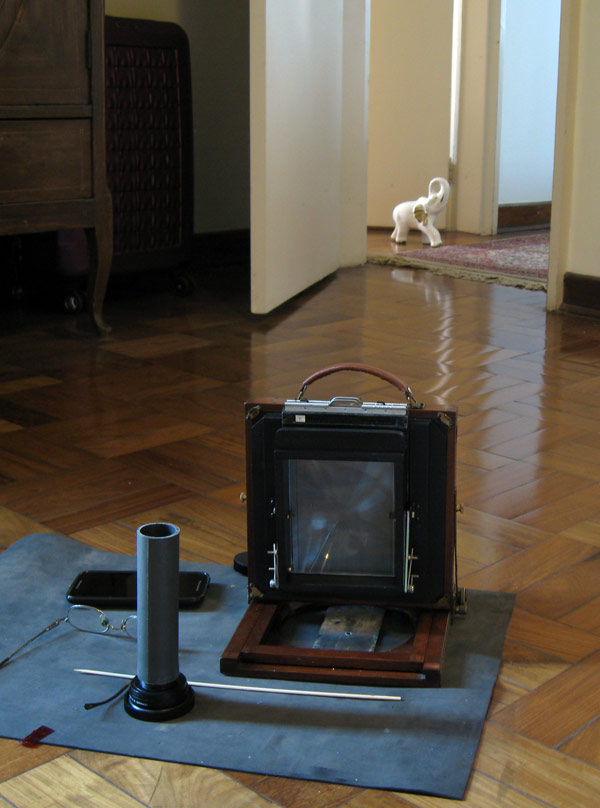
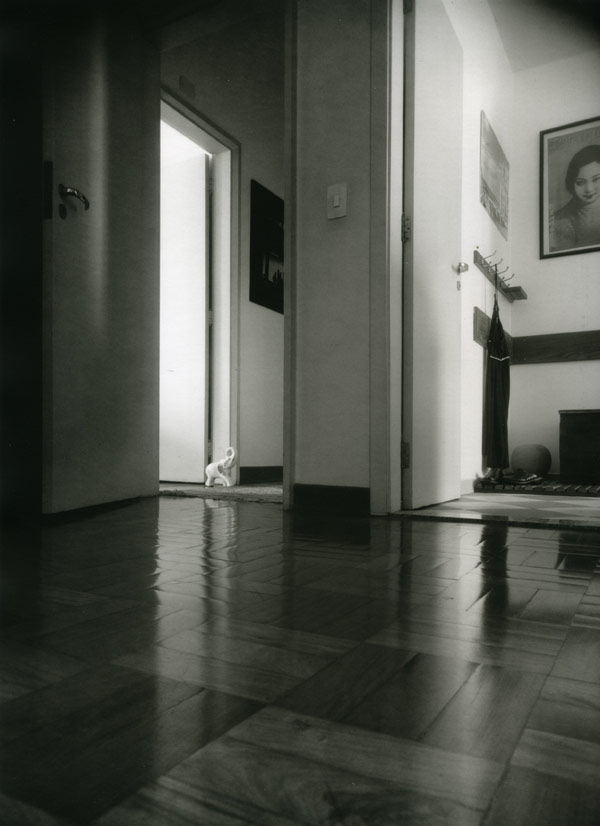
The photo below was taken with this Collinear, with the camera resting directly on the ground and using the possibility of raising the lens board.
Below, the result.
With a Dagor 120 mm
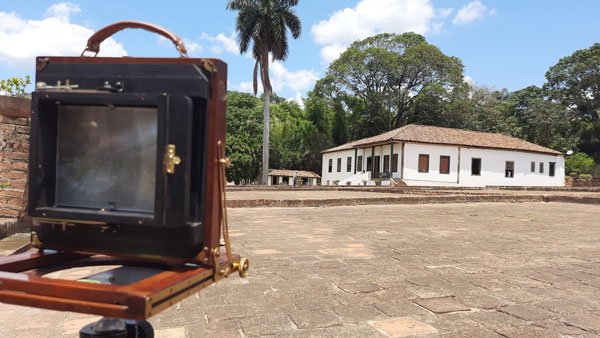
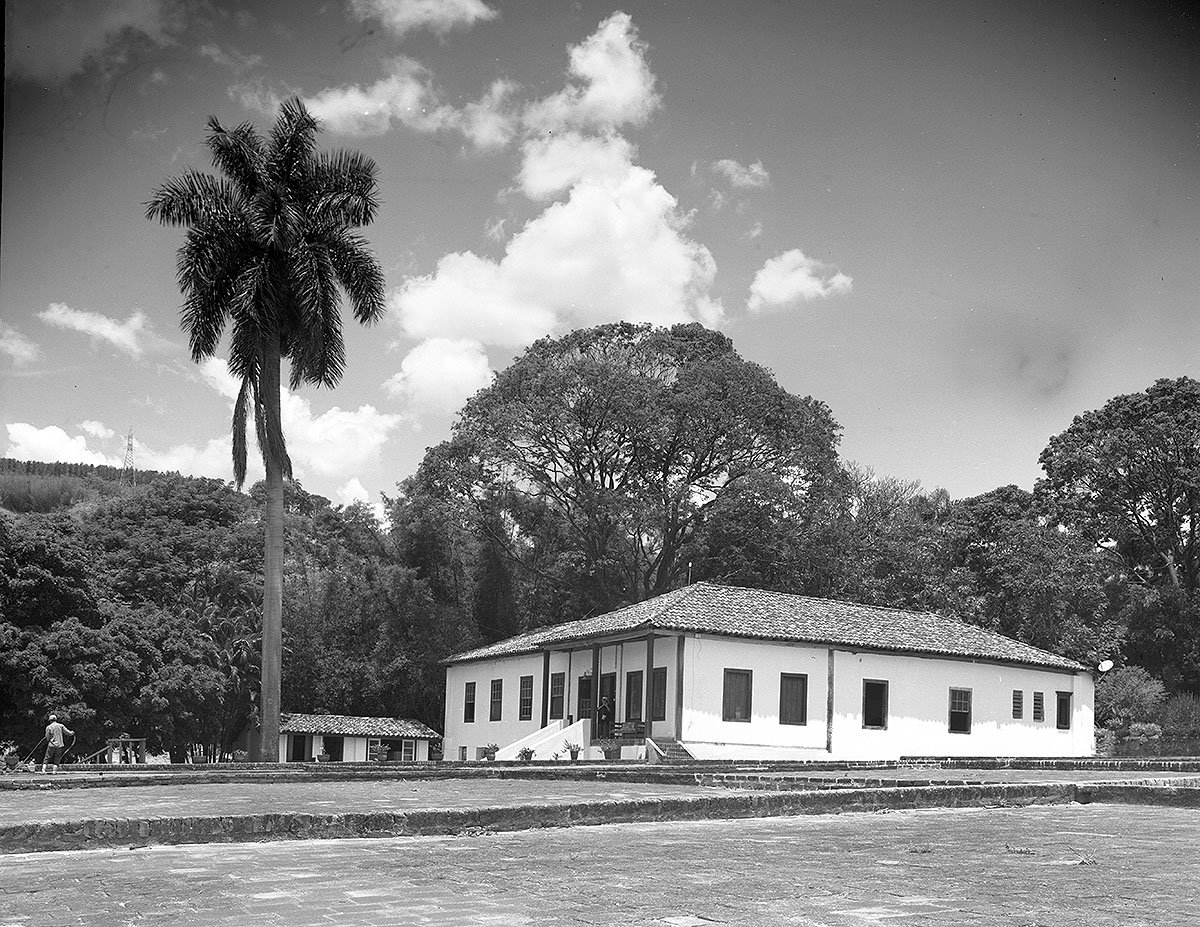
Here she was photographing an old coffee farm in the city of Amparo in the interior of the state of São Paulo, Brazil.
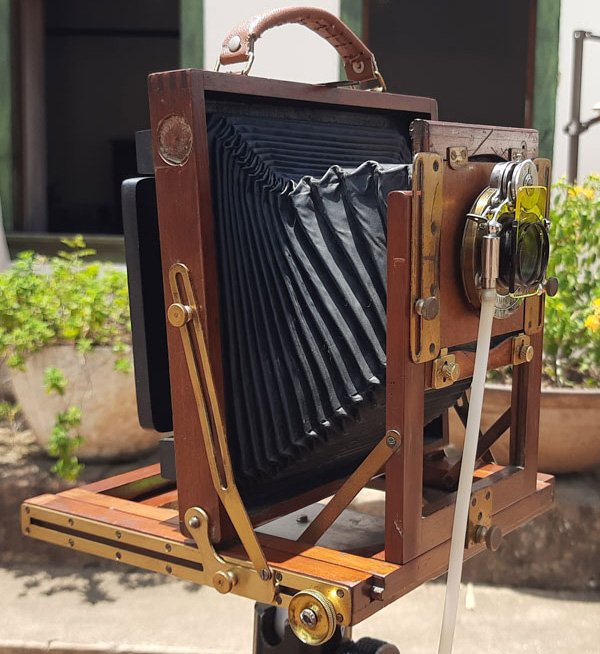
As well as raising the lens board a lot, the back was tilted to focus on the ground in the foreground. The lens was a Dagor 120 mm f/6.3 over which an Omag yellow degradée filter was added. In the photo thus produced, it can be seen that raising the lens has already caused a vignette effect in the corners of the sky, but has maintained the verticality of the architecture and the palm tree to its left.