Monoculars for slides
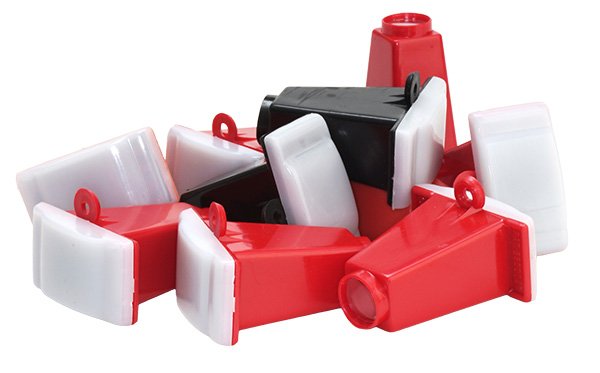
These small monoculars were very popular in the 1960s and 1970s. Kodachrome and Ektachrome films had reigned supreme since the 1950s. These were positive color films, i.e. they produced an already positive image with the film itself that the photographer put in the camera. Color negative films (such as Kodacolor) existed, but the printing process was manual, expensive and the colors were often of poor quality.
This technological delay in the production chain of the color photo on paper gave a head start to slide projections as the standard format for amateur color photography. Families at this time had slide projectors just as they had Graphoscopes in the 19th century. Gatherings to watch a series of slides were very lively events and especially loved by children.
The mini-lab, with stand-alone machines from Agfa Gevaert and Noritsu that could be installed in any shop, not necessarily in the photography business, such as grocery stores, offering photos in one hour in 9 x 12 cm and later 10 x 15 cm formats, was a phenomenon in the 1980s. Until then, slides were the standard for color photos for the general public.
The half frame slide camera
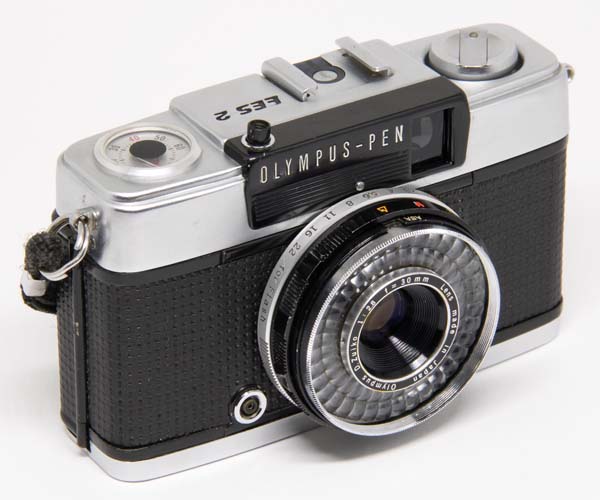
When Maitani designed the Olympus Pen and launched it in 1959, he was obsessed with one thing: democratizing the Leica experience of 35mm film photography. At the time, a Leica cost about six months’ Japanese salary; the Pen cost 6,000 yen (about 1.5 months’ salary).
But another aspect was the cost of film vs. the cost of the camera: Maitani knew that, for the weekend photographer, the cost of the camera was only the first barrier. The real recurring cost was film and processing.
The slide came as a solution because color negatives were expensive to print, but color slides were the “efficient” choice. So he designed a camera that makes a frame that is half the normal frame on a 35mm film camera, i.e. 18×24 mm instead of 36×24 mm, which is called full-frame today.
By doubling the number of exposures of a 36-position film (72 per roll), Maitani made color photography economically viable for the masses. The viewing method, for a while, remained projection. But this depended on the slide frames being adapted to the new format. In Europe and Japan, processing laboratories adapted quickly, supplying slides mounted in half frames. However, Kodak in the USA refused to manufacture mounts for half-frame slides. The result: American users received their films unmounted or with two half-frame images sharing a single full-frame mount. This friction had the effect of killing Pen’s momentum in the American market. In that market, Maitani’s system for projection was essentially blocked by the refusal of a global giant to change its industrial program.
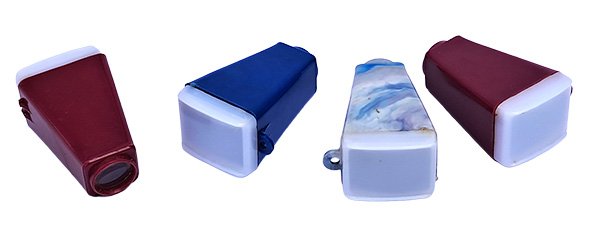
As a remedy, the monocle immediately appeared. Extremely simple, made up of just 3 parts: a conical body, a frosted screen and a plastic lens, it accommodates one slide at a time and makes for an immersive and captivating experience.
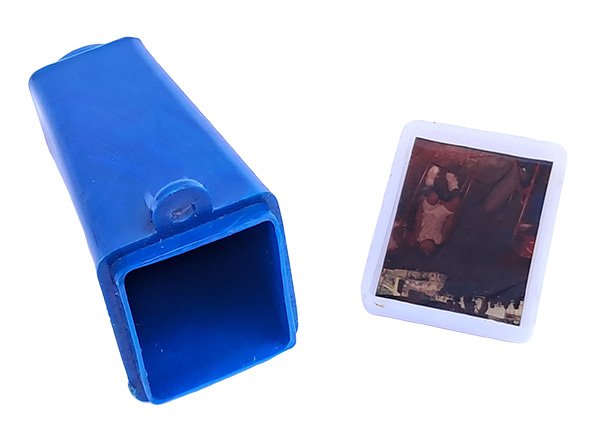
Each photo is cut out and simply inserted into the screen. This is attached to the cone with a click. No glue or other means of attachment. This device was mainly sold as a generic. Some manufacturers, such as Olympus itself and photo accessory giants such as Australia’s Hannimex, created their own premium versions. Some large retail chains also put their logos on it and took advantage of the space for branding. The quantities were astronomical, which is why the prices were immaterial.
The professionalization of monoculars in Brazil
Below are examples that a family has kindly provided to illustrate this article. They are photos taken in Brazil in the 1980s. Perhaps the activity has regional variations and differences to other countries. But essentially it should follow the same protocol because it shares a lot with the work of 19th century ferrotype photographers and 20th century park photographers. A big difference with these ancestors is the possibility that the camera and the process gave the monocle viewer photographer of taking snapshots without even having the consent of his likely clients.
Armed with their Olympus Pen, with or without flash depending on the situation, they took advantage of moments that could yield a souvenir and went out photographing families, groups of friends and lovers in places where they were concentrated.
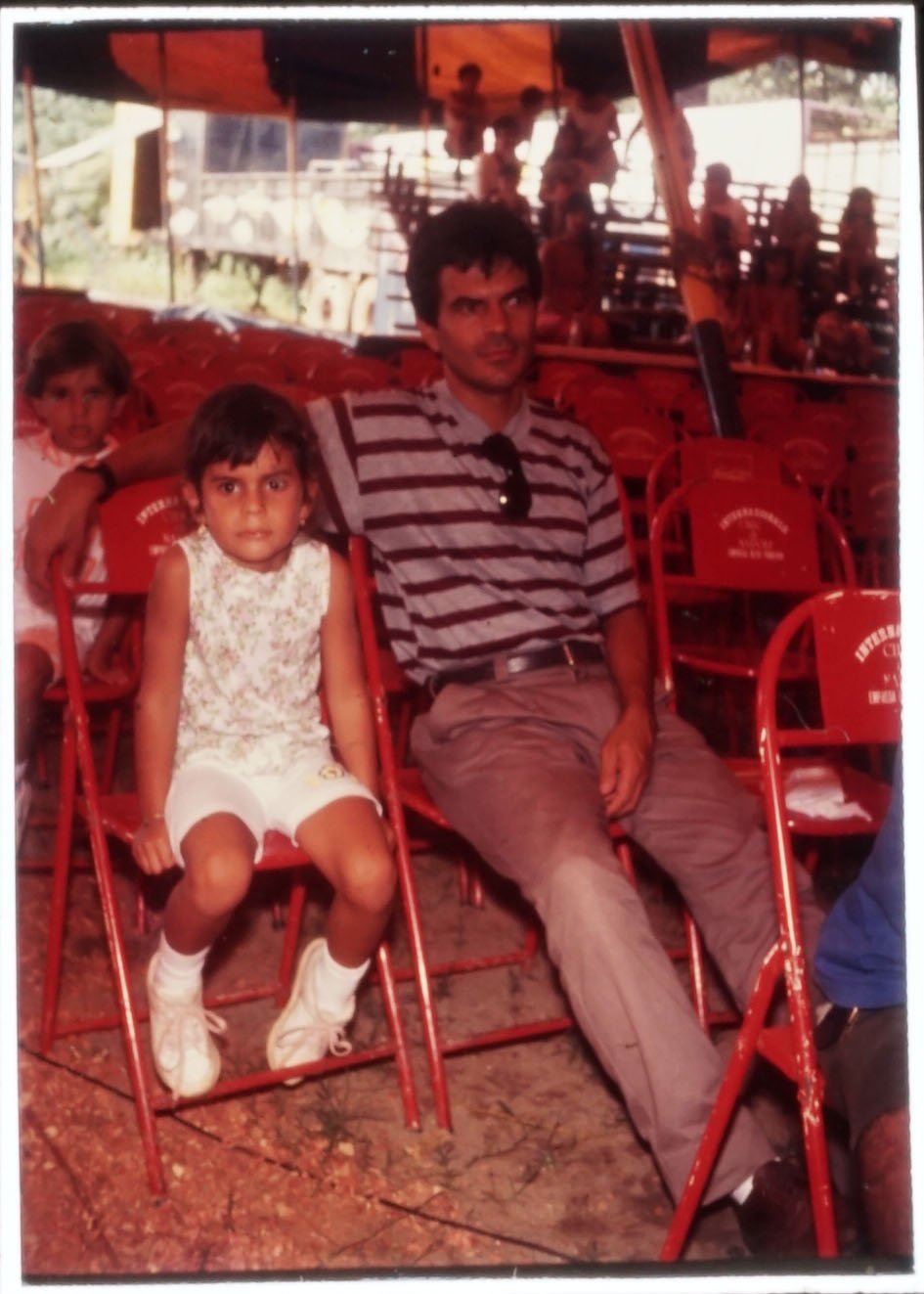
Above is a typical situation. You can see a circus tarpaulin, the arena, and a father waiting with his daughter for the show to start. During these minutes, the photographer ran around the audience taking pictures of people, without authorization or commitment. Then, during the presentations, the film was developed and the monoculars mounted.
The photographer had very little time to photograph the public and sell the monocles before everybody left the venue. A standard E-6 process involves six different chemical steps, plus several washes.
Development:
Development time: The actual “immersion” time (in the chemicals) is approximately 30 to 40 minutes.
Drying:
The “drying” bottleneck: this was the most difficult part. Wet film is fragile and cannot be mounted on slides. Using a heated portable drying cabinet (or even a hairdryer in a makeshift darkroom), they were able to get the film “dry to the touch” in 15 to 20 minutes.
Assembly:
Cutting and fitting the film into their holders for the viewers would take another 10 to 15 minutes per roll.
Total time: from the moment they finished the roll to the moment they returned to the cinema/circus or theater with the monocles in hand, it took about 60 to 90 minutes.
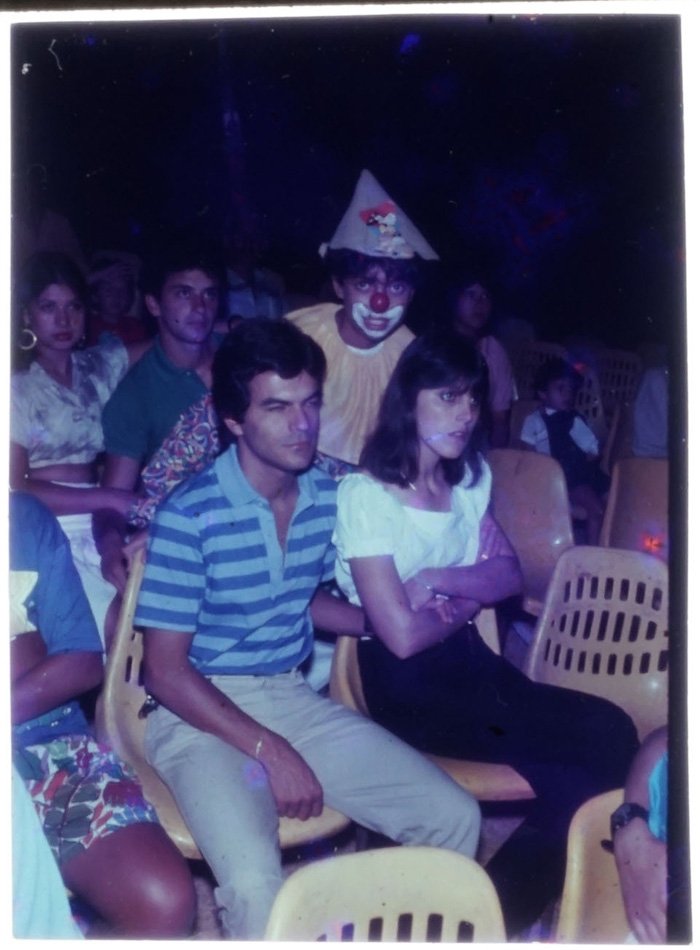
Below, another similar situation, perhaps in a street theater. You can see that a flash was used and that the couple were quite oblivious to the photographer’s actions.
The beach
A privileged location with an abundance of light and a predisposition to buying souvenirs on the part of the locals, the beach was the classic place for monocles. It’s hard for anyone who lived in those days not to remember photographers dragging their little rafts across the sand with a small camera hanging around their necks.
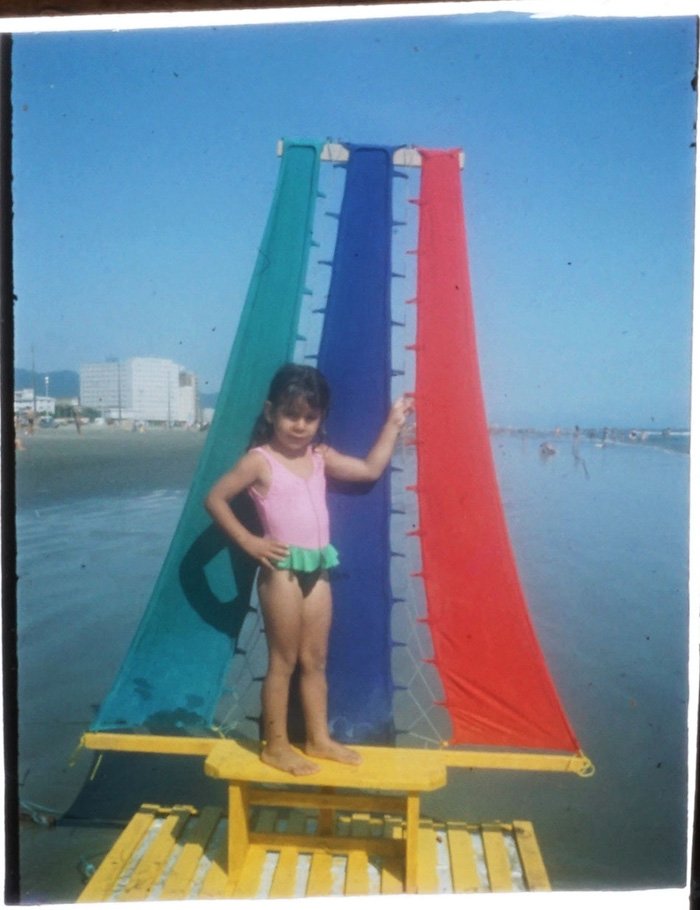
The raft was an obligatory item, as well as being attractive to the children, someone with only sand and sea as a backdrop wouldn’t give a “professional look” photograph. They had a Styrofoam base that lightened their weight when the photographer pulled them through the shallow water.
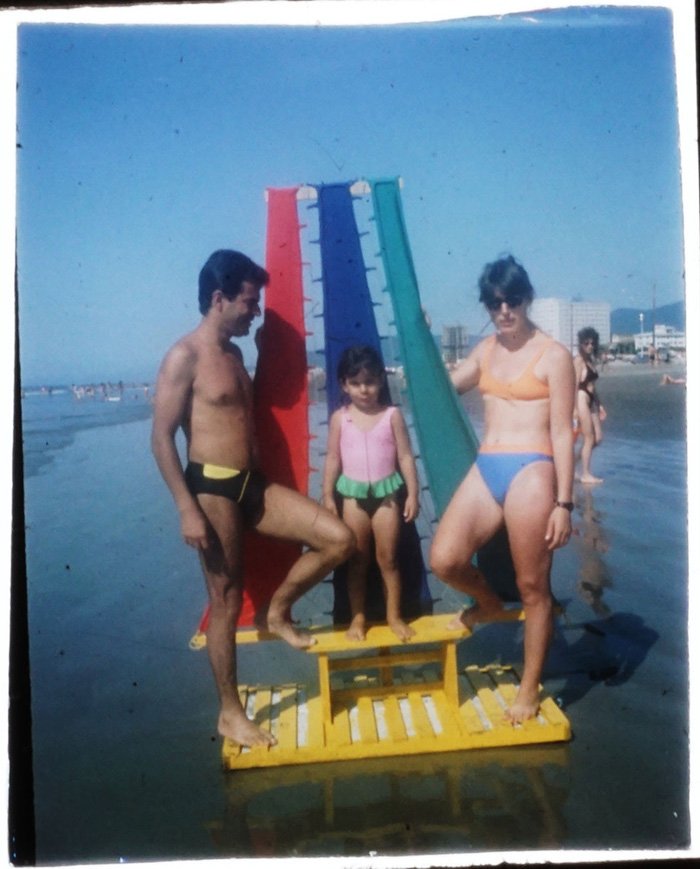
The photo was taken without obligation. The client would buy it after seeing it and at his own discretion. Usually the photographer would take the shots in the morning, write down the name of the building or condominium and come back in the afternoon to show and sell.
Full-frame monoculars
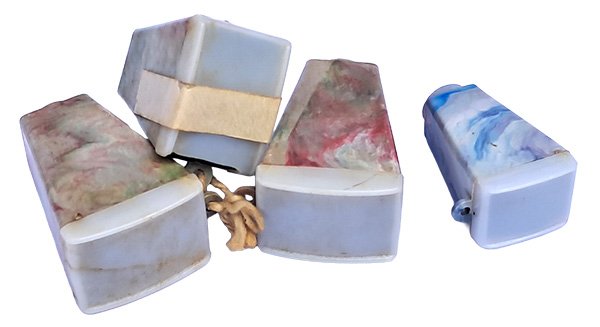
Less frequently, the monocle also existed in full format in 24×36 mm. This format was usually mounted in 5×5 cm frames for projection. There were also individual viewers for mounted slides.
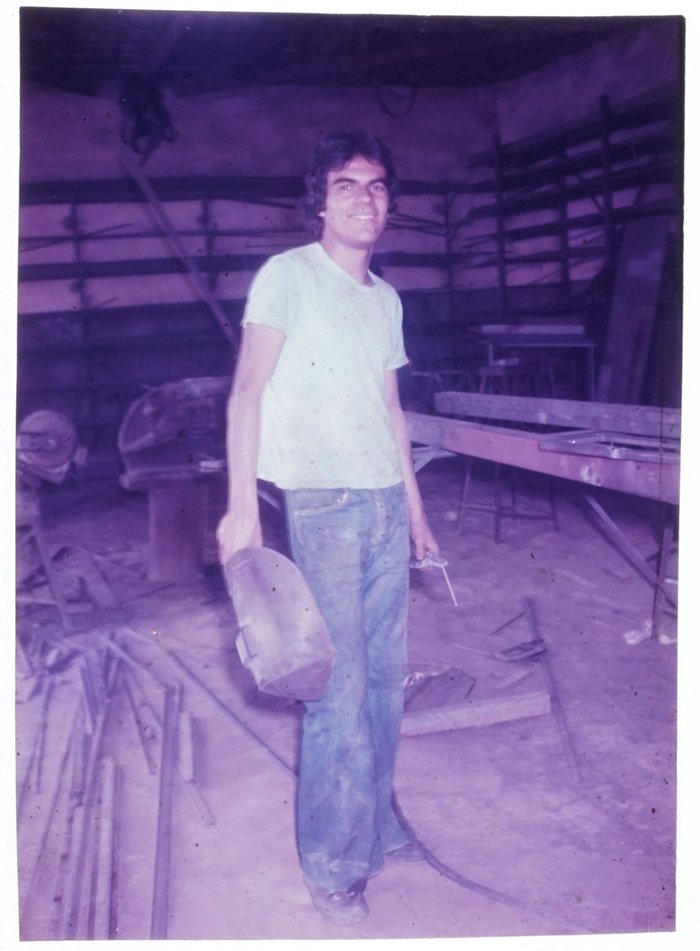
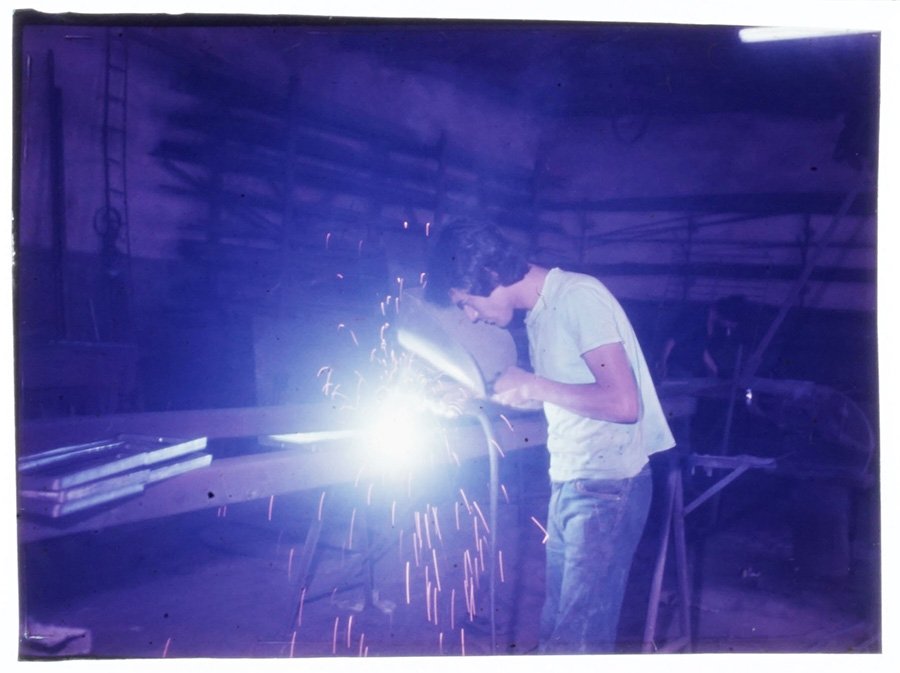
Here are two workshop memories taken with a full-frame monocular.
In the image below it is possible to see the size relationship between the two formats.
As mentioned above, from the 1980s onwards, the cost of printing photos on paper and the availability of the service took over and monoculars quickly disappeared. It’s possible to do the process in black and white, but only a few dedicated amateurs who don’t work commercially still cultivate the art. The most important thing is that it’s still possible to buy new monoculars online. The experience of looking, as if peering, through the small lens is a unique and enchanting experience.