Chambre de voyage | E. Lorillon
A travel camera suitable for taking landscape photos. You can move the lens plate and this is very convenient for photos of monuments and architecture in general.
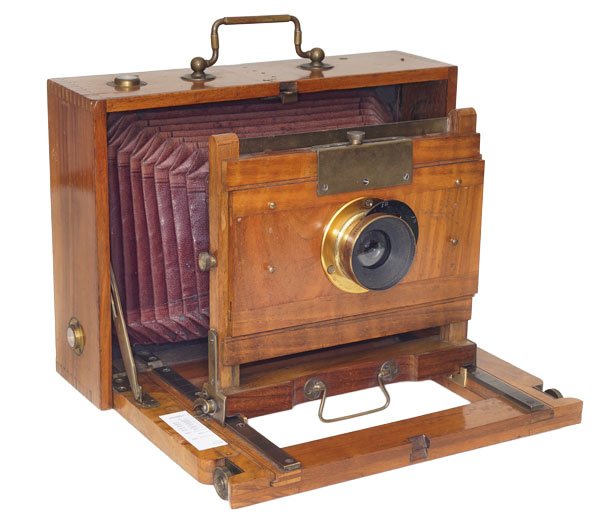
A travel camera suitable for taking landscape photos. You can move the lens plate and this is very convenient for photos of monuments and architecture in general.
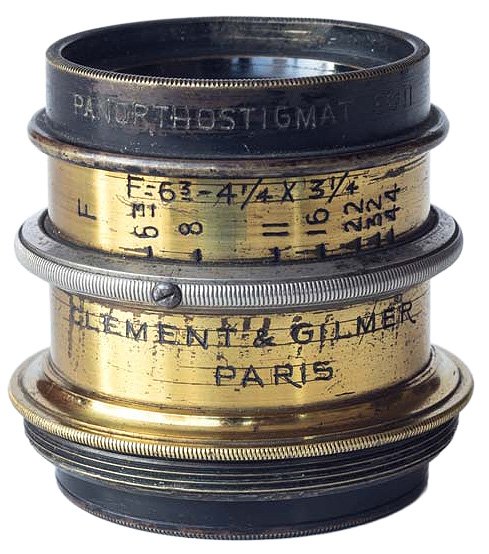
Anastigmatics in the concept of 6 elements in 2 groups like Dagor. Thanks to the new glasses available, the 1890s was the time when every firm tried to launch its anastigmatics, ushering in a new era in photographic optics.
As well as being very good, this 3-element anastigmatic has become a cult lens among large format photographers. Its images are a happy combination of sharpness and softness.
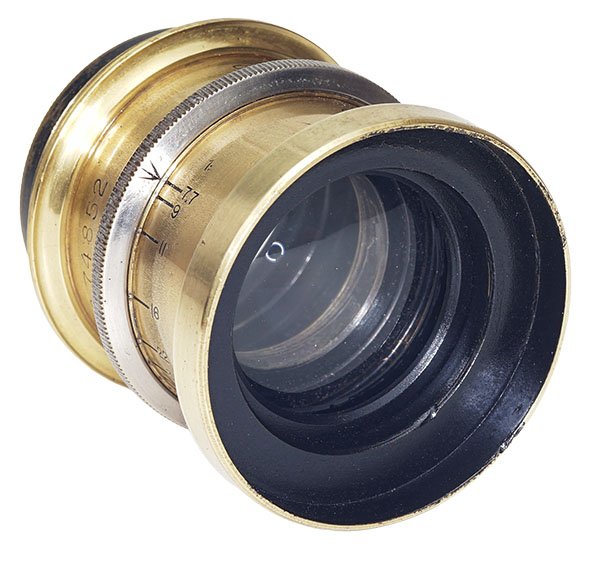
The success of the Rapid Rectilinear concept was such that many manufacturers used what had already become a category name to name their models. This one combined Dallmeyer’s Rapid with Steinheil’s Aplanat.
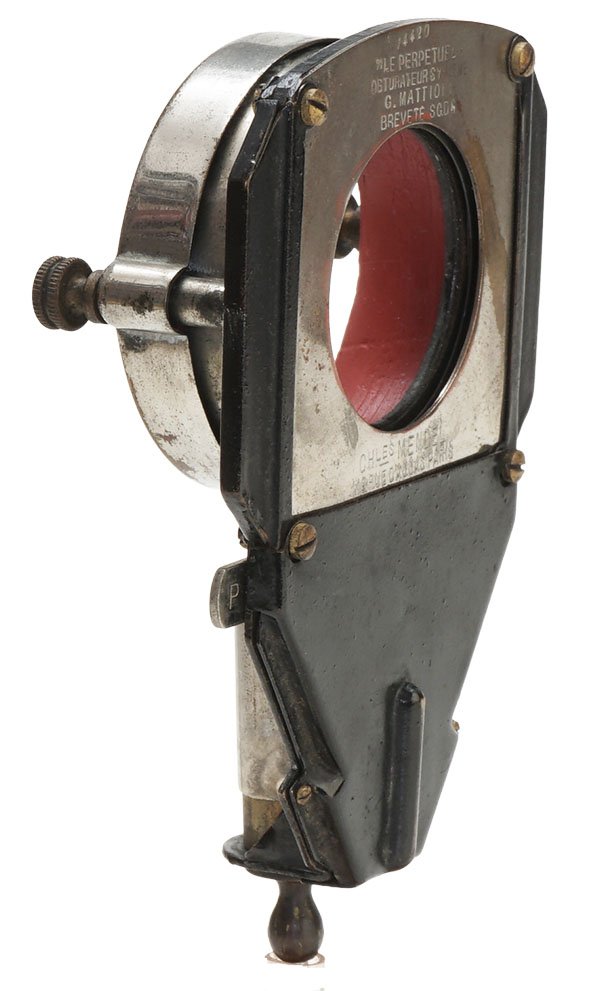
Metal shutter to be positioned in front of the lens. It is pneumatically operated and only offers a speed of around 1/20s or B. It sounds very limiting, but it’s a great speed for a huge number of situations on large format cameras.
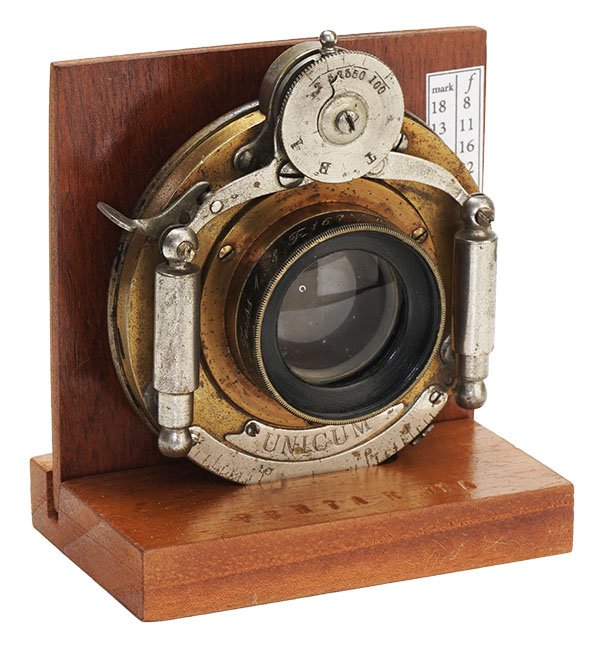
A new generation of lenses was born in 1890 with the Protars designed by Paul Rudolph in Jena, Germany for Carl Zeiss. These were the anastigmatic lenses, significantly improving the sharpness of images even far from the axis of the lens and even at its widest apertures.
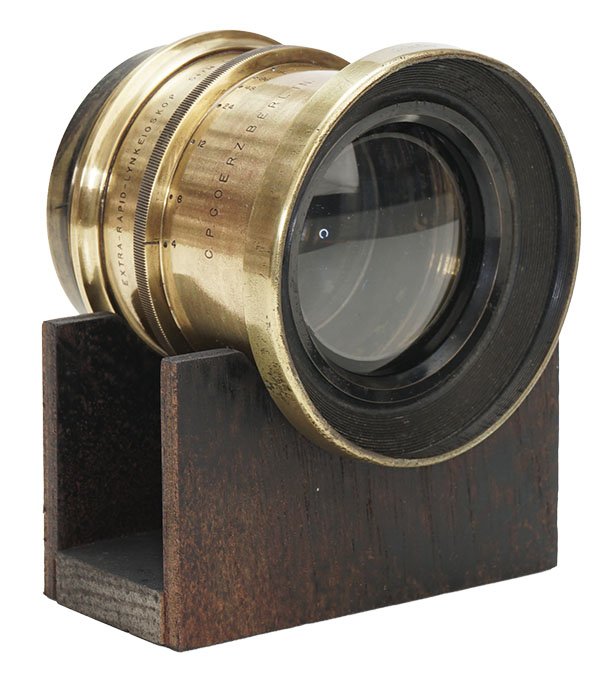
One of the best executions of the Rapid Rectilinear concept in an extensive series of lenses with many focal lengths/openings adapted to different uses.
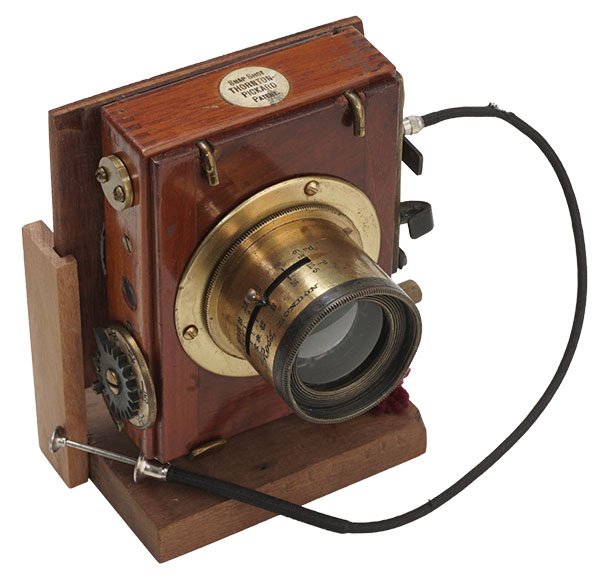
With emulsions becoming increasingly sensitive and faster, the need arose at the end of the 19th century for shutters capable of dealing with fractions of a second. Curtain shutters, positioned between the lens and the camera, were very popular until the first quarter of the 20th century
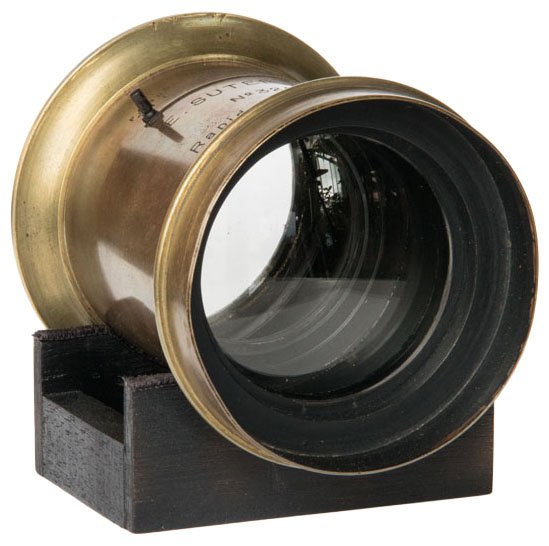
The Swiss lens, of excellent quality, boasts an ambitious f/5. If you read the documentation, it’s clear that it’s not the usual geometric f, but a calculation that takes into account more transparent glass and the result “equates” to an f/5.
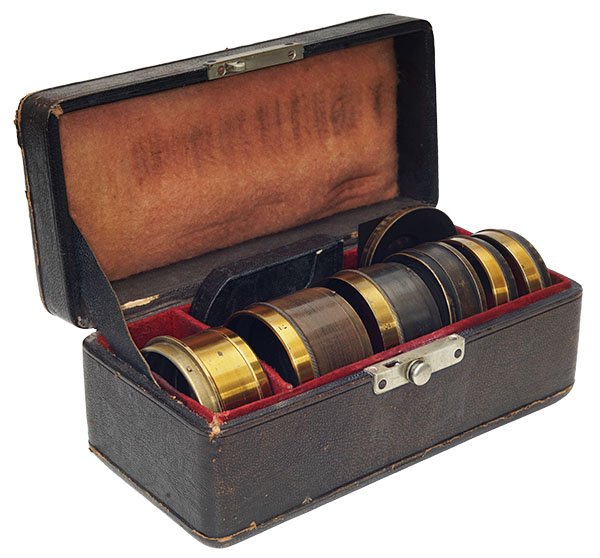
These sets, which were sold as “trousses”, meaning a case for organizing objects, made use of the Rapid Rectilinear concept and offered many focal lengths by combining different lenses.
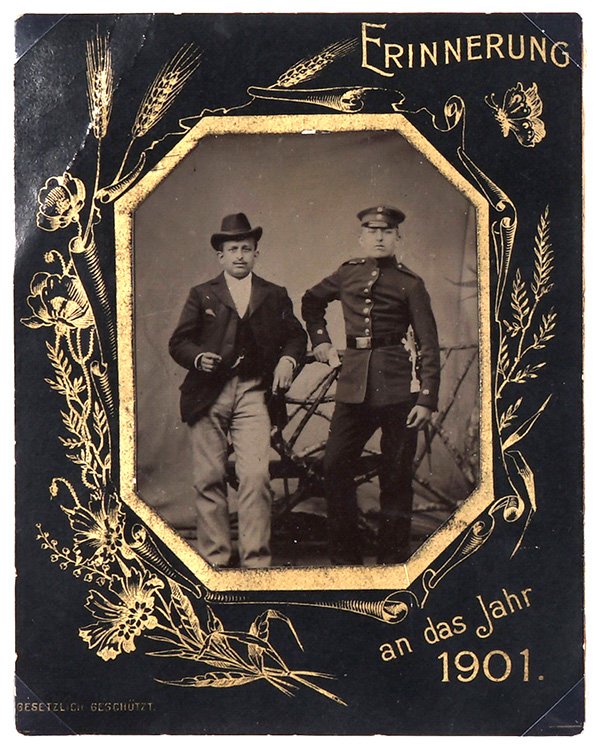
A process based on collodion but using a tin can painted black as a base. It was by far the cheapest photographic process and was practiced by street photographers for many decades.
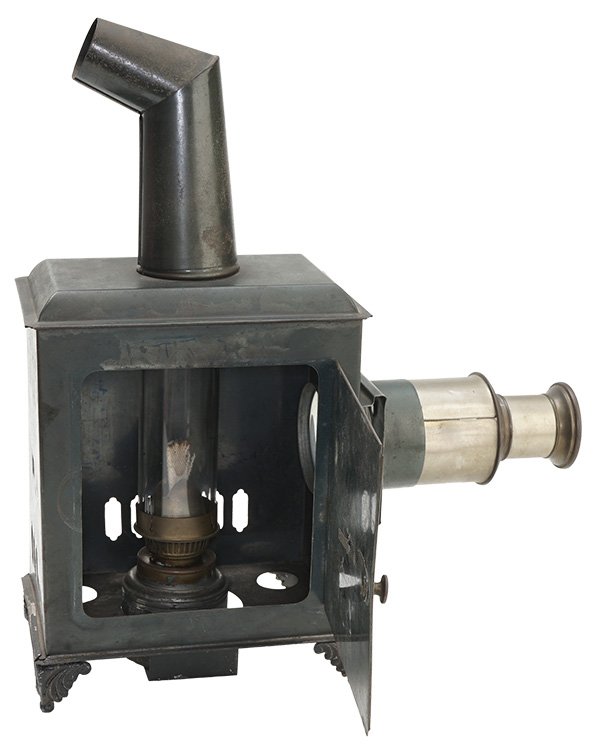
Magic lanterns have existed since 1659, but the invention of photography opened up new possibilities for the projected image that would later bring cinema.