year
Chronological circuit, 1881 to 1900
1881

Gruppen Antiplanet, Steinheil
At the height of the Aplanat’s success, Adolph Steinheil, using the mathematical tools of his friend Philipp Ludwig von Seidel, developed the Antiplanet. The opposite concept, because it again broke with the symmetry of the optical elements.
explore
1883

Rectilinéaire a Foyers Multiples nº2, E. Français
These sets, which were sold as “trousses”, meaning a case for organizing objects, made use of the Rapid Rectilinear concept and offered many focal lengths by combining different lenses.
1885

Look at the little bird
The little singing canary was used by photographers to capture the attention of children in the hope that they would sit still for a few seconds so that the portrait could be taken.
1886

Shutters, Thornton Pickard
With emulsions becoming increasingly sensitive, faster, the need arose at the end of the 19th century for shutters capable of dealing with fractions of a second. Curtain shutters, positioned between the lens and the camera, were very popular until the first quarter of the 20th century
1887
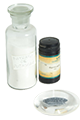
Magnesium powder flash, Miethe and Gaedicke
Invented independently by the Germans Miethe and Gaedicke, the flash using magnesium powder associated with a powerful oxidizer was an immediate success in artificial lighting in photography. Its use lasted until the 1920s and 30s.
1888

Perigraphe, Berthiot
A French wide-angle lens much appreciated in its time. In the Rapid Rectilinear concept, it is a symmetrical lens with a small aperture between f/14 and f/18 depending on the series.
explore
1889
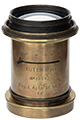
Rapid Aplanat, Suter
This lens from Switzerland, of excellent quality, boasts an ambitious f/5. If you read the documentation, it’s clear that it’s not the usual geometric f, but a calculation that takes into account more transparent glass and the result is “equivalent” to an f/5.
–

Lynkeioskop, C.P. Goerz
One of the best executions of the Rapid Rectilinear concept in an extensive series of lenses with many focal lengths / apertures adapted to various uses.
–

Protar IIa, E. Kraus under license from Carl Zeiss
A new generation of lenses was born in 1890 with the Protars designed by Paul Rudolph in Jena, Germany for Carl Zeiss. They were anastigmatic, significantly improving the sharpness of images even far from the axis of the lens and even at its widest apertures.
–
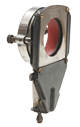
Le Perpetuel shutter, Charles Mendel ,
Metal shutter to be positioned in front of the lens. It is pneumatically operated and only offers a speed of around 1/20s or B. It sounds very limiting, but it’s a great speed for a huge number of situations on large format cameras.
1890

Darlot – B.F & Co.
Petzval-type lens, but from the end of the 19th century. Manufactured by Darlot, a French company, and distributed in the United States by Benjamin French & Co. of Boston. A good example of the longevity of the Petzval concept spanning decades and decades in photography.
1891

Rapid Aplanat, Rodenstock
The success of the Rapid Rectilinear concept was such that many manufacturers used what had already become a household name to name their models. This one combined Dallmeyer’s Rapid with Steinheil’s Aplanat.
1892

Dagor, C.P. Goerz,
Emil von Hoegh, then just 27 years old, proposed the design of his anastigmatic camera to Carl Zeiss. Concentrating on its own developments, the giant was not interested. By 1895, the very young C.P. Goerz had already sold 30,000 copies of the lens that would make history.
1893

Cooke Triplet, Taylor, Taylor & Hobinson
As well as being very good, this 3-element anastigmatic has become a cult lens among large format photographers. Its images are a happy combination of sharpness and softness.
–

Collinear, Voigtlander
Extremely sharp symmetrical wide-angle anastigmatic. In an advertisement in The American Annual of Photography in 1904, the distributor proudly presents a photo with a group of 583 people! A real feat for the time.
1894

Ross, under license from Carl Zeiss, Protar VIIa
The pinnacle of Protar development, this lens is very complex and difficult to produce with its 8 elements in 2 groups (4+4). The result is astonishing and no one can imagine, looking at your photos, that this is a lens that is more than 100 years old.
1895

Stereo Card Viewer, Keystone
The American company, one of the largest in the 3D equipment sector, has produced this classic, simple and always surprising stereocard viewer for almost 50 years.
1898

Panorthostigmat, Clement et Gilmer
Anastigmatics in the concept of 6 elements in 2 groups like Dagor. Thanks to the new glasses available, the 1890s was the time when every firm tried to launch its anastigmatics, ushering in a new era in photographic optics.
1899
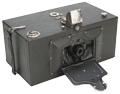
Panoram, Eastman Kodak
10x30cm negatives on roll film covering an angle of 120º. The rotating lens system allows for very convincing panoramic shots, even with a simple lens, just a meniscus.
explore
1900

Chanbre de Voyage 13x18cm, E. Lorillon
A chambre de voyage suitable for taking landscape photos. You can move the lens plate and this is very convenient for photos of monuments and architecture in general.