year
Chronological circuit, 1931 to 1945
1931
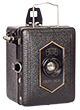
Zeiss Ikon, Baby Box Tengor
A box for 127 films and 3×4 cm negatives. If it was a camera of times of crisis, as they say in the literature, today what remains is that it is very well built and fun to use.
explore
–
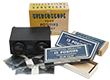
Bruguiere, Stereofilm, stereoscopic views
Since the dawn of photography, the possibility of seeing far beyond our surroundings has been one of its great attractions. The little boxes with stereoscopic views provided an extra layer of realism for these “armchair trips”.
1932
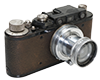
Ernst Leitz, Leica IId
Leica with a built-in rangefinder coupled to the focus adjustment, but in a separate viewfinder.
–
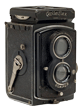
Franke & Heidecke Rolleiflex, Rolleiflex Old Standard
Start of a legend. One of the most cult cameras in the history of photography. Extremely reliable and precise, a delight to use.
1933

Ihagee, Exakta series for film 127
Predecessor of the famous Kine Exakta for 35mm film launched 3 years later. Examples in the collection are already from the B model, which added slow speeds and was launched a little later in 1935.
1934
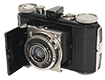
Kodak AG, Retina 117
Developed and manufactured at the German subsidiary in Stuttgart, in addition to being a very beautiful and well-built camera, it was with this that Kodak launched 135 film, which is 35mm film already in the cartridge and ready to be loaded into the camera even in the clear,
–
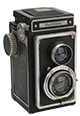
Zeiss Ikon, Ikoflex
It’s a good camera, even better than its contemporary the Rolleiflex. But the synonym and future of this category, of TLRs, would be the Rolleiflex.
–
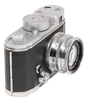
Otto Berning & Co, Robot
The camera has a spring-loaded motor drive. Just wind it up and when you press the shutter button it automatically takes pictures in sequence. Famous for having been used by the German army during the Second World War.
–
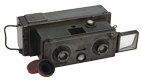
Cornu Paris, Ontoscope
All-metal for stereo photos in 45×107 format on glass plates. With a magazine that allows you to load 12 plates. Aperture and speed adjustment but fixed focus.
1936

Zeiss Ikon, Contax II
The first Contax was launched in 1932 to compete with Leica. But it was only the Contax II that proved to be truly competitive, with a rangefinder in the viewfinder and coupled to the focus, among other advantages.
–
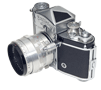
Ihagee, Exakta series
First 35mm monoreflex to make history. It has an extensive line of optics produced by many different manufacturers. This example in the collection is much more recent, from 1951. The general appearance is the same but it has several improvements.
–
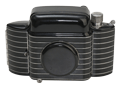
Kodak, Kodak Bantan Special
Considered by many to be the most beautiful camera ever produced. True or not, there is a copy of it in the Metropolitan Museum of Art.
–
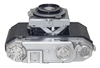
Agfa, Karat
Unique design, has launched the Rapid system, with 35mm film, which uses two reels and allows you to remove partially exposed film.
–
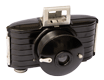
Kodak, Bullet Camera
Another Kodak experience with an Art Deco design. The Bullet is made entirely of bakelite and uses 127 film. Very simple, all the photographer has to decide is whether or not to shoot.
–
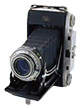
Zeiss Ikon Ikonta C 531/2
Zeiss Ikon offered a series of folding cameras for use with 120 film that had great overall quality. This C is 6x9cm. For instant photos, it made great contact prints. An ideal camera for amateur photographers.
–

Zeiss Ikon, Super Ikonta A 531
The Super Ikontas had a rangefinder coupled with the focus, but in a separate viewfinder. The ones with the A prefix are 4.5×6 cm.
1937
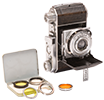
Kodak AG, Retina 141
The Retina series evolved and continued for many years, gaining accessories, until it reached a Retina Reflex in the 1950s.
–

Zeiss Ikon, Nettar 518/16
Another very simple, sturdy folding camera that stays small when closed and makes 12 6×6 cm plates on 120 film.
–

Zeiss Ikon, Super Ikonta B 532/16
This is a 6x6cm Super Ikonta. As well as having the rangefinder coupled with the focus, the double image is visible in the viewfinder itself through which the frame is made. It’s worth remembering that Leica wouldn’t have this until 1954, almost 20 years later.
1938

Zeiss Ikon, Ikonta 521/16
6×6 cm simple, in these Ikontas nothing is automatic, you have to advance the film, cock the shutter, set the speed/aperture, adjust the focus by estimating the distance, frame and shoot.
–
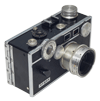
Argus, Argus C3
Known as The Brick, manufactured in the United States where it sold many thousands. Solid, durable and very ugly.
1939
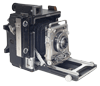
Graflex, Graflex Miniature Speed Graphic 23
Miniaturization of the famous Speed Graphic from 1912, which was offered in 4×5″ and 5×7″. The “miniature” accepts 2¼ x 3¼” plates and also 120 film with Graflex’s own original adapters.
–
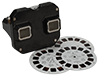
Sawyer’s Inc, Viewmaster
Initially a direct successor to the tourist stereographic views of the 19th century, it became a toy with Disney stories from 1950 onwards
–

Ernst Leitz, Leica IIIc
The first Leica with low shutter speeds, from 1 to 1/30s. Another great convenience was the incorporation of a diopter corrector in the rangefinder window.
–

Kodak, Baby Brownie Special
This nice bakelite camera for 127 films is representative of George Eastman Kodak’s experiments with design rather than technical flexibility in photography.