Ideal | ICA
Very sophisticated and well-built camera. Allows lens changes and various movements. It uses its own chassis in 10x15cm format for making Cabinet Cards by contact printing.
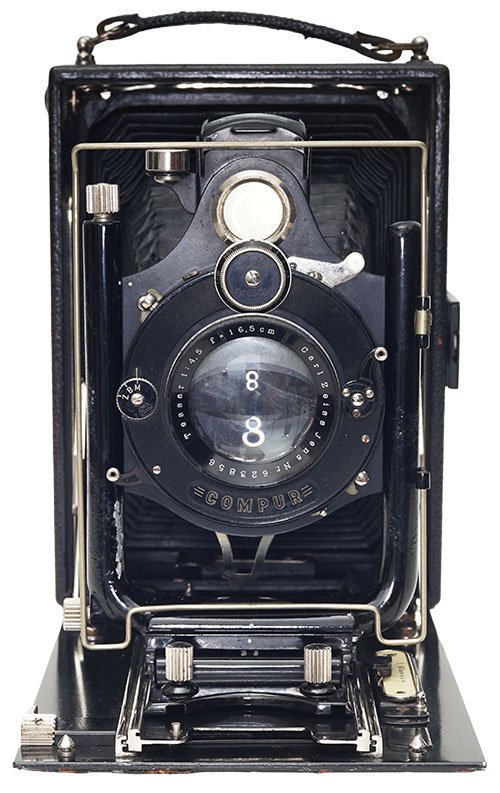
Very sophisticated and well-built camera. Allows lens changes and various movements. It uses its own chassis in 10x15cm format for making Cabinet Cards by contact printing.
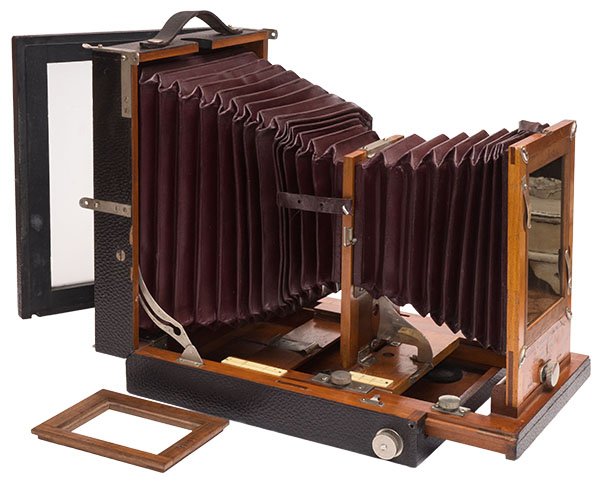
It’s worth remembering that photography existed long before and in many places where there was no electricity. This enlarger uses daylight to print 9×12 and 6.5×9 cm negatives.
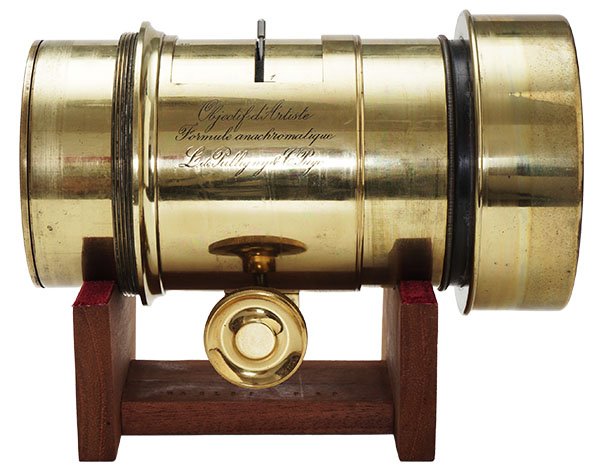
Manufactured by the traditional Darlot Opticien house in Paris, this lens uses uncorrected chromatic aberration to give the image a soft-focus effect, which was to the taste of many at the time.
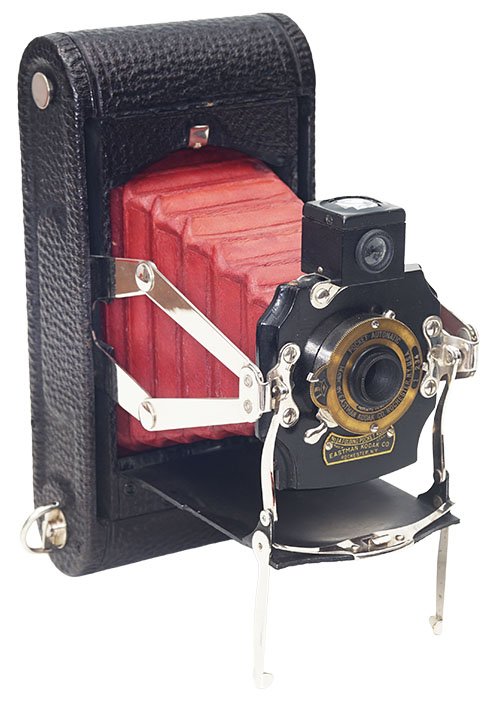
It’s a bit of an exaggeration to call this a “pocket” camera, but it’s a beautiful wooden camera with red bellows and chrome-plated metal. It makes 2¼ x 4¼ negatives on 116 film. But with (unofficial) adapters you can also shoot on 120 film.
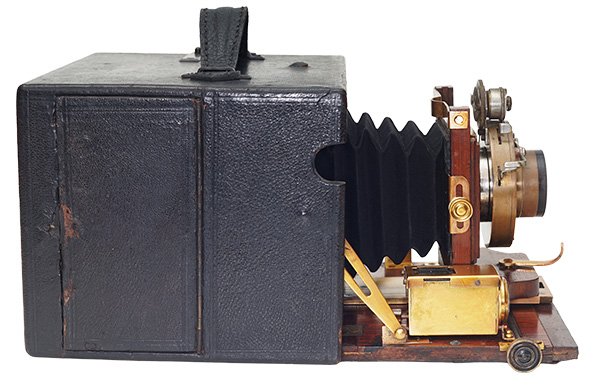
An interesting camera, it has a compartment at the back that can hold up to 3 double chassis, giving the photographer the autonomy of 6 plates.
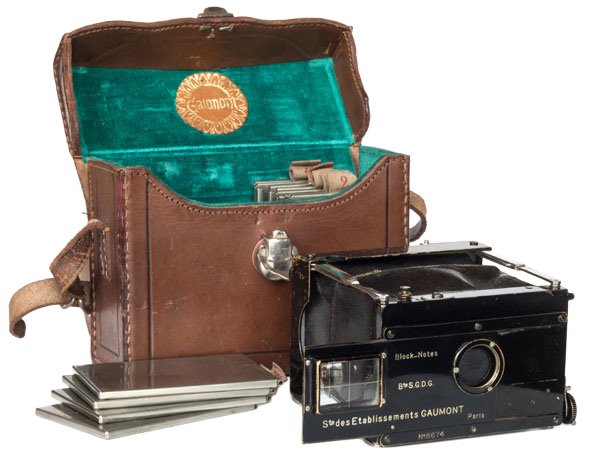
For snapshots on 4.5×6 cm glass plates. Few speed options, two apertures and no focus adjustment. This camera is a delight to use.
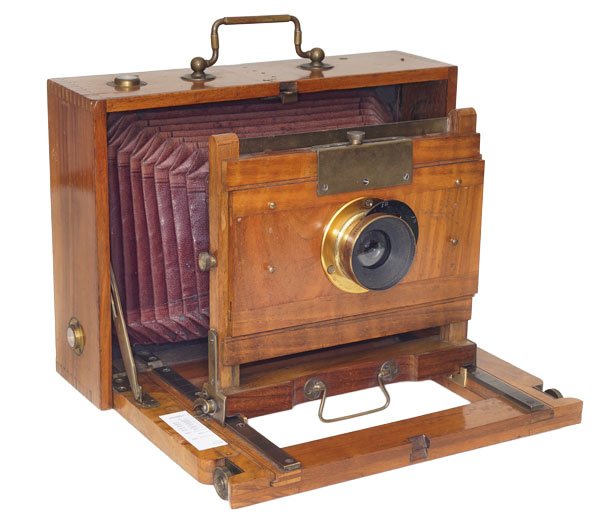
A travel camera suitable for taking landscape photos. You can move the lens plate and this is very convenient for photos of monuments and architecture in general.
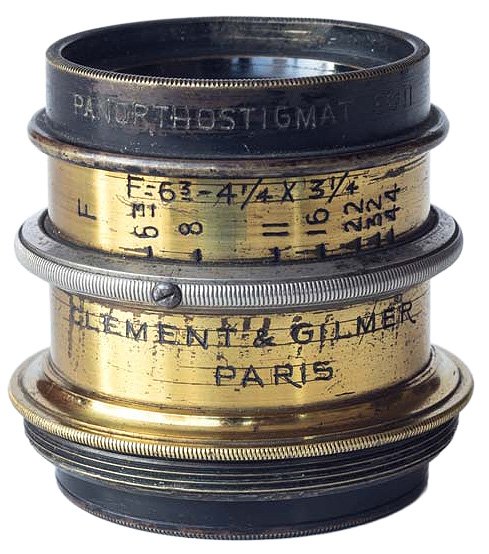
Anastigmatics in the concept of 6 elements in 2 groups like Dagor. Thanks to the new glasses available, the 1890s was the time when every firm tried to launch its anastigmatics, ushering in a new era in photographic optics.
As well as being very good, this 3-element anastigmatic has become a cult lens among large format photographers. Its images are a happy combination of sharpness and softness.
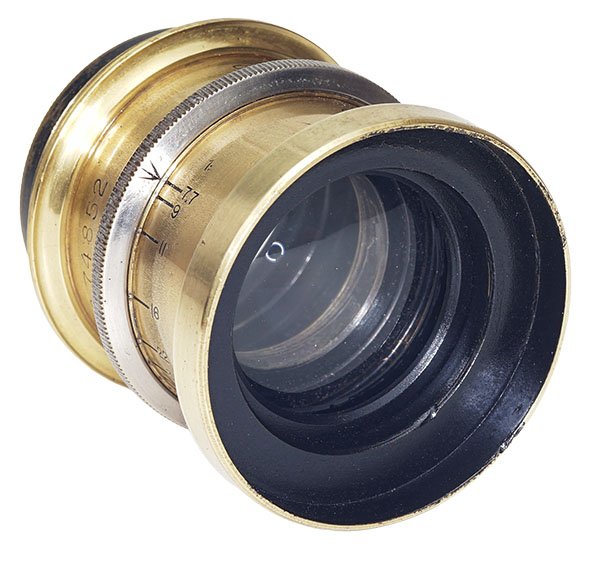
The success of the Rapid Rectilinear concept was such that many manufacturers used what had already become a category name to name their models. This one combined Dallmeyer’s Rapid with Steinheil’s Aplanat.
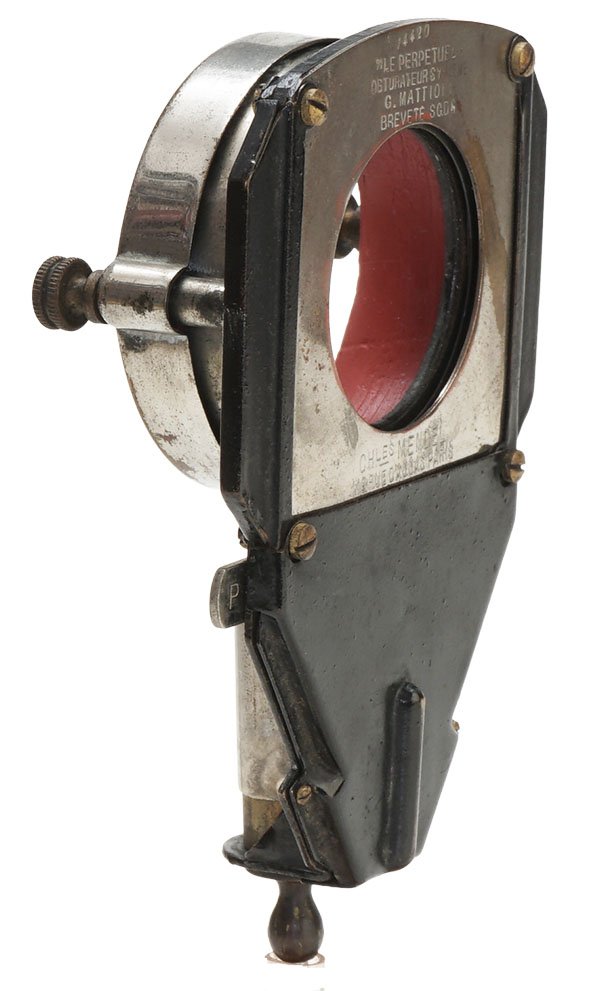
Metal shutter to be positioned in front of the lens. It is pneumatically operated and only offers a speed of around 1/20s or B. It sounds very limiting, but it’s a great speed for a huge number of situations on large format cameras.
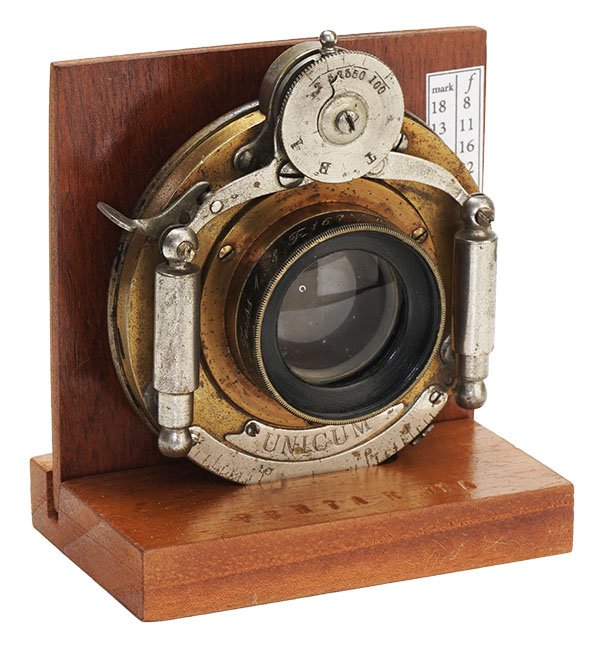
A new generation of lenses was born in 1890 with the Protars designed by Paul Rudolph in Jena, Germany for Carl Zeiss. These were the anastigmatic lenses, significantly improving the sharpness of images even far from the axis of the lens and even at its widest apertures.