Camera Lucida | Chambre Claire P. Berville
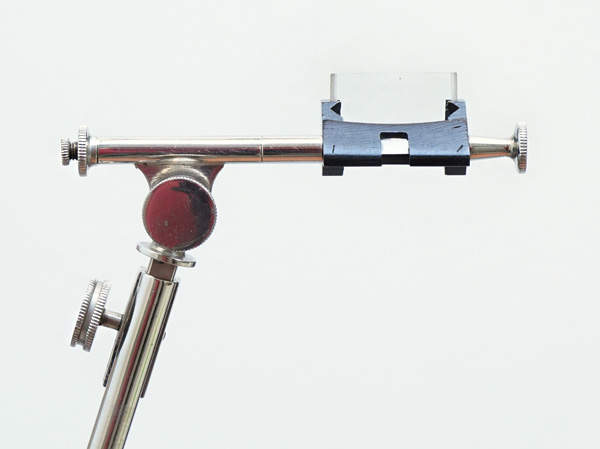
Halfway between the photographic image and the manual drawing, the Camera Lucida was very popular in both artistic and scientific imagery. See how it works optically and learn a little about its history.
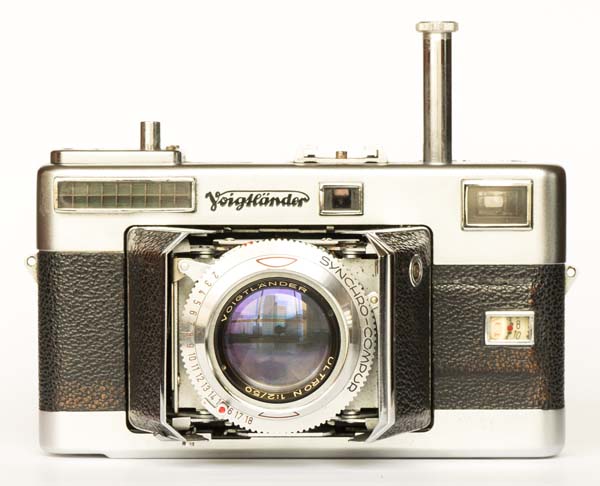
Another Voigtlander camera with an innovative design. This folding 35 mm has bellows and barn-doors, focus adjustment on the rear of the camera, advancing the film with a vertical rod that is driven like a piston. The lens is a sophisticated 50mm f / 2 Ultron
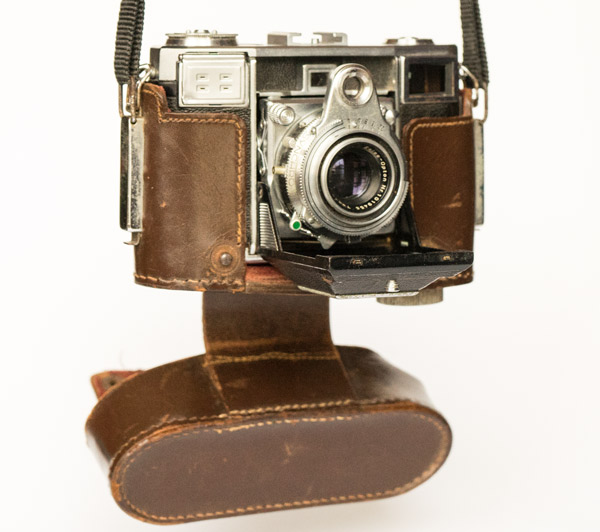
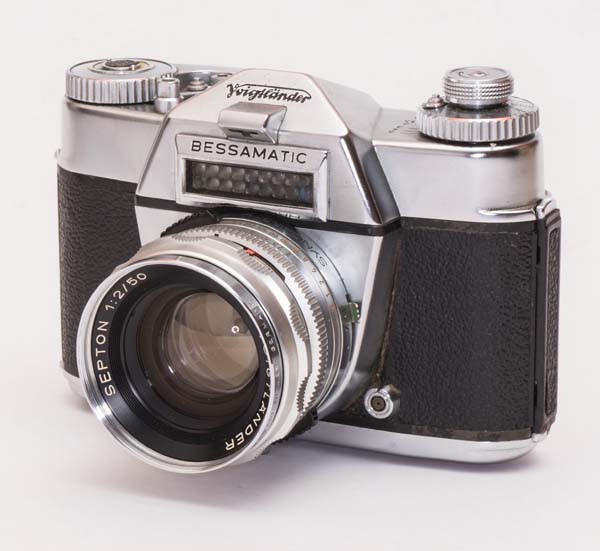
This is a compact and sophisticated camera for 35mm films, but with a strong heritage of medium format folding cameras. It is a great choice for those who want to take analog photography with manual control of all parameters.
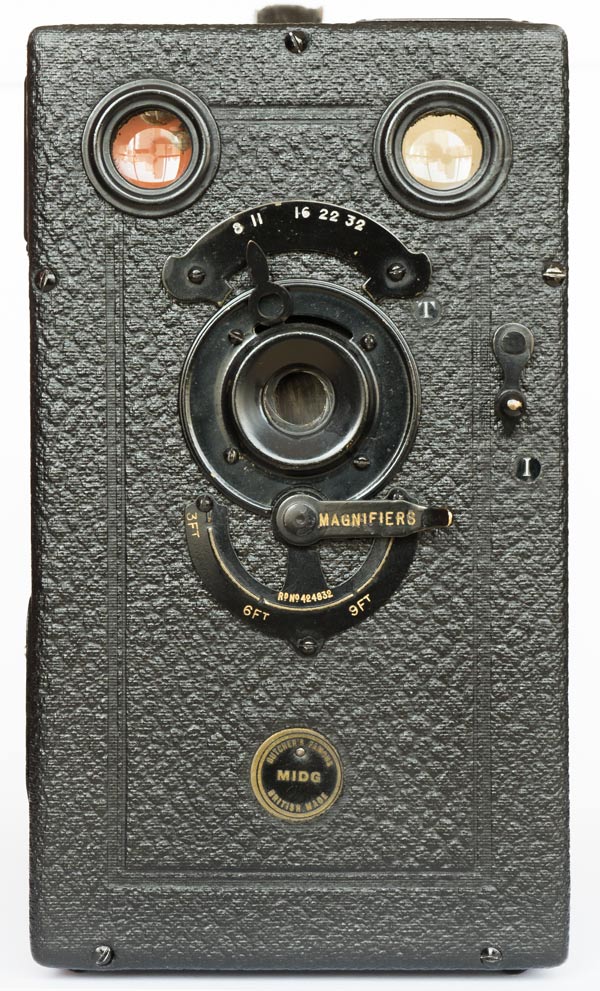
Very popular camera from the beginning of the 20th century, with only one speed and a lens that is simply an achromatic doublet, the old landscape lens. But the results are surprisingly good and the camera is very practical to use.
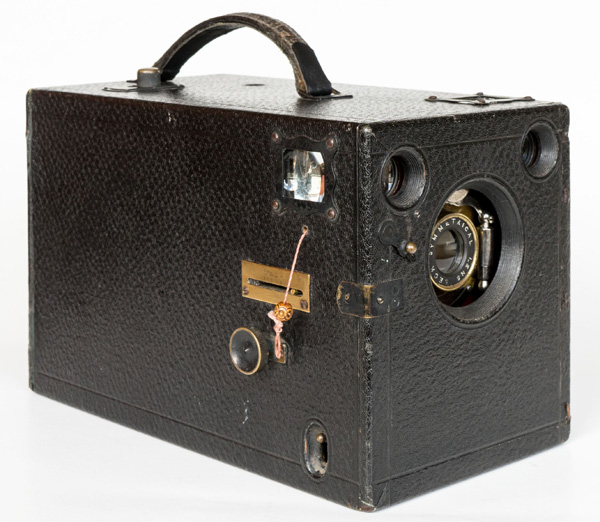
This type of camera was important in the creation of a new segment and new period in the history of photography. It was with this category that amateur photographers were finally able to produce their family and travel snapshots, without the complications of ground glass cameras, with their tripods and black cloths.
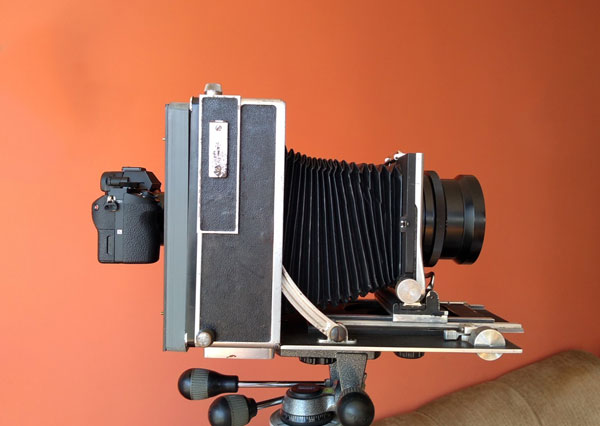
Discusses the adaptation and use of large-format lenses with full-frame or smaller digital cameras. Concepts of circle of confusion, focal length and angle of view are reviewed as a basis to theoretically understand the reason for the loss of sharpness in the images thus produced.
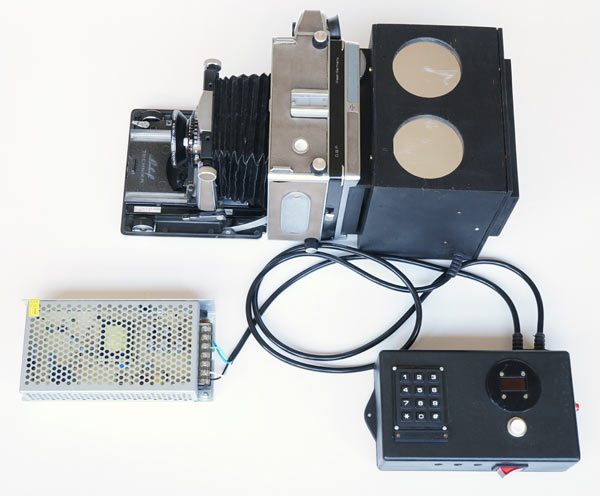
Complete project for the construction of a photographic amplifier head using RGB LEDs. Includes your timer / mixer. It allows the use of multi-contrast papers and can be fixed on a 4×5 camera for use as an amplifier.
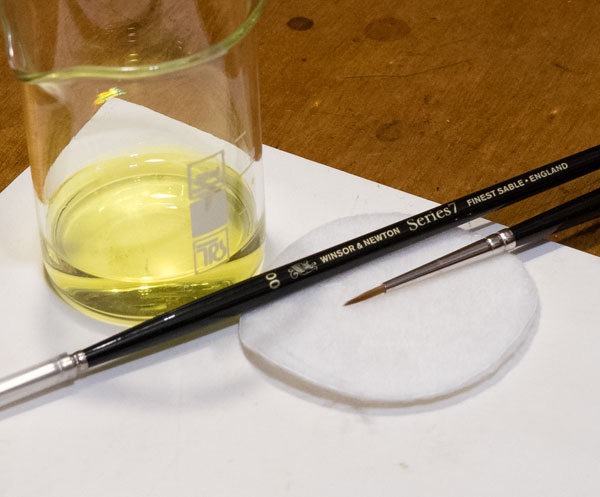
Tutorial shows you how to spot retouch black and white photos either by chemical reduction, or by depositing pigments to darken small areas. Procedure can be used for fault correction or creatively as photograph interventions. Example shows how to enhance catchlights.
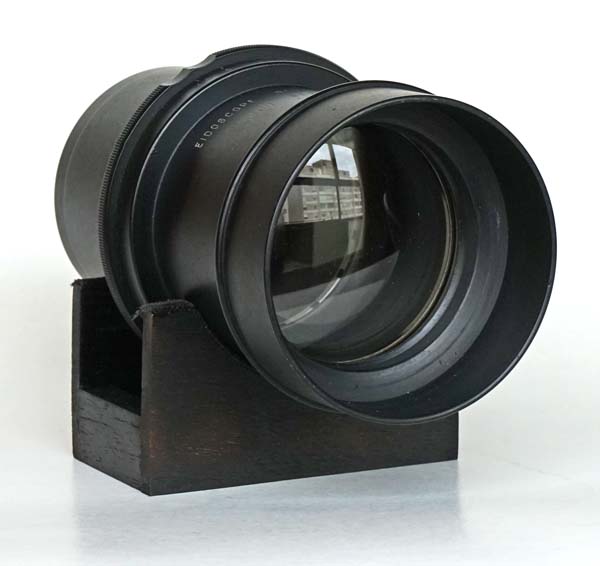
A lens originally developed by Hermagis and launched in 1903, the Eidoscope is one of the highlights of soft focus optics. This sample was manufactured later by SOM Berthiot, which kept Eidoscope in its catalog after acquiring Hermagis in 1934.
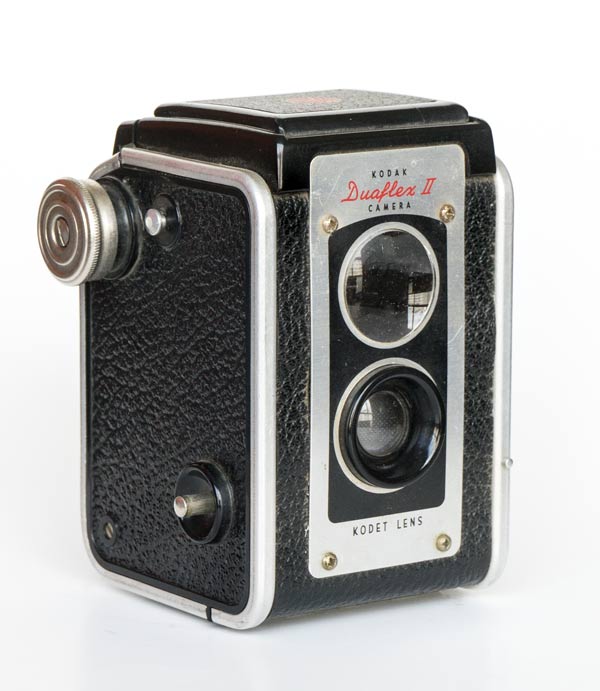
Bakelite camera manufactured by Kokak in the fifties. It uses 620 films that are no longer manufactured, but having two empty reels, it is possible to spool the film 120 with its own protective paper and markings, because internally the reels are compatible.
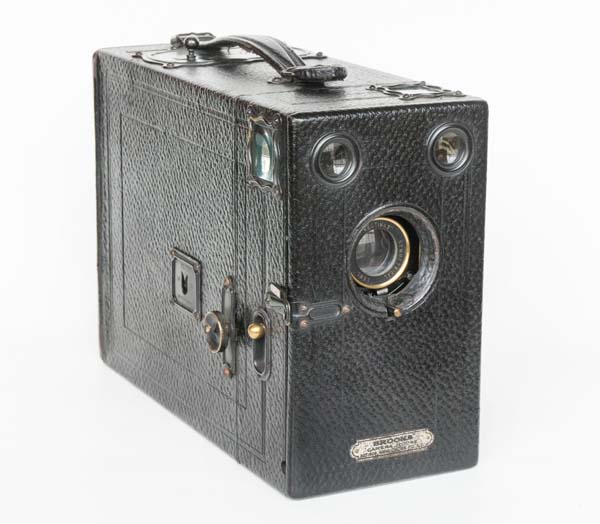
Known as detective cameras, falling plate cameras, magazine cameras or, for the novelty of its day, simply as hand cameras, the Klito was very important in the history of photography as a transition from a tripod and black cloth to handheld camera photography.
One of the most commonly used large format lens at the height of analog photography, Symmar follows a 1903 concept named plasmat and has been adopted as a standard lens by many thousands of photographers.