Petzval portrait lens | Voigtländer
Quick review of a Petzval type lens for portraits. Manufactured by Voigtländer in 1862. Sample of portrait made with it and links to useful resources.
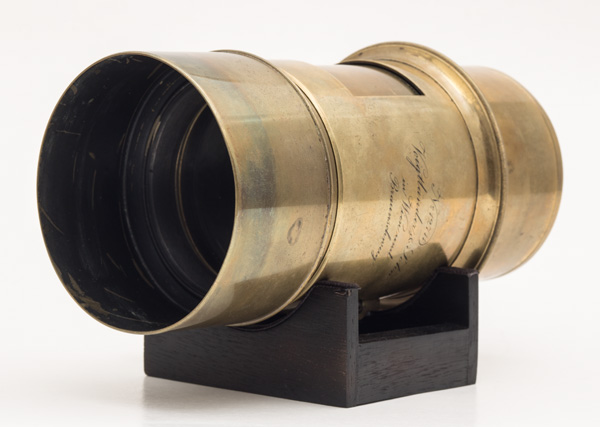
Quick review of a Petzval type lens for portraits. Manufactured by Voigtländer in 1862. Sample of portrait made with it and links to useful resources.
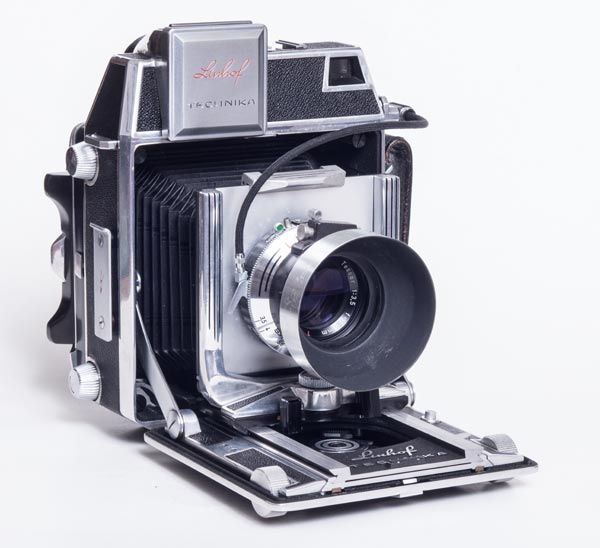
Designed to offer the advantages of large-format and miniature photography in one camera, with focus and composition via optical viewfinder or ground glass, the Linhof Super Technika is an icon in camera history. Review with photos, comments and images produced with the Linhof Super Technika.

Tutorial shows step-by-step and constructive details to make a large format camera back to work with standard film holders, sizes 4×5″ and 9×12 cm.
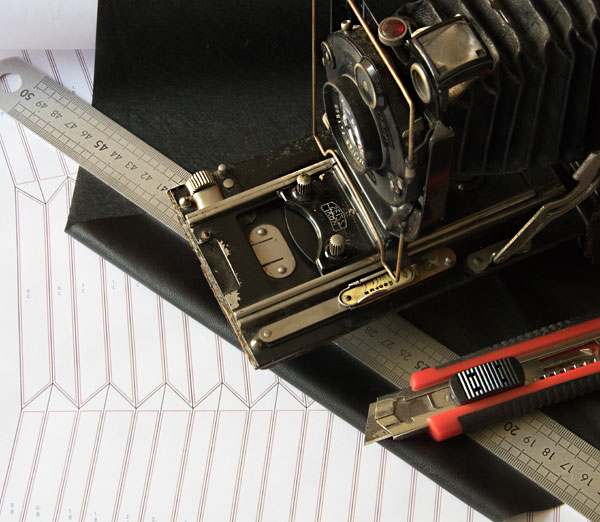
Application creates a .pdf for a bellows used on photo cameras of any size. The drawing indicates the cut-and-fold lines in life size. You indicate the measures, pay via Pay Pal and receive the project by email within a few minutes.
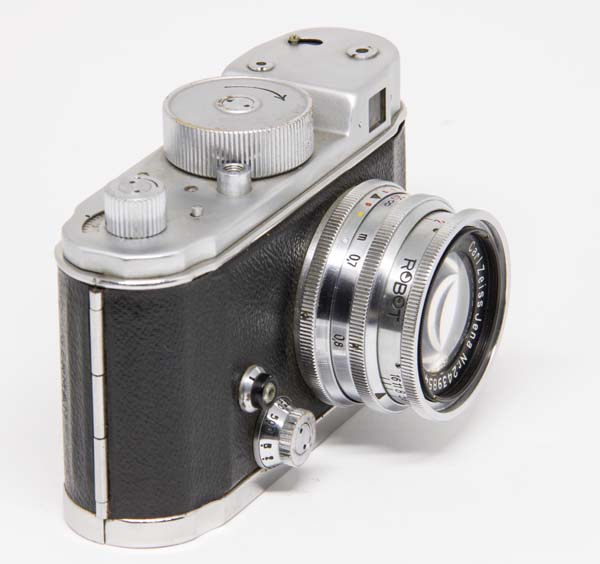
A camera created in 1930, which uses 35mm film, and besides being totally mechanical, has a spring system that allows one to make up to 5 photos per second just by pressing the shutter release button. The film is advanced and the shutter is armed automatically.
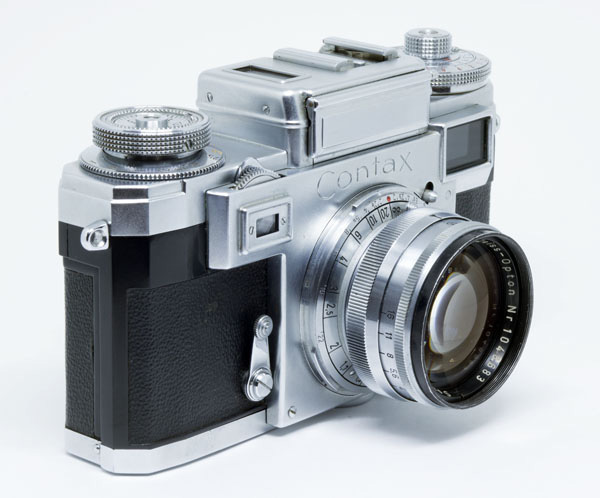
One of the most iconic cameras from Zeiss Ikon, the 35mm Contax offered a system with interchangeable lenses and a multitude of accessories. It was launched with the difficult task of competing with Ernst Leitz’s Leica. Although it has not outgrown its competitor in glamour, technically, It brought important innovations that marked the history of photography.
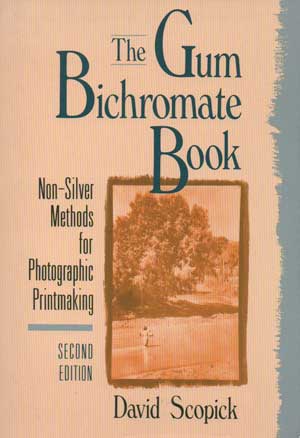
A very practical book with good advice on the technique of Gum Bichromate. From paper preparation to archiving. Some more in-depth considerations on sensitometry and trichromia using the process complete a book that can be a guide for the beginner and also a roadmap for anyone who wants to explore the process further.
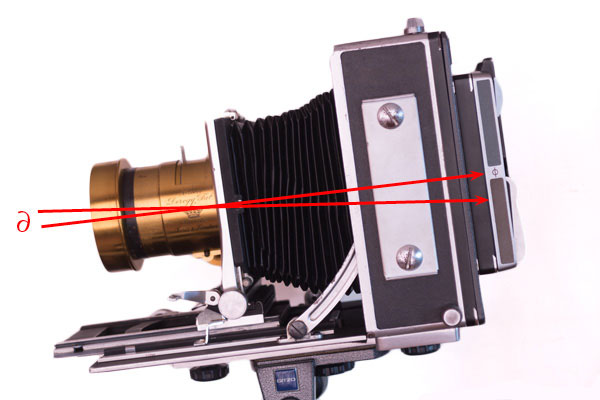
Using Petzval-type lenses for portraits when the subject’s face is out of the center of the image requires some care. The article discusses and gives an example of how to decentralize the lens to reposition its optical axis over more peripheral areas of the photographic frame.
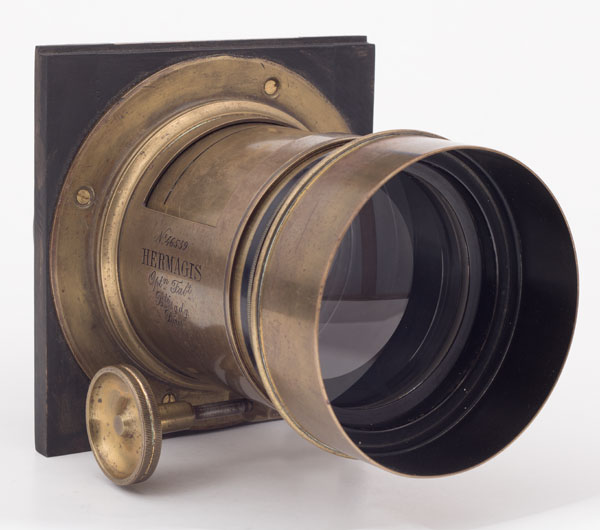
Lens description with photos, measurements and presence in a manufacturer’s catalog. Photographs of pencil inscriptions on the edge of optical elements and details of the standard carte-album format, popular in the late nineteenth and early twentieth centuries, to which this lens was intended.
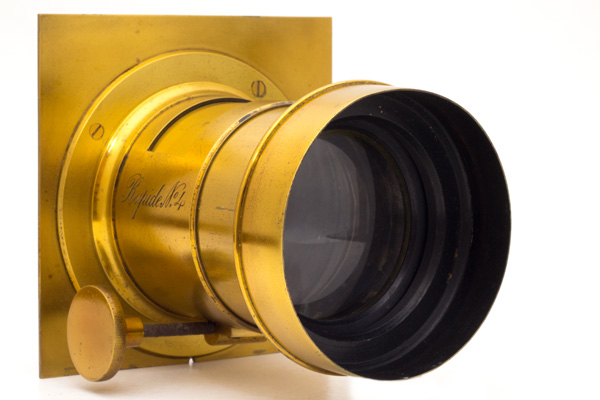
A short text, with photos, analyzes a portrait lens constructed by Derogy-France, based on the famous drawing by Josef Petzval of 1840. It briefly discusses, from this manufacturer, how the Industrial Revolution impacted the optical industry in 19th the century.
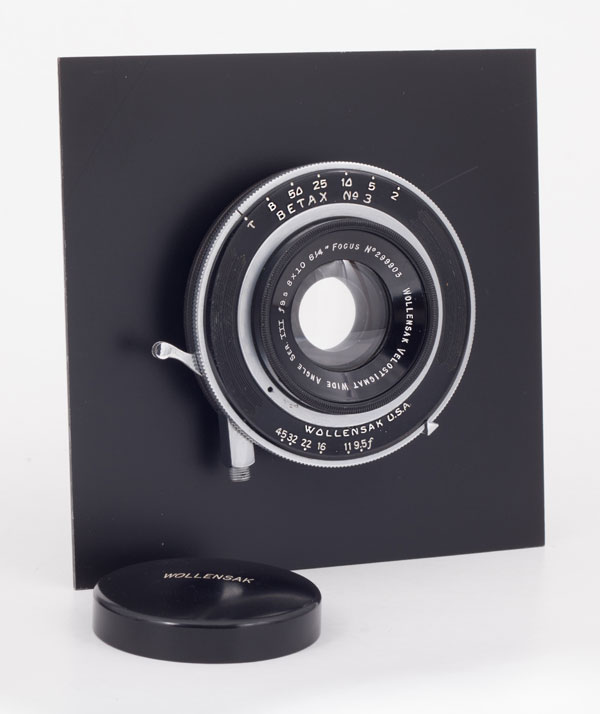
Brief article discusses the design, characteristics and ancestry of Wollensak’s Wide Angle Velostigmat lens and shows an image made with it on an 18 x 24 cm negative.
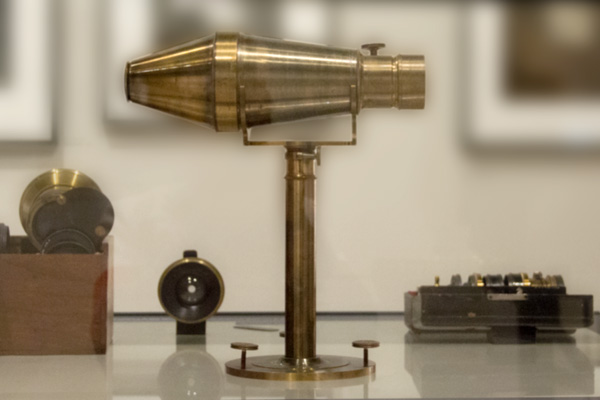
Article addresses the technical and historical aspects of the first lens actually thought, calculated and developed for photography, in 1840 by Joseph Petzval.