year
Chronological circuit, 1901 to 1915
1901

Kodak, Kodak Brownie #2
The camera for which 120 film was launched. It was extremely important in the massification of photography. Its launch price was 2 USD and it was produced in the millions.
explore
1902

Carl Zeiss, Tessar
Perhaps the most successful lens of all time, if units produced is the criterion. Known for being very sharp, it has equipped everything from miniature to ultra-large format cameras,
–

Emil Busch, Omnar
An anastigmatic of the convertible type, i.e. its two optical groups can be used in isolation, resulting in a much longer focal length at the sacrifice of a much smaller aperture.
1903

Voigtlander, Heliar
Voigtlander’s mythical lens. First designed in 1900, based on the Cooke Triplet. It was then recalculated, under the influence of the Tessar, and launched as the Dynar in 1903. The name Heliar was adopted soon after and it remained in production in a variety of sizes for many decades.
–
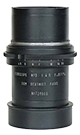
Hermagis, Eidoscope
“She doesn’t photograph, she draws”, this is how the Seeberger brothers, photographers of Parisian high society, described the Eidoscope, a soft-focus lens launched in the middle of the pictorialist period. The copy in the collection is much later, produced by SOM Berthiot, which acquired the Hermagis in 1935 and kept it in its catalog.
–

Thornton Pickard, Tribune
At the time, it was a camera for beginners. Today it’s an extremely light and versatile camera with very generous movements. Originally for 3¼ x 4¼” plates, but this copy has been adapted for 4×5″.
1904

Gaumont, Block-Notes
For snapshots on 4.5×6 cm glass plates. Few speed options, two apertures and no focus adjustment. This camera is a delight to use.
1905

Clement et Gilmer, Ultra
An interesting camera, it has a compartment at the back that can hold up to 3 double chassis, giving the photographer the autonomy of 6 plates.
–
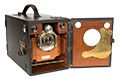
Houghtons, Klito
In the concept of a detective camera, because it doesn’t need a tripod and allows for indiscreet shots, this English camera can be loaded with 12 glass plates.
–

Butcher, Midg #2
English, like falling plate, or detective, or magazine, an entry-level camera, very simple, but it was the camera used by two children who photographed fairies in the woods.
explore
–
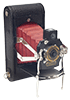
Kodak #1 Folding Pocket
It’s a bit of an exaggeration to call this camera a “pocket” camera, but it’s a beautiful wooden camera with red bellows and chrome-plated metals. It makes 2¼ x 4¼ negatives on 116 film. But with (unofficial) adapters you can also shoot on 120 film.
–
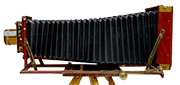
Thornton Pickard, Royal Ruby Triple Extension
English camera for the 18x24cm format. The bellows extends to 70cm and this allows the use of lenses up to 420mm for portraits, for example. It’s a superb piece of construction.
–

Puyo et Pulligny, Objectif d’Artiste
Manufactured by the traditional Darlot Opticien house in Paris, this lens uses uncorrected chromatic aberration to give the image a soft-focus effect, which was to the taste of many at the time.
–
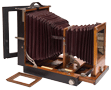
Eastman Kodak, Daylight Enlarger
It’s good to remember that photography existed long before and in many places where there was no electricity. This enlarger uses daylight to print 9×12 and 6.5×9 cm negatives.
–
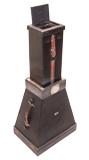
C.P. Goerz Daylight enlarger
The need to enlarge negatives came with the arrival of miniature cameras. This enlarger allows for some size variations when enlarging 4.5×6 cm negatives and uses ambient light to do so.
1906

Pigeon lamp with Junius sleeve
Very practical for laboratories, with or without electric lamps, this lamp patented by Charles Pigeon in 1884 accepts the sleeve made of beautiful red glass in the Junius brand.
1909
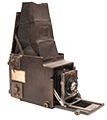
Graflex, Graflex Auto RB
Large format monoreflex, widely used by great photographers such as Alfred Stieglitz, Louis Hine and Dorothea Lange
–
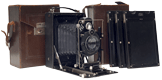
ICA, Ideal
Very sophisticated and well-built camera. Allows lens changes and various movements. It uses its own chassis in 10x15cm format for making Cabinet Cards by contact printing.
–

Rodenstock, Eurynar
A Rodenstock bestseller. In 5 years it has sold 50,000 units. It’s a general-purpose anastigmatic with 4 elements in two groups.
1910

Contessa Nettel, Deckrullo
Camera for action scenes. It has a two-curtain focal plane shutter and speeds of up to 1/1200 s for the 13x18cm format.
–
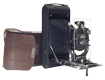
ICA, Nixe
A hybrid camera, in the sense that it could use roll film, in this case 122, but it also came with clear glass and a chassis for glass plates in the 9x14cm format.
–
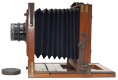
View Camera 13x18cm, A. Calits
Camera from from Riga, Latvia. It’s a model with very common specifications for that era, a typical tail board camera, all wood with some metal joints and controls.
–

ICA, Excelsior
Made in Dresden, this is classified as a travel camera due to its lightness and portability. At 13x18cm, it offers various movements between lens and chassis for glass plates.
–
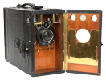
Houghtons, Klito 3A
Camera for 12 3¼ x 4¼” glass plates, upgrade from the original Klito featuring a rack-and-pinion focusing system.
1911
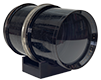
Wollensak, Verito
The famous American soft focus. The glamorous images associated with the Hollywood era, in black and white photos of Greta Garbo, Gloria Swanson and Clark Gable, to name a few, owe a lot to the look provided by this lens.
1913

Jules Richard, Taxiphot automatic tabletop stereo viewer
A complicated but very robust mechanism can display up to 25 views in 3 dimensions in the 45×107 mm format. The effect is astonishing.
–
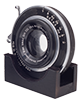
Wollensak, Velostigmat Serie III Wide Angle
This anastigmat from the Rochester, US firm has a focal length of 159mm, an aperture of f/9.5 and a 90º angle of view, enough to shoot up to 8×10″.
1914

ICA, Maximar
Lightweight, well-built camera in 9×12 cm format with double bellows extension for close-up shots
1915
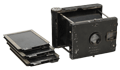
Goerz, Tenax
Camera for snapshots on glass plates in 6.5 x 9 cm format. Focus adjustment and shutter Compound hidden in the front panel gives good aperture and speed options.